
By James “JB” Ferguson, P.E., and Jamie Hudson, P.E.
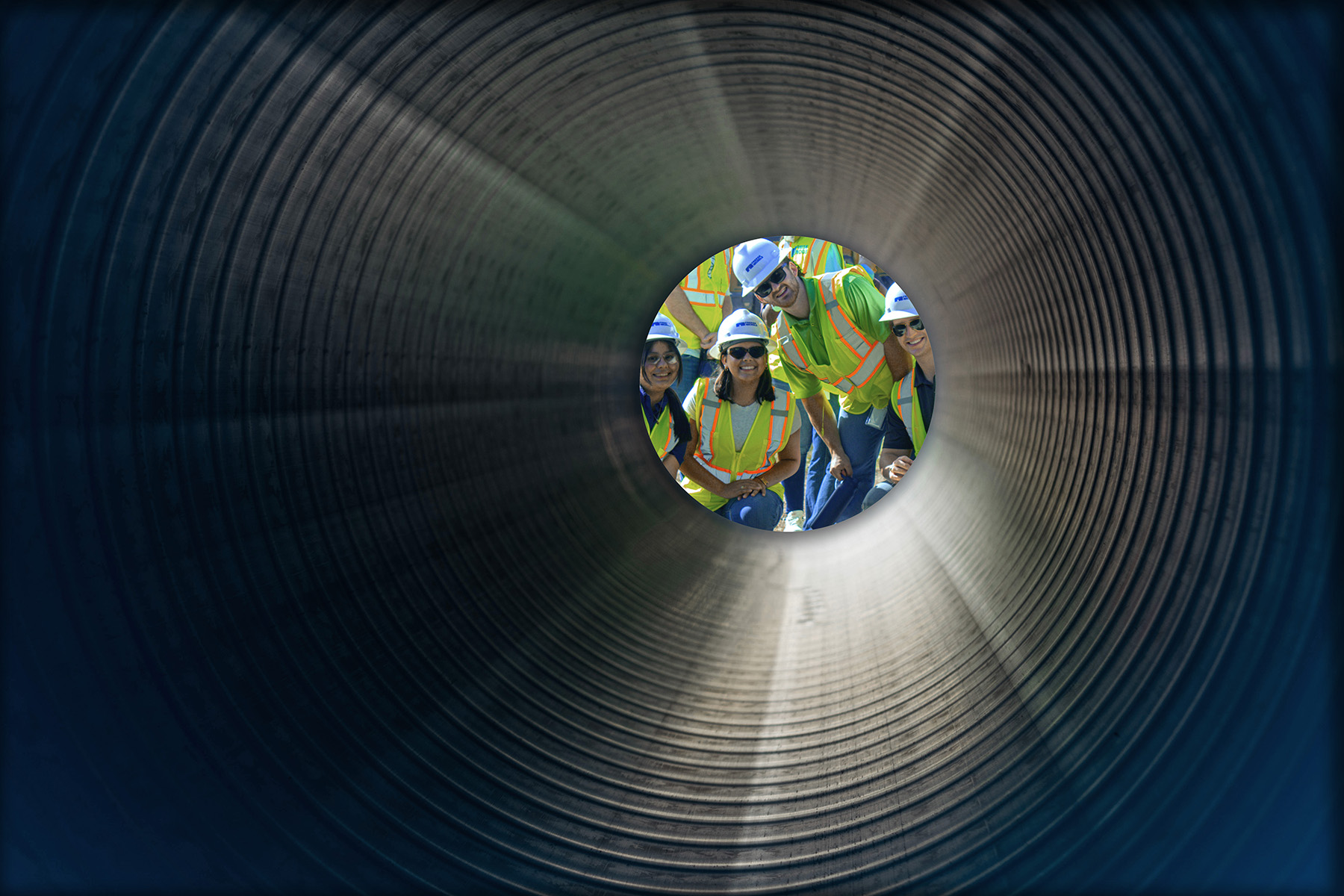
The authors share what it takes to create an engaging internship program that bridges the transition between student and professional engineer.
Architecture, engineering, and construction firms are increasingly competing for engineering talent. With that in mind, it’s important for civil engineering firms to ensure they are building a deep talent pipeline through internships to prepare for the future. Developing and growing a successful internship program requires commitment, intention, and creativity to make the experience a meaningful investment for companies and an unforgettable experience for aspiring engineers.
The right kind of training and insight into the realities of civil engineering life will draw college students into the field — and, hopefully, to civil engineering firms. Doing that requires a well-planned strategy that is successfully executed across every facet of the program. Start by connecting with interns on day one with onboarding, introducing them to daily tasks, and partnering them with a mentor. Be sure to schedule time for fun activities that reinforce your company culture.
We are vocal advocates of powerful internship offerings because of our own rewarding experiences at organizations with strong programs (a private company and a public agency) before joining Freese and Nichols. Those exposures to engineering helped prepare us to enter the workforce with a better focus on our career goals. We’re among the many Freese and Nichols employees who volunteer time and ideas to help our HR department’s recruiting team enrich the internship experience.
Building a robust program
In 2025, Freese and Nichols welcomed 105 interns from dozens of schools to paid summer positions at 21 of our offices across the United States — up from 35 interns in 2021. That kind of growth comes with a company-wide focus on developing broad-ranging content and deep connections. As our firm has expanded well beyond its Texas roots — with offices now in 12 states — we’re recruiting at more universities, and the internship program has evolved into a vital bridge for identifying and developing young talent who can eventually become full-time employees after graduation.
An internship program should not be a source of temporary labor; it should be designed to create opportunities for students to develop skills as they interact with professional engineers and learn more about the industry, as well as their own strengths and interests. Here are some ways that happens:
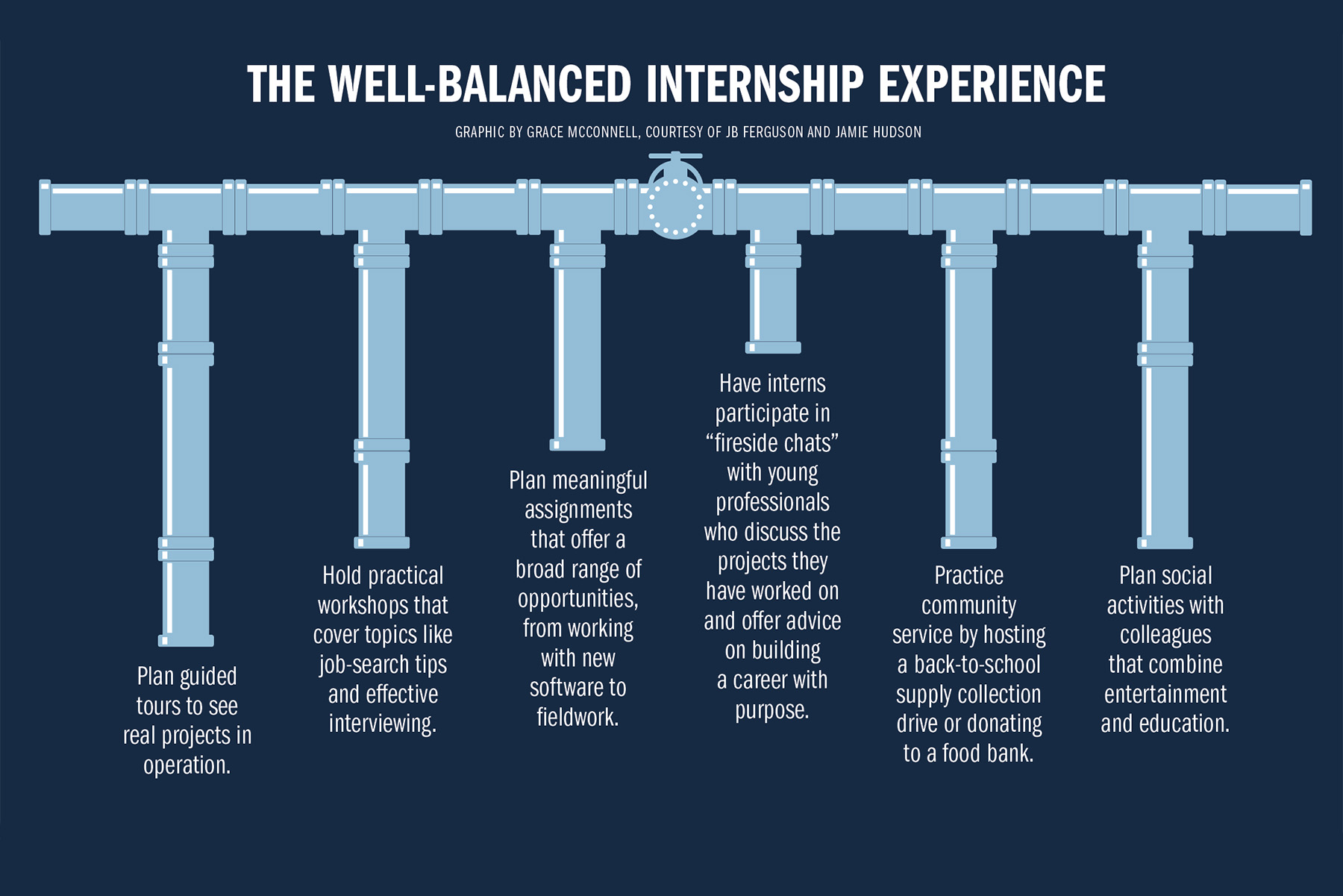
Practice insights: Students learn about a range of engineering and planning disciplines to convey the scope of career options at Freese and Nichols. Firms could provide lectures and presentations from experienced staff about their specialties and what makes their work fulfilling. At our company last summer, interns attended presentations about transmission and utilities, urban planning, and program/construction management. Among the presenters was a young professional who has worked in our offices in Raleigh and in Rogers, Arkansas, who discussed her work on hydrologic and hydraulic modeling and master drainage plans. Another was a young staffer who moved from Virginia to join the Austin office and regaled the interns with tales of his experiences in water/wastewater master planning.
Hands-on experience: At Freese and Nichols, interns’ work assignments typically involve ongoing design or planning projects. They also visit finished work or projects under construction. Site visits could range from a force main project to a stabilized creek to water and wastewater treatment plants, depending on the firm’s areas of expertise. (Read about some individual experiences below.)
Career advice: Programs do not need to focus solely on the technical side of civil engineering! At Freese and Nichols, interns are invited to workshops tailored to them, covering practical topics like job hunting, building a LinkedIn network, and navigating a hiring interview. These workshops offer critical career insights that students may not receive elsewhere.
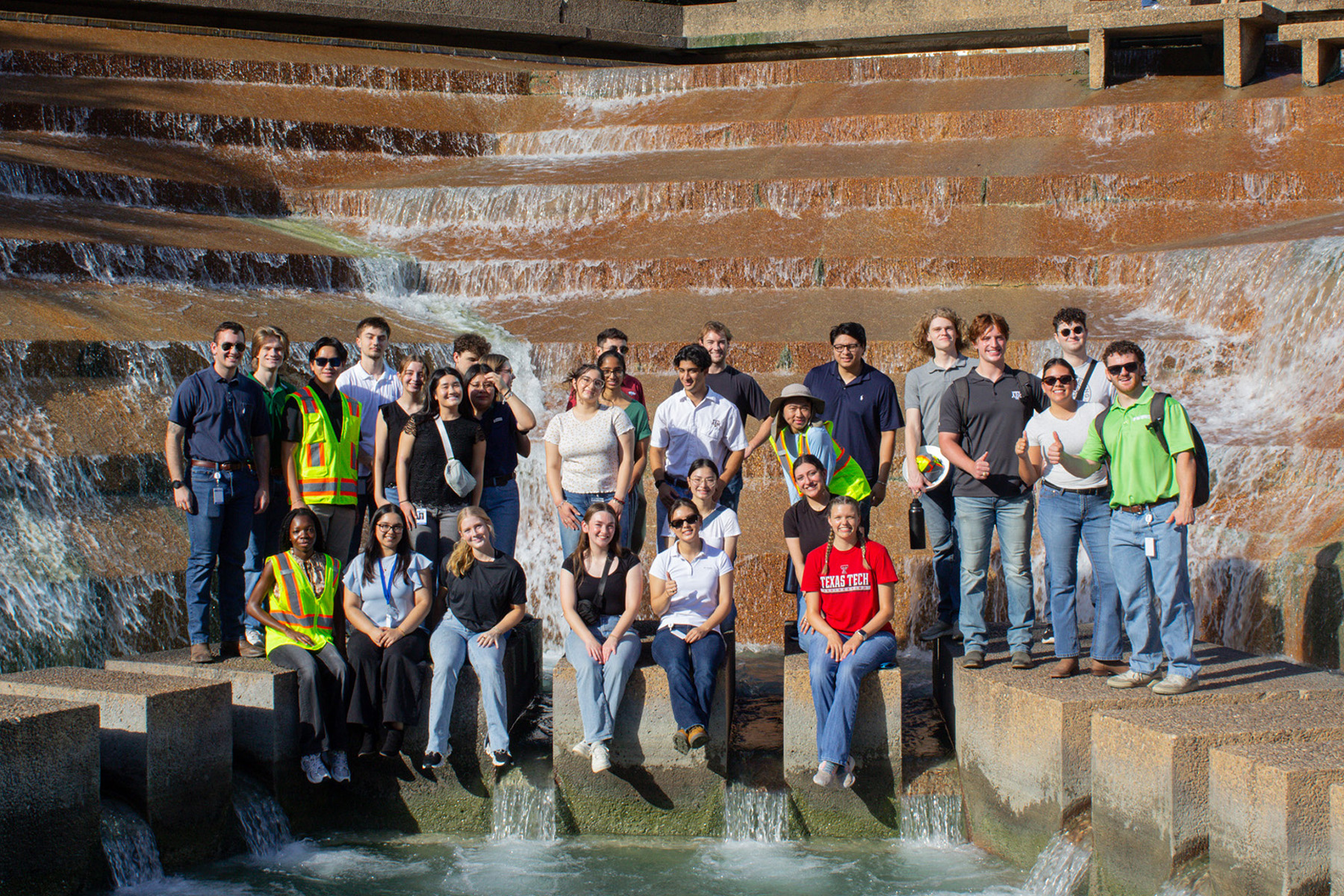
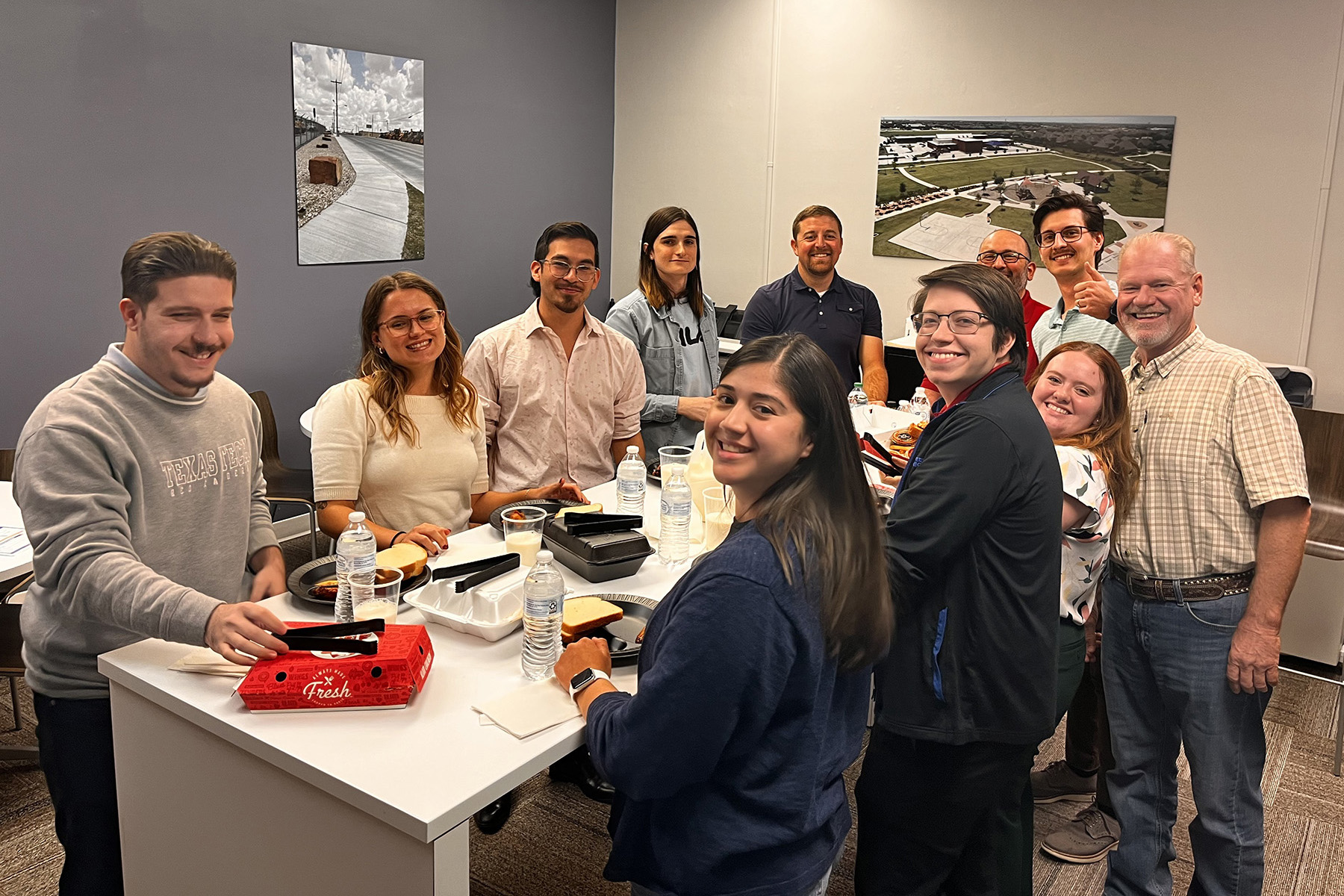
Relationship building: Immersing interns in our company’s mission, vision, and values includes networking opportunities with leaders as well as young professionals and arranging social activities such as a waffle buffet, community service food drive, or sports-focused outing.
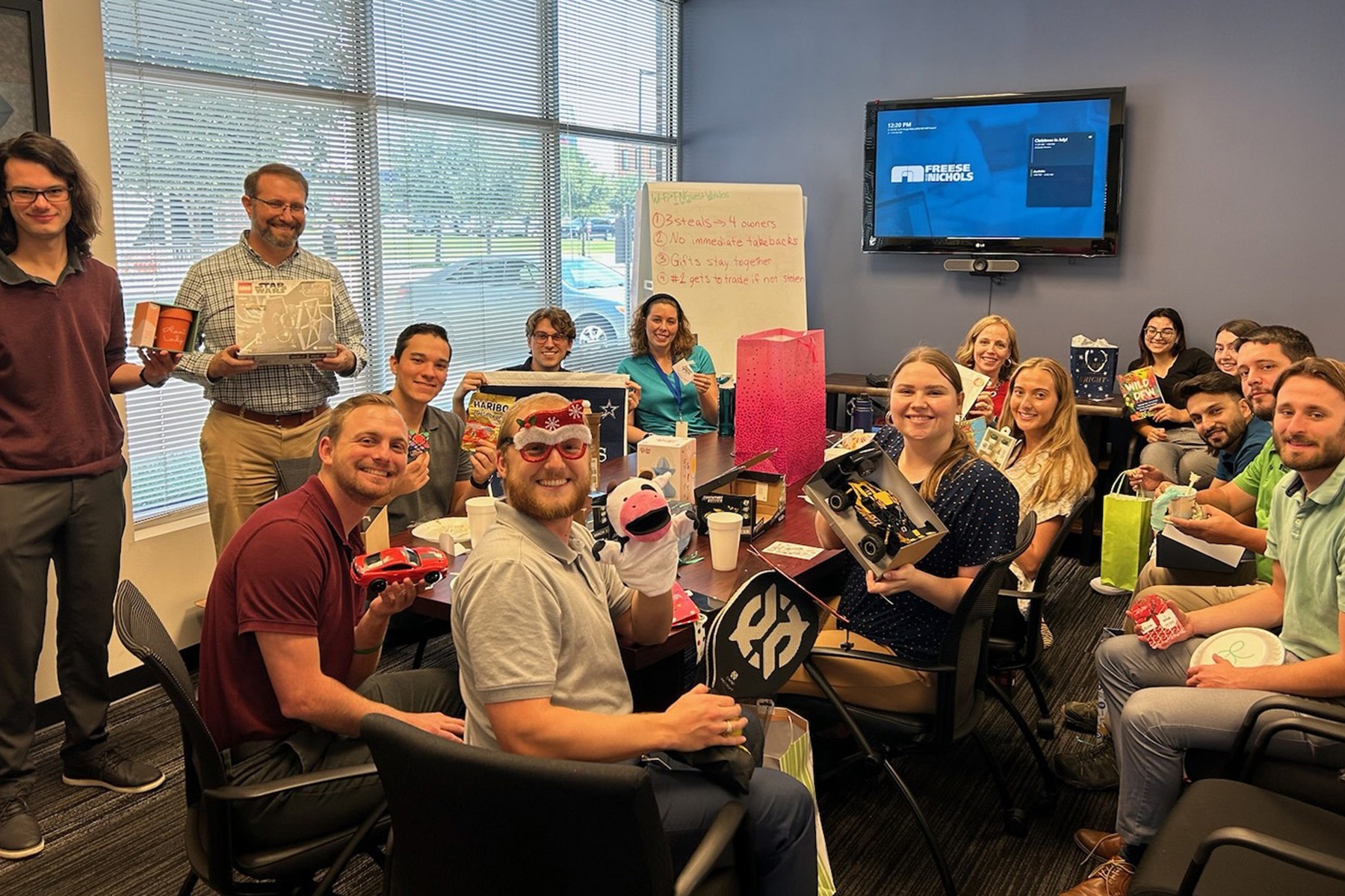
Company-wide efforts: Several of Freese and Nichols’ technical groups host signature events for their interns. One of the transportation teams has developed presentations on topics as detailed as Bluebeam software tips and tricks, franchise utility coordination, and traffic signal design. Our Urban Planning + Design group adopted a “summer camp” theme with badges like “Complete your final presentation to the group.” And on National Intern Day, the last Thursday of each July, the firm holds a company-wide College Shirt Day that’s accompanied by intern celebrations. In the friendly competitive spirit that comes naturally to engineers, interns join employees to show off their gear from their alma maters.
From intern to employee
Although every intern’s experience is different, the goal of our program is to spot and train talented students and recruit them to our firm. What they learn puts them closer to the level of engineer-in-training when they start their career, something that’s especially true for interns who complete multiple internships.
Students who make a positive impression with their work and connect well with their group are likely to be invited back for another summer or during a school semester. A repeat intern might also have the opportunity to try a different office or learn about another technical specialty. The more times students return, the more skills they will bring to their first job — and the more they will know about their strengths and areas that need improvement.
Internships can give students real-world experience they aren’t meant to gain in the classroom. But an internship is not just about working on unique projects, networking, or skill building. Interns should also search for a good fit with their skill set and company culture. We want them to feel that they belong here.
The following are perspectives from two former interns who found that fit and are now full-time employees.
While working toward a degree in mechanical engineering at the University of Tennessee at Martin, Abby Kubin interned at the Dallas office, first in the water/wastewater transmission and utilities group, then in water/wastewater master planning the following year.
Those experiences led to a full-time position in 2025 in our office in Frisco, Texas. Kubin said she felt the internships put her ahead for entering the workforce. Much of that preparation came through having meaningful assignments and interacting with colleagues who were eager to help.
She also felt embraced as part of a welcoming group, both during work hours and at team events outside the office.
“I really enjoyed coming to work every single day,” she said of her internships. “I enjoyed the opportunity to learn more about the company, about the projects, about the design process, and how I can contribute. I definitely learned where I excel and the places I need improvement.”
As a transmission and utilities intern, Kubin handled preliminary design calculations, helped evaluate pipeline routing options for a ground storage tank, and developed route suggestions for an underground electrical line through terrain with multiple obstacles.
Coming in with no background in geographic information systems, she learned it during her internships. Now that she’s working as a transmission and utilities engineer, designing pipelines, pump stations, and other water infrastructure, that exposure to GIS helps with cross-group collaboration.
“I feel like I have an appreciation for what the master planning group does and what (is needed) from us,” she said.
Another of our repeat interns is David Cherry, who was attending Texas Tech University when he interned in our San Antonio office and then in Lubbock, Texas. He gained experience in different areas: water/wastewater master planning, transmission and utilities, transportation, and stormwater.
Two summers and three semesters of interning, including while he finished his civil engineering degree, led to a full-time job as a transportation engineer in our Pearland, Texas, office. He’s also part of a new pilot program fast-tracking leadership training for new graduates.
“Going into your first internship, you have no idea what to expect,” Cherry said. “I had learning opportunities and opportunities to develop myself.”
For instance, he saw how various engineering disciplines connect on a project. That understanding put him in a strong position later when he was assigned to create drainage maps for transportation work. “I not only knew what to do, but I knew how it would impact the project,” Cherry said.
Meanwhile, the internship allowed him to discover “what I’m good at and not good at.” He developed more confidence presenting in front of a group, which led him to become a team leader on his college capstone project. “Going through my internship helped me learn how important it is to be able to communicate with a team.”
Cherry said that he initially wasn’t expecting the welcoming atmosphere he encountered, but it was a game-changer for him. “People care not only about the work that they do but also (about) the people they’re working with,” he said.
Internships benefit everyone
Even one summerlong experience can give an intern a leg up in their post-graduate job search. And those who return for more than one summer can shorten the learning curve when they arrive at their first full-time position.
An internship is also a good time to find out what areas aren’t appealing. With real-world experience, students can learn what specialty they may want to focus on and more quickly find a job that well suits their passions. There’s so much knowledge that only comes with hands-on experience. College teaches the “why,” but the real world provides a different level of exposure and understanding.
In companies with internship programs, there are valuable learning experiences for the employees, too. Managers may assign younger engineers to oversee intern work, providing managerial experience early in their careers.
What’s more, firms should consider including internship programs, big or small, in their strategic plans to cement learning opportunities for future practitioners. That is the case at Freese and Nichols, and it involves the entire company. And we’re willing to make the investment even though some of our interns will accept jobs elsewhere after graduation.
Krista Paredes, P.E., Assoc. DBIA, PACP, LACP, MACP, M.ASCE, a transmission and utilities team manager at our office in Raleigh, North Carolina, explained the value of investing in interns this way:
“Interns not only support ongoing projects but also bring fresh perspectives and up-to-date tech insights that enrich our workflows. The exchange of knowledge goes both ways, and whether they return to the same team or explore others, one of Freese and Nichols’ strengths is recognizing everyone’s contributions and helping talented young engineers find the right fit.”
James “JB” Ferguson, P.E., is a transportation group manager, and Jamie Hudson, P.E., is a transportation design engineer in Freese and Nichols’ Pearland, Texas, office.
This article first appeared in the March/April 2026 issue of Civil Engineering as “Securing the Talent Pipeline.”

