
By Claire L. Pedersen, Aleksandar Antonic, Farah M. Alqaraghuli, Riley E. Mayes, and Jekan Thangavelautham, Ph.D.
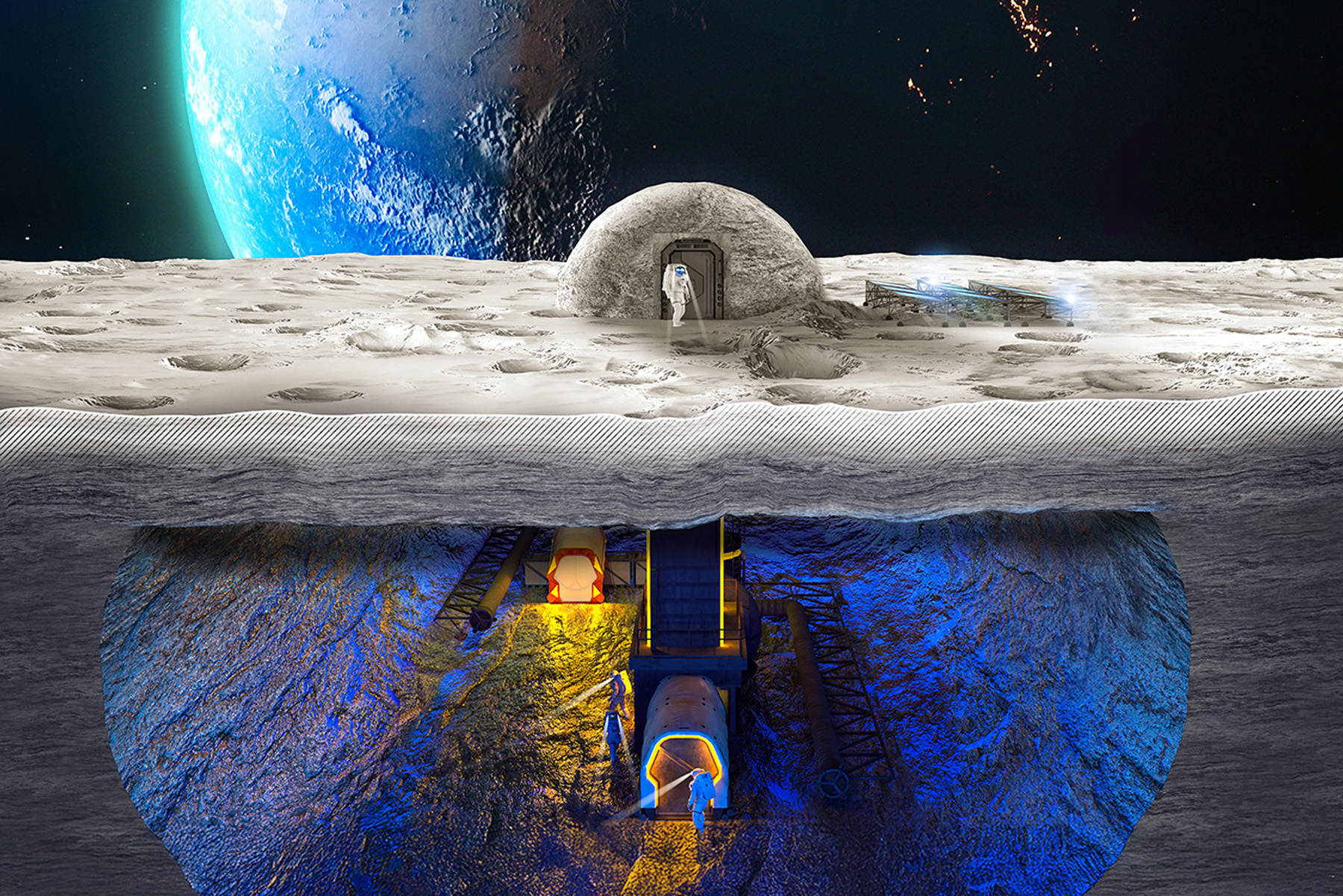
Lava tubes, created by asteroid strikes on the moon, are ideal places to build safe, efficient, and habitable infrastructure.
The idea of establishing a permanent lunar base has become a focal point of extensive research and interest among scientists and space agencies around the globe, with the interest centering around not only location selection but also resource utilization and sustainability. Numerous ongoing projects aim to develop large-scale crewed lunar bases to support settlement efforts, such as the Lunar Consumables Storage and Distribution Depot by researchers at NASA’s Kennedy Space Center.
Additionally, there is a growing interest in lunar astronaut refuges, such as the Lunar Safe Haven proposed by researchers at Langley Research Center and Marshall Space Flight Center. These structures will play a pivotal role in ensuring the safety and coordination of future lunar missions.
In recent years, space agencies in the United States, Europe, and China have studied lunar lava tubes as an option for a permanent lunar base. Lunar lava tubes are primordial structures on the moon that vary in size, shape, and composition. They are believed to originate from asteroid impacts in the early years of the formation of the moon. These impacts resulted in large-scale volcanic activity and vast flows of lava lakes.
Lava tubes have ceilings that are 100 m or more thick and are made of solid volcanic rock. Each tube is 80 m to 100 m in diameter, and some extend hundreds of kilometers and lead to chambers that are estimated to be large enough to enclose Manhattan-sized cities. Thanks to the thickness of the walls, they are likely ideal shields against radiation, and they have weathered intense natural events, such as the Carrington Event, which was a massive solar storm that occurred in the 1850s.
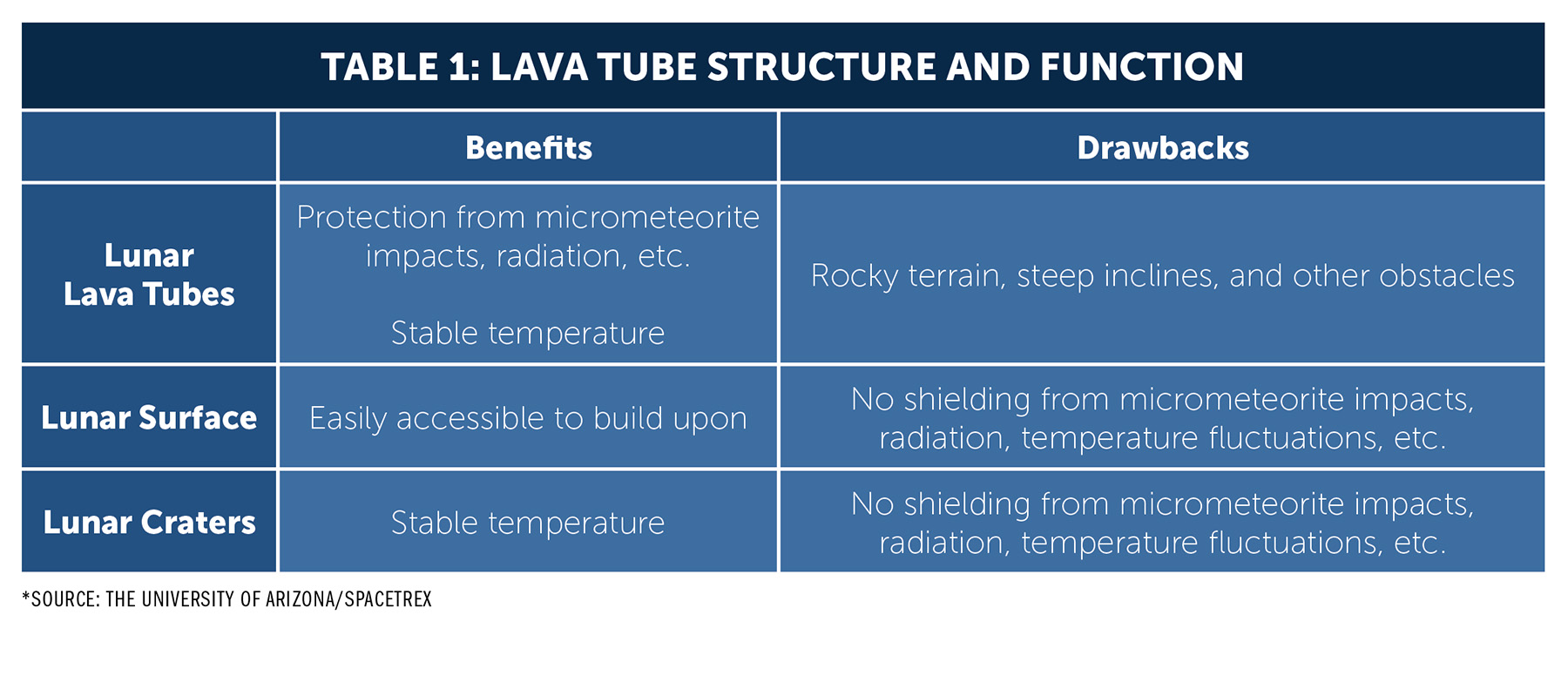
Additionally, the tubes can act as protection from micrometeors, some of which can travel at speeds exceeding 3-5 km/s. Their near-constant temperature and shielding from micrometeorites, radiation, and other threats make them prime locations to house shelters, refuges, and other infrastructure, saving time, money, and energy versus new construction of appropriately hardened and safe structures (Table 1).
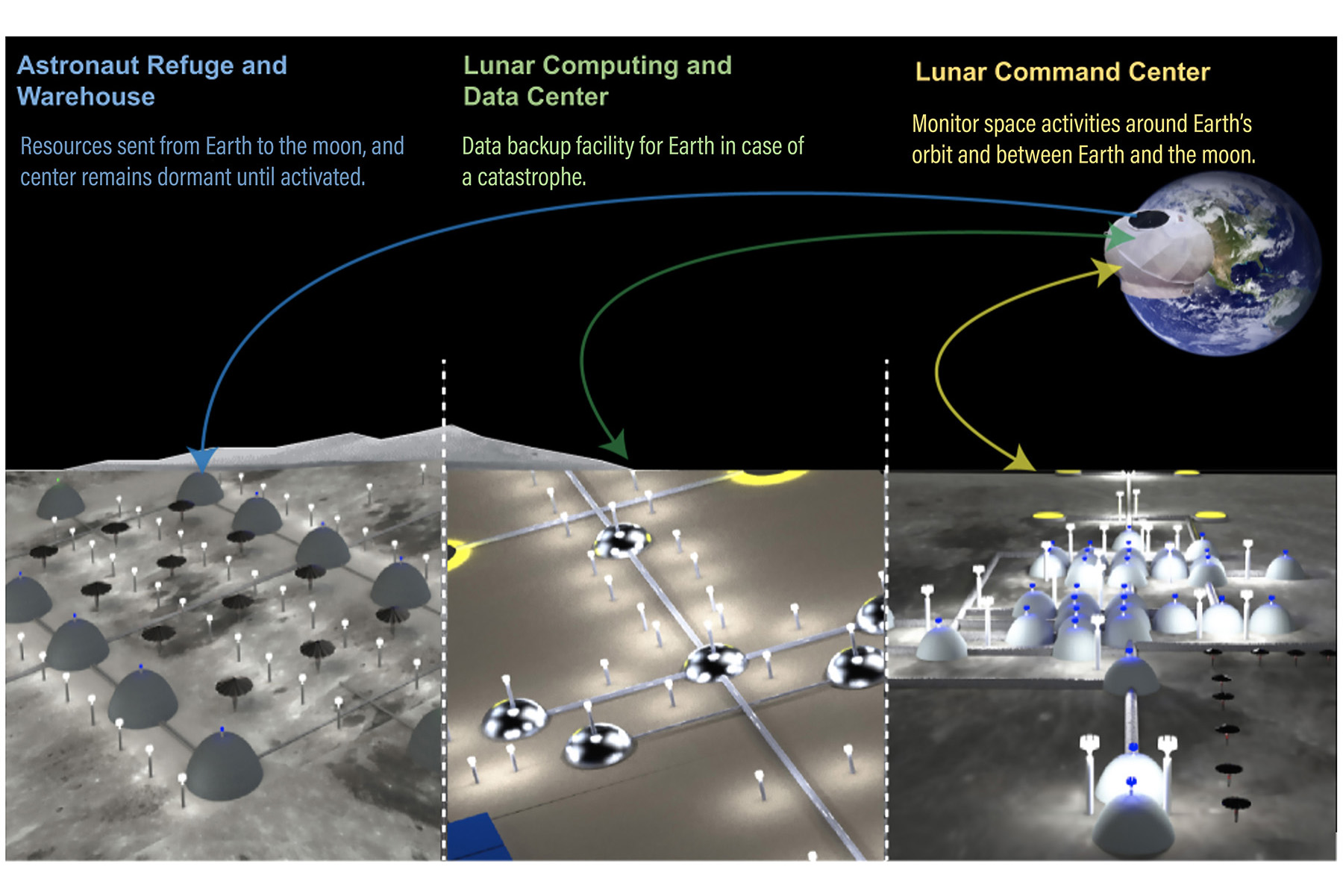
The Space and Terrestrial Robotic Exploration Laboratory, or SpaceTREx, at the University of Arizona is a multidisciplinary, primarily government-funded facility dedicated to research that could lead to transformative solutions for space exploration, space development, and space security. Researchers there designed three lava tube structural concepts: a lunar computing and data center, an astronaut refuge and warehouse, and a lunar command center.
Structure and function
Lunar lava tubes are structurally sound up to a depth of 5 km, depending on the thickness of the roof. As stated above, the lava tubes can protect from radiation and insulate from extreme temperatures. On the surface of the moon, the radiation dose is approximately 100-400 millisievert/year. However, in lunar lava tubes, this number drops to approximately 1-20 millisievert/year.
On Earth, humans are exposed to a 1-15 millisievert/year dose and are not known to do well at higher exposures. But humans can withstand up to 20 millisievert/year on the moon by remaining in a facility that has a relatively constant temperature of -25 °C (-13 °F), making human habitation possible within the tubes. Entrance pits surrounding the openings to the lava tubes and extending for some distance into them can get up to 17 °C (roughly 63 °F), depending on their structure and location.

Some potentially usable lava tubes and pits are located in the lunar Marius Hills; these reside in the lunar Oceanus Procellarum, which is on the near side of the moon, approximately where Apollo 12 landed in 1969. The hills comprise an area of 35,000 sq km and possess lava tube lines that are approximately 5 km wide and up to 50 km in length. The Marius Hills also provide plains in which lunar architecture can capitalize on both surface and subsurface structures.
Landing pads will be key for lunar exploration, and the area described possesses a high concentration of valleys (rilles), craters, and plateaus, which are positive attributes for launch and landing pads because they provide natural shielding in case of an accident or event that scatters debris. These geological features vary in height, width, and length. Lunar mare pits will serve as access points for the lava tubes, and although these pits vary from 5 m to 900 m in width, SpaceTREx researchers assumed them to have an 80 m diameter for their designs, as this is the average size for pits in this area.
Lunar requirements
The insulation provided by the tubes would allow for relatively easy temperature regulation and monitoring. The tubes would also be protected from the lunar materials and energy blasted outward by rocket landings. However, there are issues to be considered when placing architecture beneath the surface. First, the base must be accessible, meaning there must be structures that can raise and lower people and resources to and from the base. Additionally, solar panels and radio systems must be able to connect from the surface to the subsurface infrastructure. Also, reliable lighting systems will be needed.
Another issue is ventilation. Air circulation within the base would remain largely the same above and below ground, so large gas tanks would be required to provide oxygen to the astronauts. Vents can be used to bring oxygen in, and lithium hydroxide filters would be used to filter out carbon dioxide. Ventilation can be managed using large air tanks connected to fans that introduce air to the base, airlocked from the outside.
Finally, routing would be complicated because structures with above- and below-ground components would require pipes and wires running through the entrance pits to connect the surface to the subsurface infrastructure. Pipe and wire infrastructure for fluid and power distribution would need to be laid on the surface, and this could be managed using horizontal routes. However, when an underground section of the base is built, the pipes need to be vertical, which makes gravity a factor in wiring and piping construction as well as transportation.
Hypothetical structures to accommodate this infrastructure would be produced in the same manner throughout the base, but some construction would need to occur within the tubes. For the purposes of research, the SpaceTREx team assumed tube heights of 100 m.
Lunar computing and data center
The lunar computing and data center, or LCDC, will primarily be a data backup facility for Earth, should its data be in jeopardy. The facility will be accessible to clients on Earth and the moon via 1 TB/s laser data links. Each link consists of a 600 MB/s transmitter/receiver similar to the one demonstrated on the Lunar Atmosphere and Dust Environment Explorer mission. The data center will contain approximately 10.6 million computer cores.
The LCDC will have the capacity to support 550,000 clients, each with a 2 MB/s connection. In total, the facility will hold 1.7 exabytes of data, which is estimated to be 1% of the total data generated by human civilization in the year 2022.
What’s more, the facility will have enough capacity to electronically store the DNA of more than 6.7 million species of plants, animals, and fungi, estimated at 27 petabytes. Additionally, it will have the capacity to digitally capture culturally important artifacts, such as the Library of Congress’ 74 terabytes of electronically accessible content.
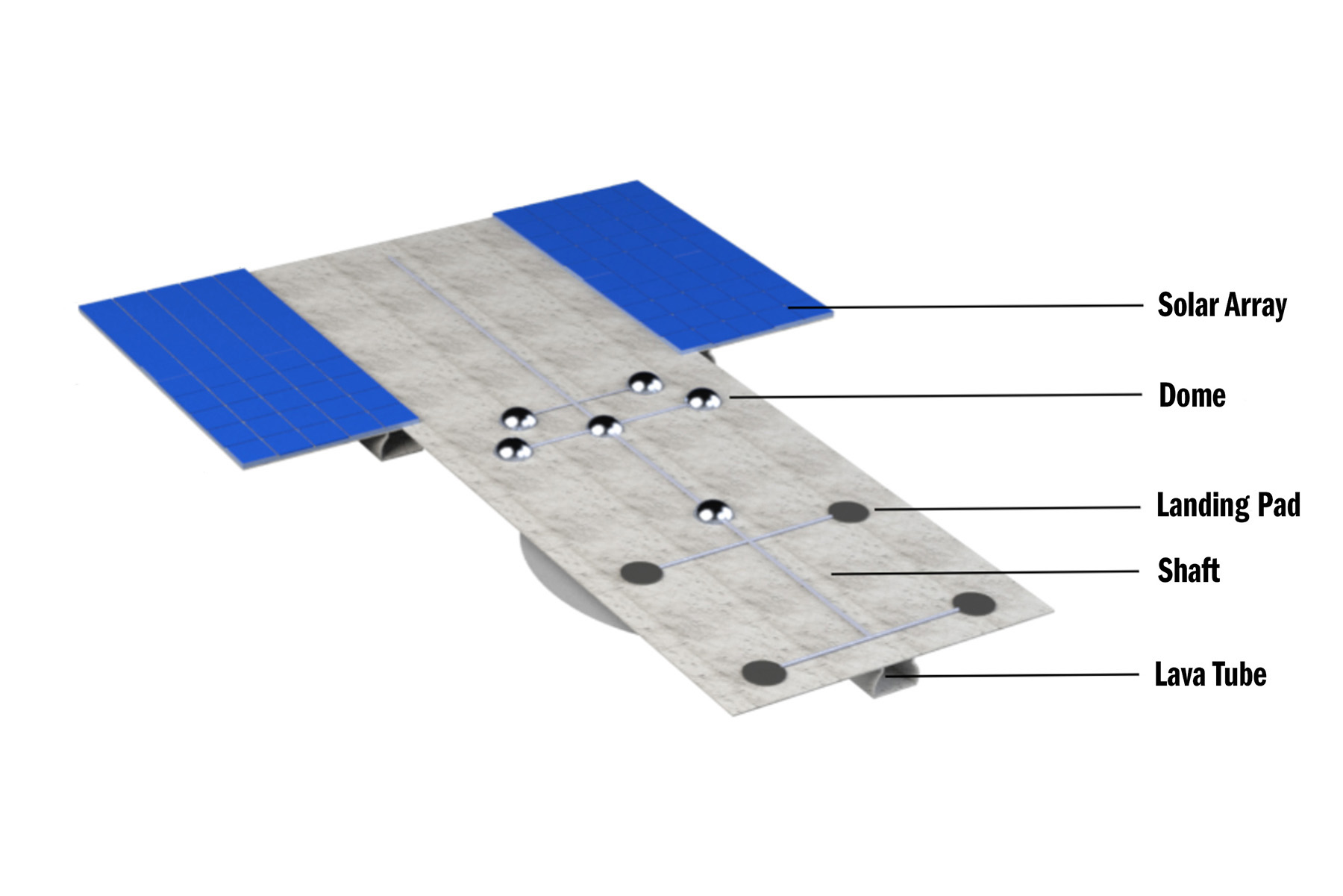
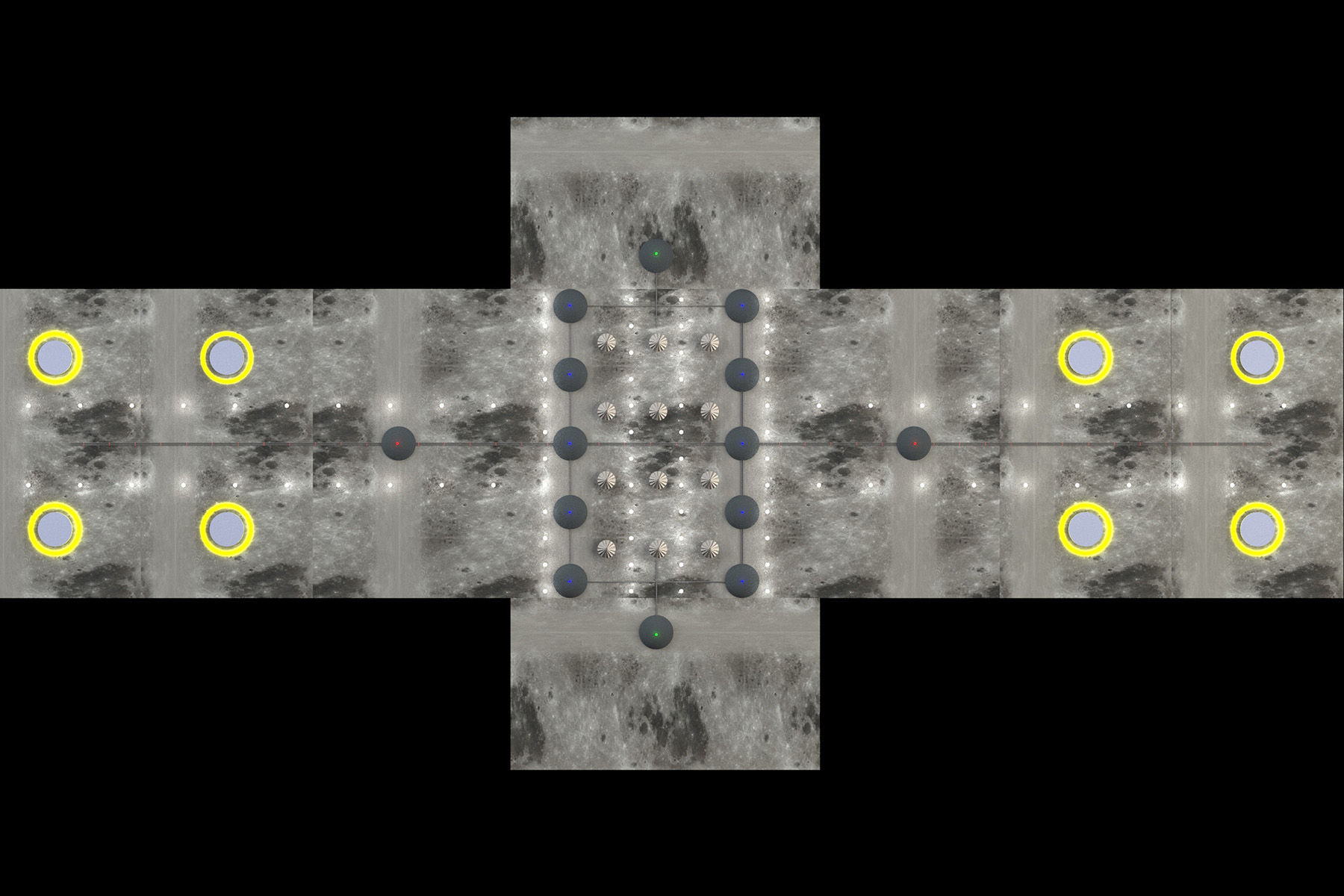
The LCDC facility consists of six 100 m diameter domes designed to house power generator electronics connected to solar panels, a pair of laser communication centers, a pair of shafts to access the lava tube-based server compartments, and four 100 m diameter landing pads to be used for upgrades, repair, and replacement of major facility components.
All functions will be operated using a system of autonomous robots, which will reduce the resources required to maintain and service the facility. Using modern robotics and sophisticated machine learning, the data center will be able to collect, process, store, and distribute data for an initial lifespan of 50 years.
The facility is also designed to be extensible; modules can be continuously added, replaced, or upgraded. This is achieved via a system similar to railcars, in which damaged or broken server segments can be pulled out and either fixed or replaced, pushing the lifespan of the facility beyond 50 years.
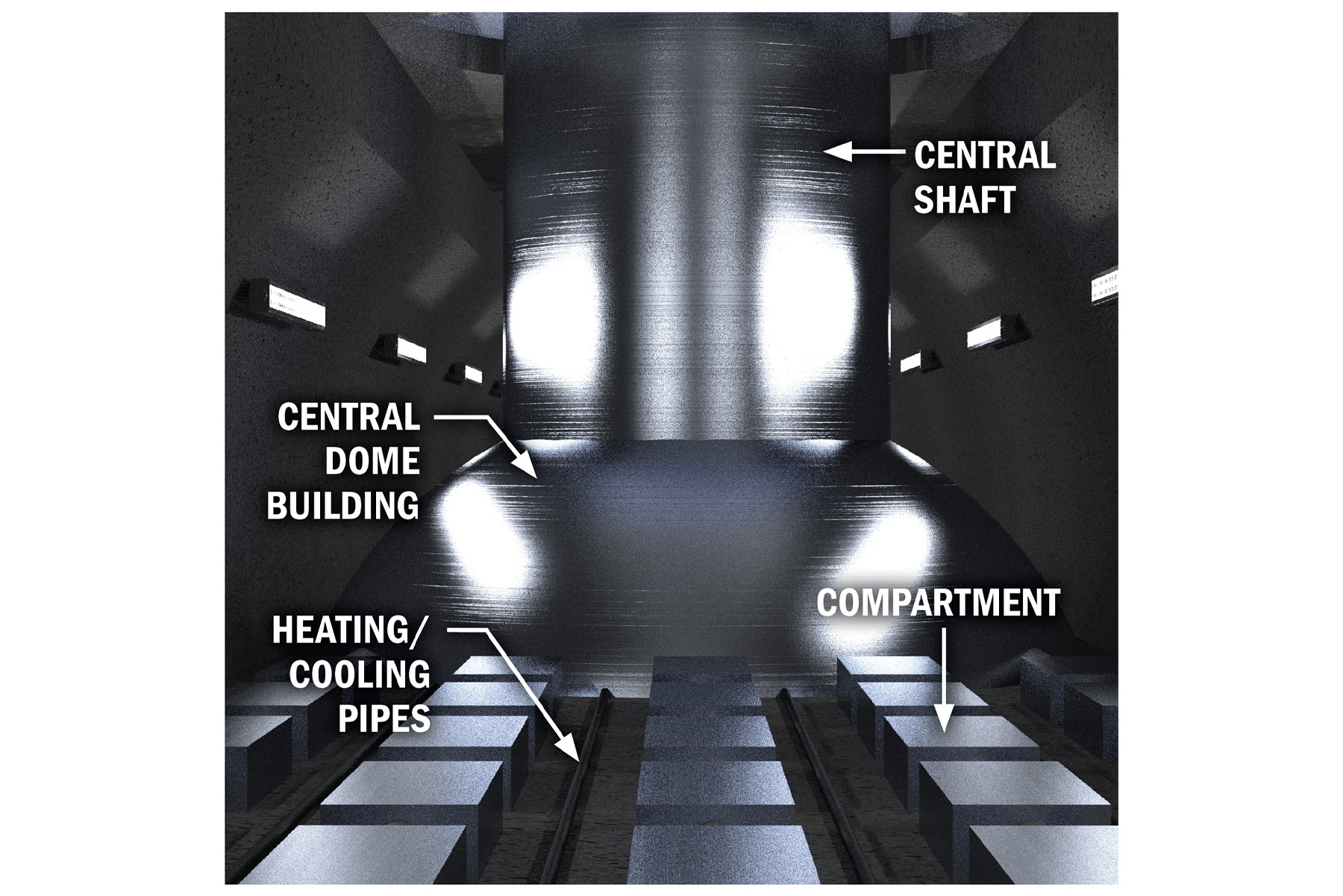
The core of the facility, which is below the surface, consists of container units that will be referred to as compartments. These compartments are arranged in five columns with heating/cooling piping between each column. In each compartment, there are four rows of 42-unit server racks. Each unit server measures 1.89 m by 1.11 m by 0.48 m. A pair of server units are stacked, forming the four rows that extend through each compartment. Each unit server is estimated to consume 480 watts. The server racks are estimated to consume 20.2 kilowatts. In total, there are 24 compartments providing a single line of redundancy. The entire system is estimated to consume 81.3 megawatts.
Astronaut refuge and warehouse
With the NASA-led Artemis missions that are planned in the coming decades to return humans to the moon, it is paramount to have astronaut refuges and warehouses, or ARWs, where they can seek safety in case of a catastrophe. This complex would act primarily as an emergency storage and shelter facility that astronauts can use until help arrives from Earth.
The contents of an ARW would include three months’ worth of supplies: preserved food, water, oxygen, and necessary replenishing systems. The structure would be located near, but not attached to, existing Artemis structures on the surface. This would ensure that the astronauts would have easy access to the facility and not have to access Artemis structures, which might be susceptible to damage.
The ARW will have its own power generation systems that will lie dormant until needed. One assumption that is made throughout the analysis of the ARW is that the astronauts accessing the facility will arrive with many of the technologies needed for survival. This includes their spacesuits, carbon dioxide scrubbers, and any necessary communication technologies. For this reason, these items would not be contained within the ARW.
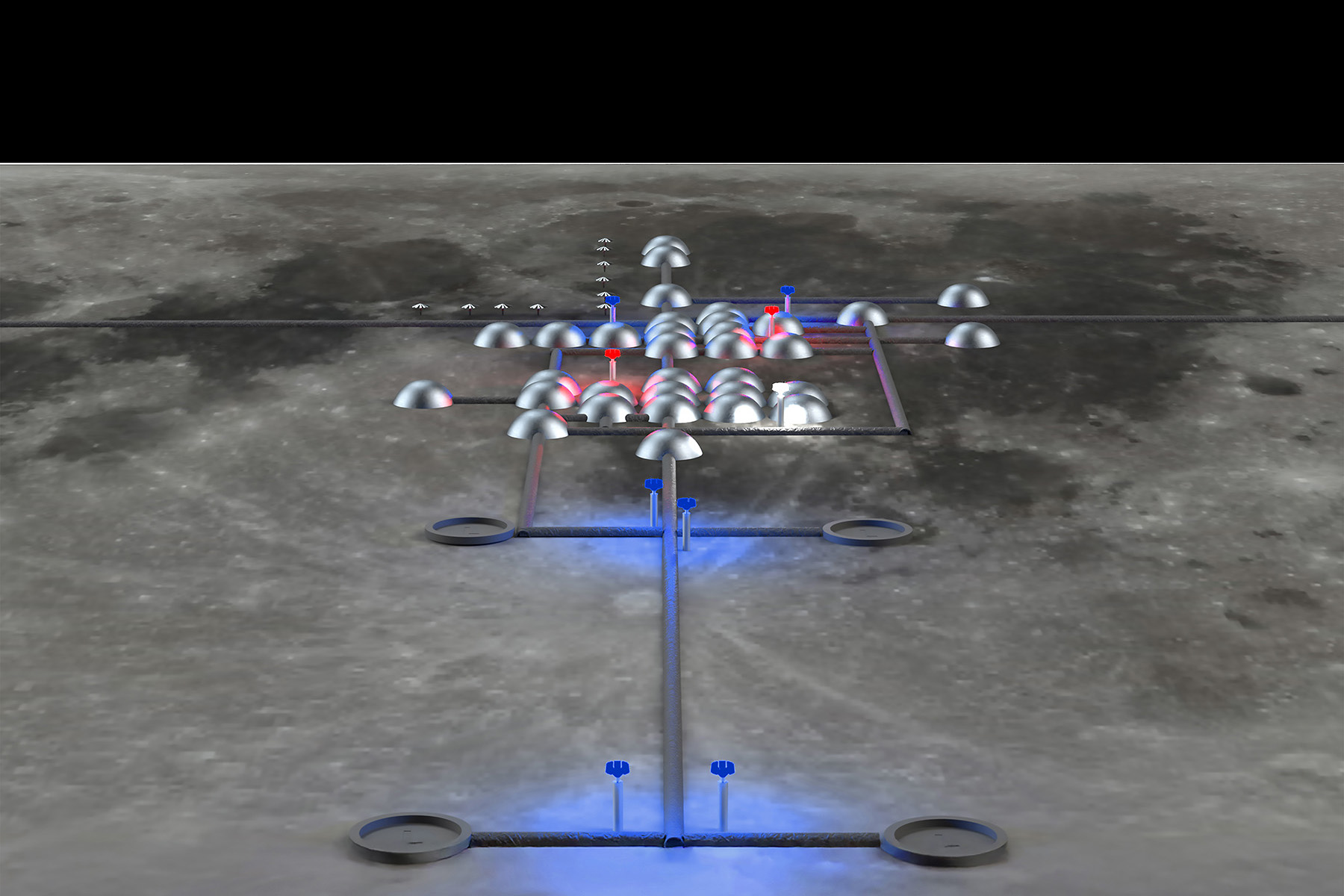
The proposed ARW facility consists of three primary sectors: above ground, below ground, and connecting shafts between the surface and base of the lava tube. Above ground, there are four entrances to the connecting shaft in a line following the lava tube. The two central shafts are located near the above-ground facilities. These will house logistics, communications, and maintenance service hubs.
The logistics centers receive the goods sent to the moon, prepare them for storage within the warehouse, and prepare supplies to be sent from the moon back to Earth. The communication centers are the hub for contact to and from Earth, and the maintenance services area will contain the technologies necessary to repair damaged structures or devices.
Also, above ground will be a solar or nuclear energy farm that will produce the power necessary to keep the ARW operational. Each power farm will connect to its own power generation building, located just beside the farms themselves. Lastly, above ground there are eight launch and landing pads, with connecting cylindrical tubes for transport between buildings.
The ratio of subsurface to surface infrastructure is kept at 3:20 (15%) to manage costs. Located below ground are four central hubs that connect to the shafts as access to the surface, similar to that displayed in the LCDC in the figure on page 60. These are the locations where any goods recently processed via the logistics centers will arrive once inside the lava tube. From there, the goods will be kept in one of 200 storage compartments branching from the central hub. These compartments make up approximately 80% of the mass of the facility.
Each facility within the ARW has a minimum triple redundancy in its function. Intermediary shafts provide elevator and stairway access between the surface and the lava tube. The layout of the ARW is segmented so that if something should happen to one component, the other components will not be affected. Assuming the maintenance and well-being of the facility, it will be built to last approximately 50 years.
Lunar command center
The current exponential increase in space traffic from several countries, especially the U.S. and China, will require a secure control center that can be used to monitor space activities around Earth’s orbit and between Earth and the moon. While a control center on Earth is feasible, there needs to be a backup control center on the moon.
Although the systems developed on Earth are advanced and can track large areas, they are also susceptible to damage or destruction from natural or human-made disasters as well as cybersecurity issues. A lunar command center, or LCC, could monitor space traffic from the moon using preexisting structures such as satellites. Defensive architecture for such monitoring can be created using lava tubes. Similar architecture exists in the U.S. in the Cheyenne Mountain Complex in Colorado, where the North American Aerospace Defense Command headquarters is located.
Being underground adds a natural layer of protection from aerial threats to the LCC. Splitting the architecture into above- and below-ground sections provides a division of labor and efficiency. Nearly 3% of the structure would be below ground and serve as a refuge in case of any threats to the surface facilities. The primary requirements of the LCC are living quarters, a communications center with a radio antenna, storage for materials and robots, and data centers with electronics and computers.
Power generation and transport systems will also be created for the construction and functioning of the LCC. There are several primary components, including areas for human needs, energy generation, transportation, and launching/landing pads.
It is proposed that living quarters and data centers be placed underground, as this is the area with the most protection. It also holds the lowest temperature, as the roof of the tube acts as insulation for the interior, keeping temperatures at approximately -25 °C.
Facilities comparison
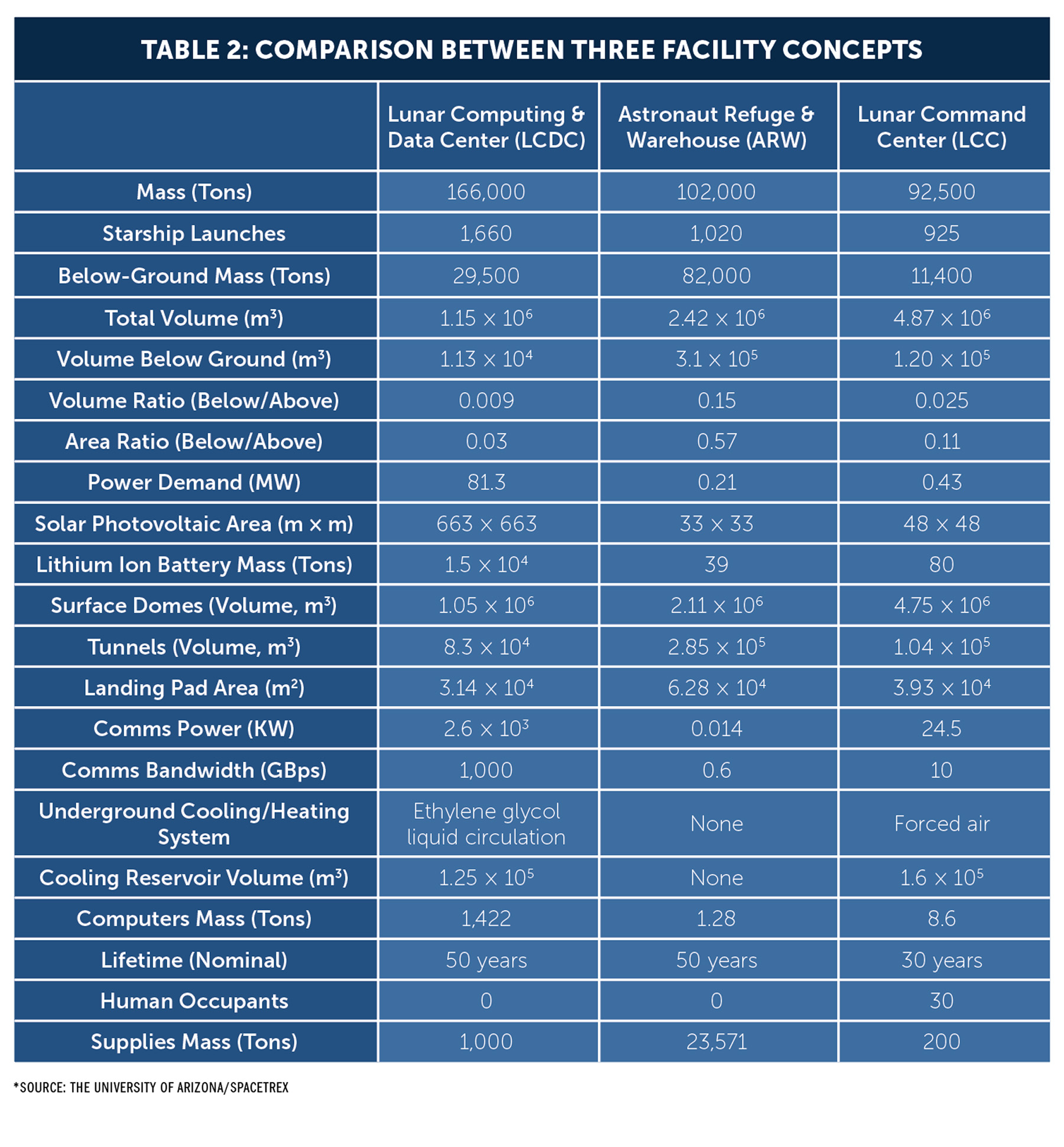
The estimated conditions of each type of facility are displayed in Table 2. The main construction architecture consists of domes, rectangular compartments, and cylindrical tubes for work, storage, transport, and energy purposes. The main building material chosen was aluminum with a density of 2,700 kg/cu m.
As seen in Table 2, these facilities vary substantially in terms of complexity, and each facility is designed to require roughly 900 to 1,600 launches of the SpaceX Starship lander, which is a new class of space vehicle with a payload capacity of 100 tons.
The ARW relies on much of the emergency storage material being stored underground, while the LCDC has its core underground, namely, the data center hardware. The LCC has the lowest subsurface footprint, with sleeping quarters and shelters located in the lava tubes.
For the LCC, it was logical that much of the living and working spaces have a surface presence. However, there must be a backup facility underground ready to activate. The LCDC requires substantially more power — to the tune of 80+ megawatts — than the others. However, research shows that a solar photovoltaic farm can meet these power needs as long as batteries can supply power during the lunar night. Solar PV fields could be mounted on masts 50 m to 100 m tall. Even with these masts, this option would greatly simplify the construction and operation of lunar facilities.
The LCDC also has the highest communication requirements. For these reasons, the facility needs special provisions for cooling. The team proposes to use ethylene glycol-water as a coolant because it does not freeze above -45 °C and is well suited for using the heat sink provided by the lava tubes. Additionally, the LCDC will contain the largest number of operating computers.
The ARW is in many respects the simplest to manage. Very little power is required for maintaining the storage of the backup supplies. The LCC, while appearing smaller than the ARW in terms of mass, is substantially more complex because it must support a team of 30 human occupants. This will require facilities for working, sleeping, wellness, and living. Given the number of distinct facilities, extensive underground tunnels and access passageways are needed to safely transport people and supplies to the landing pads.
Bioanalysis of the facilities
Calculations for biological and life-sustaining needs were made for one man and one woman. Numbers can be scaled linearly based on crew size and gender (Table 3).
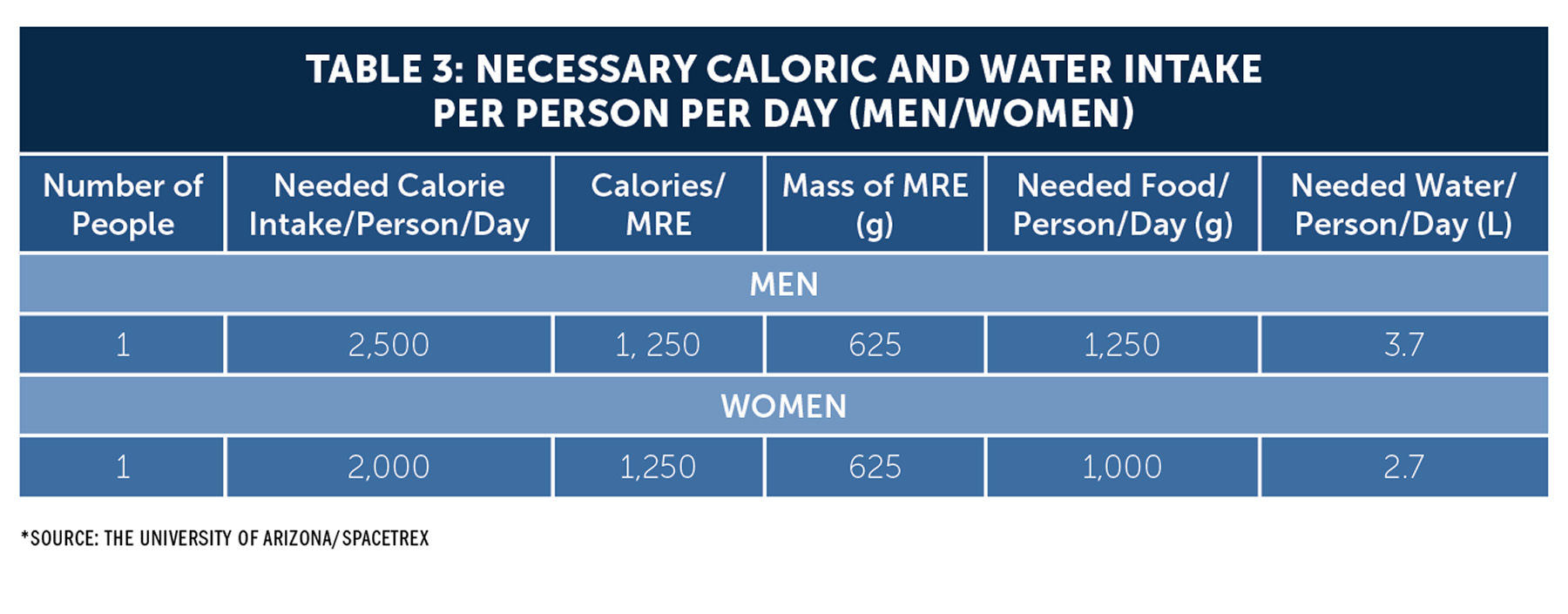
The ARW is only meant for short-term use, so nearly all the required materials will be brought with the crew. The LCC, on the other hand, is designed for a 30-year mission with a crew of 30 people. It will be stocked with all the necessary materials in addition to a three-month surplus of critical materials. The LCDC requires no bioanalysis.
Those residing in the LCC will be stocked with military-grade meals ready-to-eat, or MREs, with an average of 1,250 calories and a shelf life of more than seven years. Calculations can be made based on the standard recommended daily calorie intake (2,500 for men and 2,000 for women).
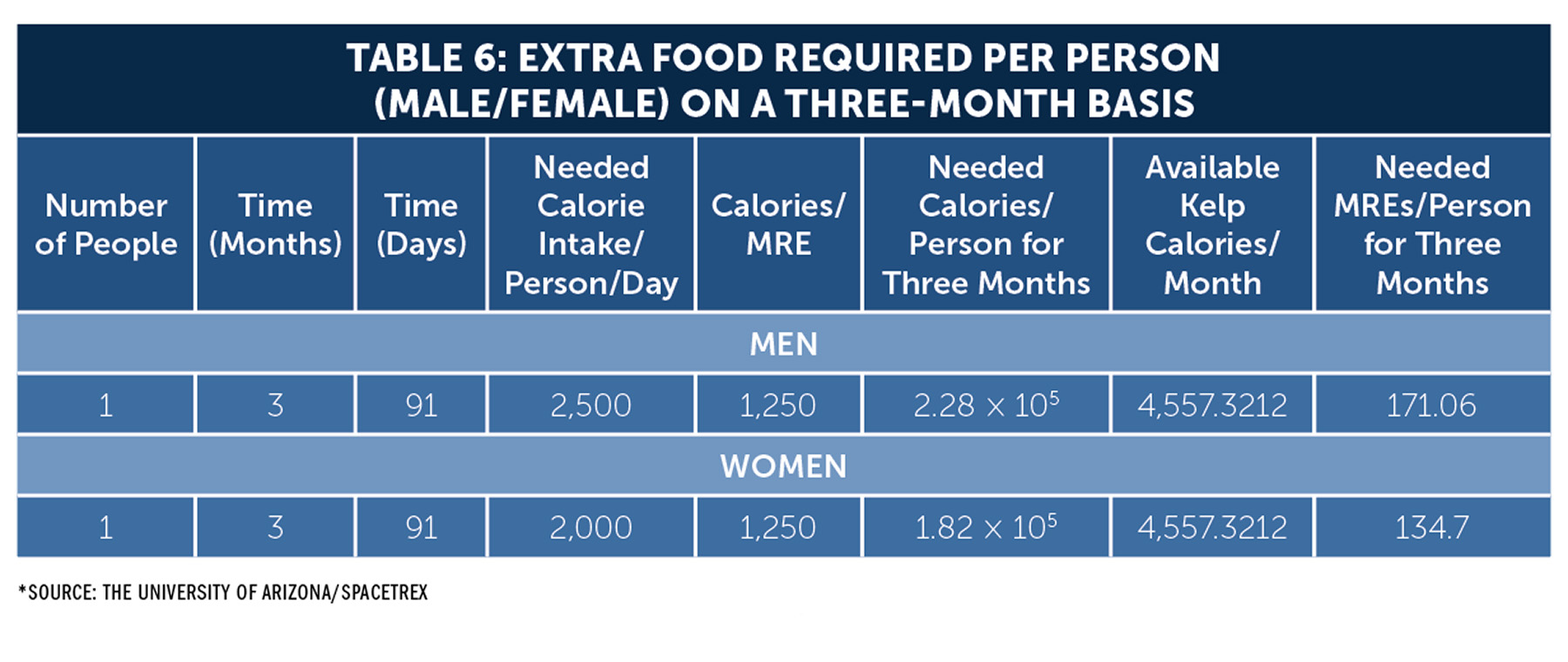
Calculating based on the recommended daily calorie intake suggests that 182 MREs per man and 145 MREs per woman would be necessary.
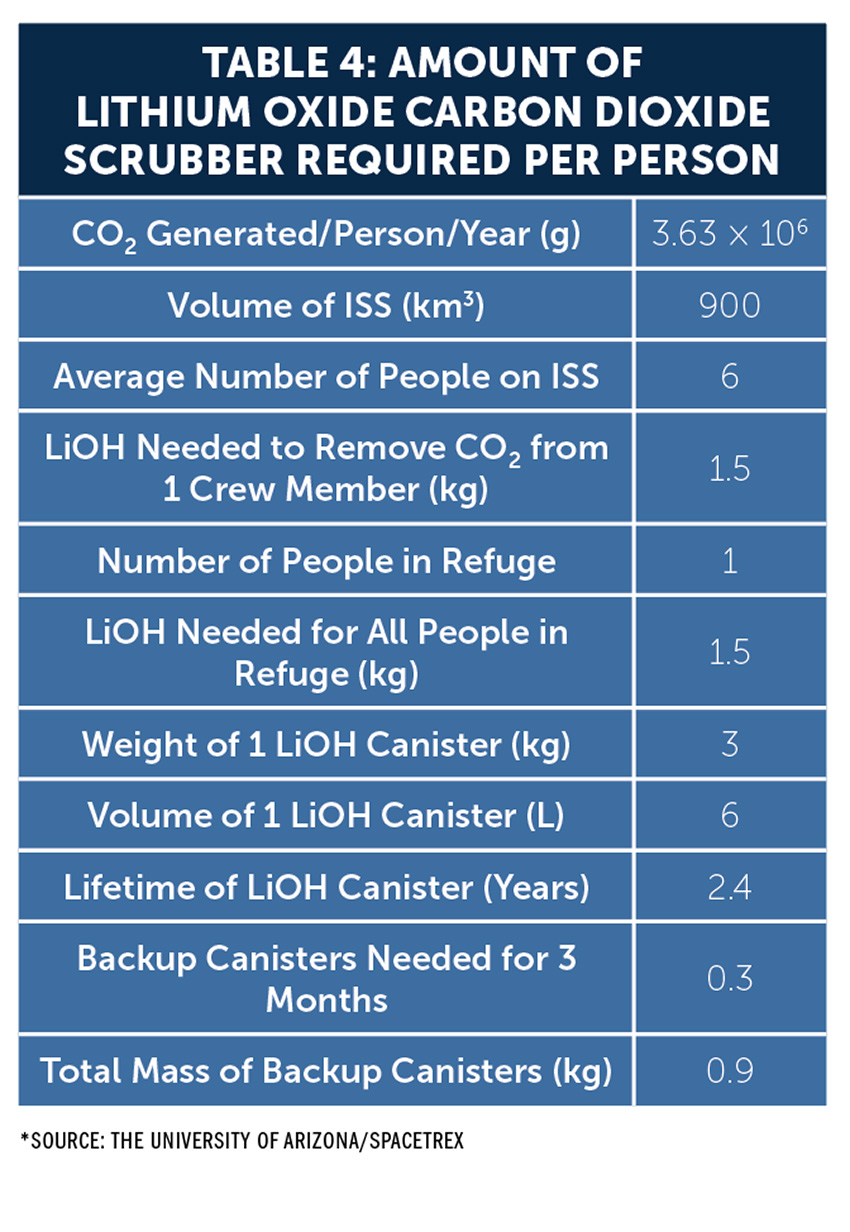
For carbon dioxide scrubbing in the ARW, lithium hydroxide will be used. This method is employed by the ISS and has previously been used on Mercury, Apollo, Gemini, Shuttle, and Soyuz missions.
A three-month backup of carbon dioxide scrubbing equipment is necessary and will be stored in the warehouse as shown in Table 4.
Help from kelp
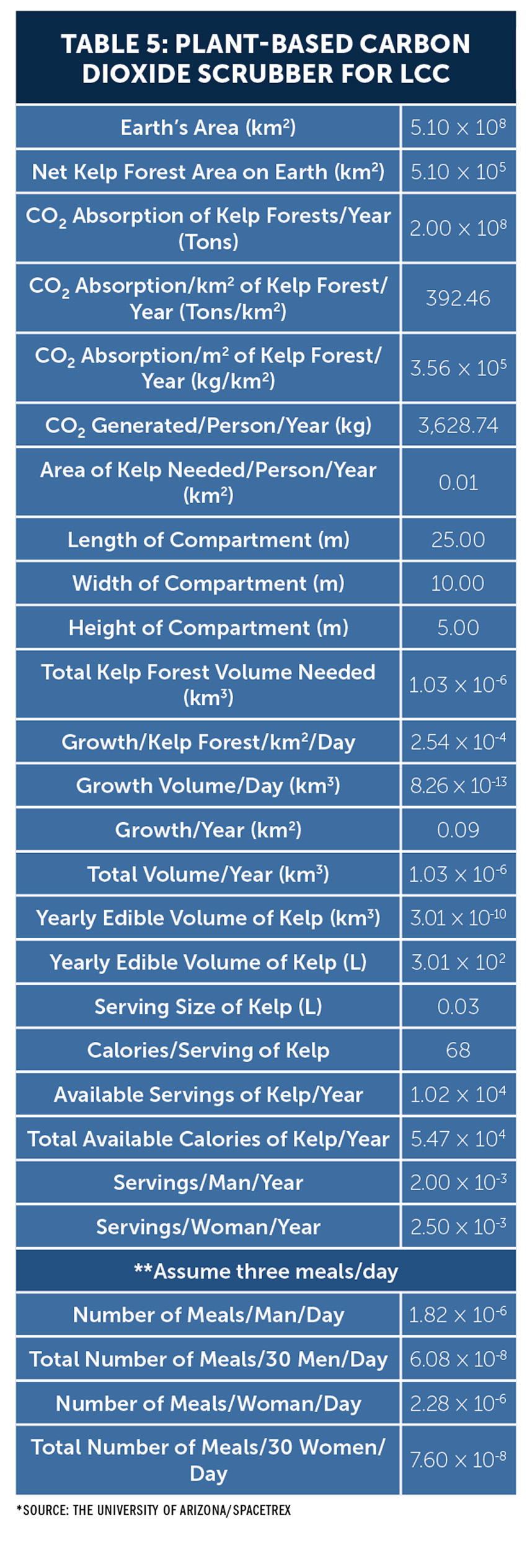
For the LCC, a plant-based carbon dioxide scrubber will be used. Kelp is a plant that is easily grown in a simple hydroponic system and produces high nutritional yields. Using kelp as a natural carbon dioxide scrubber allows for a consistent stream of backup food.
Kelp is a fast-growing, high-calorie plant that can be grown in a compartment measuring 25 m by 10 m by 5 m; the depth of the water will be 3.25 m, for a total water volume of 812.5 cu m. This leaves 437.5 cu m of air space, allowing for easy access to harvest and cultivate the kelp (Table 5).
A three-month surplus of food is needed in case of emergency. With the availability of nutrition from the excess kelp, fewer MREs need to be stored. However, the excess kelp does not completely fulfill the necessary amount of backup food. Table 6 shows the calculations for the necessary backup food.
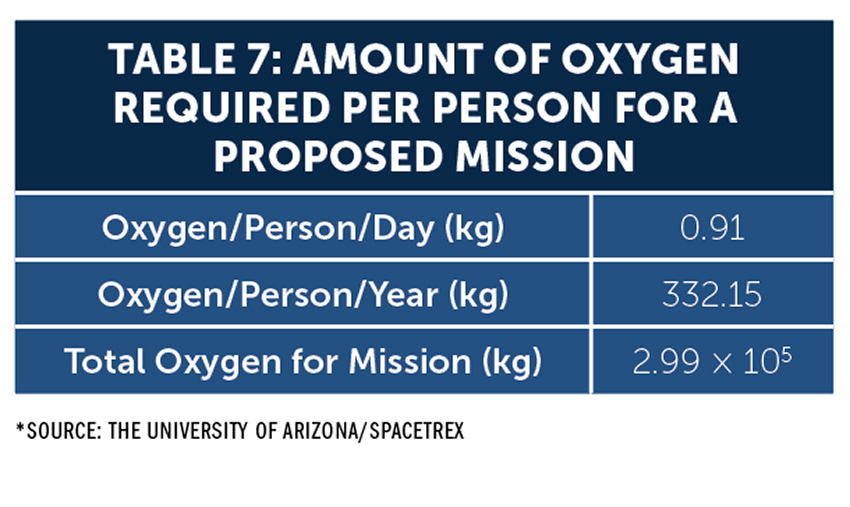
The LCC requires a three-month backup of oxygen. Calculations were done based on one person and can be scaled accordingly (Table 7).
Conclusion
The moon presents a wide variety of possibilities for architecture and construction. The lunar surface, however, continues to prove treacherous for human activity, as the lack of atmosphere and bombardment of sunlight are constant dangers.
Using lunar lava tubes as a building location for construction mitigates the threats on the moon. The tubes’ large size and sturdy nature provide natural insulation and protection from the sun, as well as a foundation for the proposed structures.
Nevertheless, these lunar facilities will require a substantial investment in launches just to get started. These capabilities are not achievable at present, but future launch advances will make these facilities a realistic possibility.
The bioanalysis shows that the requirements of humans living in such a system could be realistically met using kelp as a carbon dioxide scrubber and potential food source. Long-term periods of human survival would require supplementary materials and shipments.
The proposed structures demonstrate several applications for various tasks achievable within the lava tubes tubes as well as
how segmenting the structures between the surface and subsurface can provide added benefits for their construction.
The LCDC especially benefits from thermal insulation, as the natural heat sink helps provide cooling for the elevated temperatures that computers exert.
In addition, subsurface server storage provides additional space to host data and shield-sensitive technology from external damage, while energy generation, communications, and transport can still exist on the surface level of the tube.
The numerical analysis demonstrates that structures can be effectively built for the data center, astronaut refuge, and command center, with subsurface portions taking up 1%, 15%, and 3%, respectively. The ARW and LCC also offer substantial protection to human occupants.
This study opens the possibility for new conversations and analyses on the use of lunar lava tubes for various multifunctional architectures.
References
Blair, D. M. et al. (2016, October 8). The structural stability of lunar lava tubes. Icarus, 282, 47-55.
Greeley, R. (1971, December). Lava tubes and channels in the lunar Marius Hills. The Moon, 3, 289-314.
Hörz, F. (1985). Lava tubes: Potential shelters for habitats. Lunar Bases and Space Activities of the 21st Century. 405-412. https://articles.adsabs.harvard.edu//full/1985lbsa.conf..405H/0000407.000.html
Hurlimann, S. (2019, July 4). How kelp naturally combats global climate change. Science in the News.
James, J. T., & Macatangay, A. (2009). Carbon dioxide — our common “enemy.” NASA Technical Reports. https://ntrs.nasa.gov/api/citations/20090029352/downloads/20090029352.pdf
LROC — Lunar Reconnaissance Orbiter Camera (2010, March 1). https://lroc.im-ldi.com/images/202
Manning, C. G. (2023, July 25). Lunar Atmosphere and Dust Environment Explorer (LADEE) launched.
https://www.nasa.gov/technology/space-comms/lunar-atmosphere-and-dust-environment-explorer-ladee-launched/
Mueller, R. P., & Notardonato, W. (2004, April). Development of a lunar consumables storage and distribution depot. In 41st Space Congress 2004 (No. KSC-2004-053).
Naito, M. et al. (2020, September 22). Radiation dose and its protection in the Moon from galactic cosmic rays and solar energetic particles: at the lunar surface and in a lava tube. Journal of Radiological Protection, 40(4), 947-961. IOP Publishing, https://iopscience.iop.org/article/10.1088/1361-6498/abb120
NORAD — North American Aerospace Defense Command. (2013, April 26). Cheyenne Mountain Complex. https://www.norad.mil/Newsroom/Fact-Sheets/Article-View/Article/578775/cheyenne-mountain-complex/
Rao, R. (2022, July 28). The moon’s strange warm pits may be the most pleasant place for astronauts.
https://www.space.com/moon-exploration-lunar-pits-stably-temperate
Wagner, R. V., & Robinson, M. S. (2014, April 13). Distribution, formation mechanisms, and significance of lunar pits. Icarus, 237, 52-60.
Wong, I. M., Siochi, E. J., Grande, M. L., Moses, R. W., Waltz, W. J., Silbernagel, S. R., Hayward, E. G., & Barkhurst, M. E. (2022). Design analysis for lunar safe haven concepts. In AIAA SCITECH 2022 Forum, p. 1567.
Claire L. Pedersen served as the research technician III in the department of biosystems engineering for SpaceTREx at the University of Arizona from 2021 through 2024. She is currently a graduate research assistant at the University of Hawaiʻi at Mānoa.
Aleksandar Antonic was a researcher in the department of physics for SpaceTREx from 2022 to 2025 and is currently a master’s student in robotics, systems, and control at ETH Zürich.
Farah M. Alqaraghuli was a student in the department of chemical and environmental engineering for SpaceTREx, and she is now a research engineer.
Riley E. Mayes was a student researcher in the department of aerospace and mechanical engineering for SpaceTREx from 2023 to 2024. She is now a research intern at the Oak Ridge National Laboratory.
Jekan Thangavelautham, Ph.D., is an associate professor of electrical and computer engineering at the University of Arizona and leads the SpaceTREx program.
This article first appeared in the March/April 2026 issue of Civil Engineering as “A Strategy for Life on the Moon.”


