By Kayt Sukel
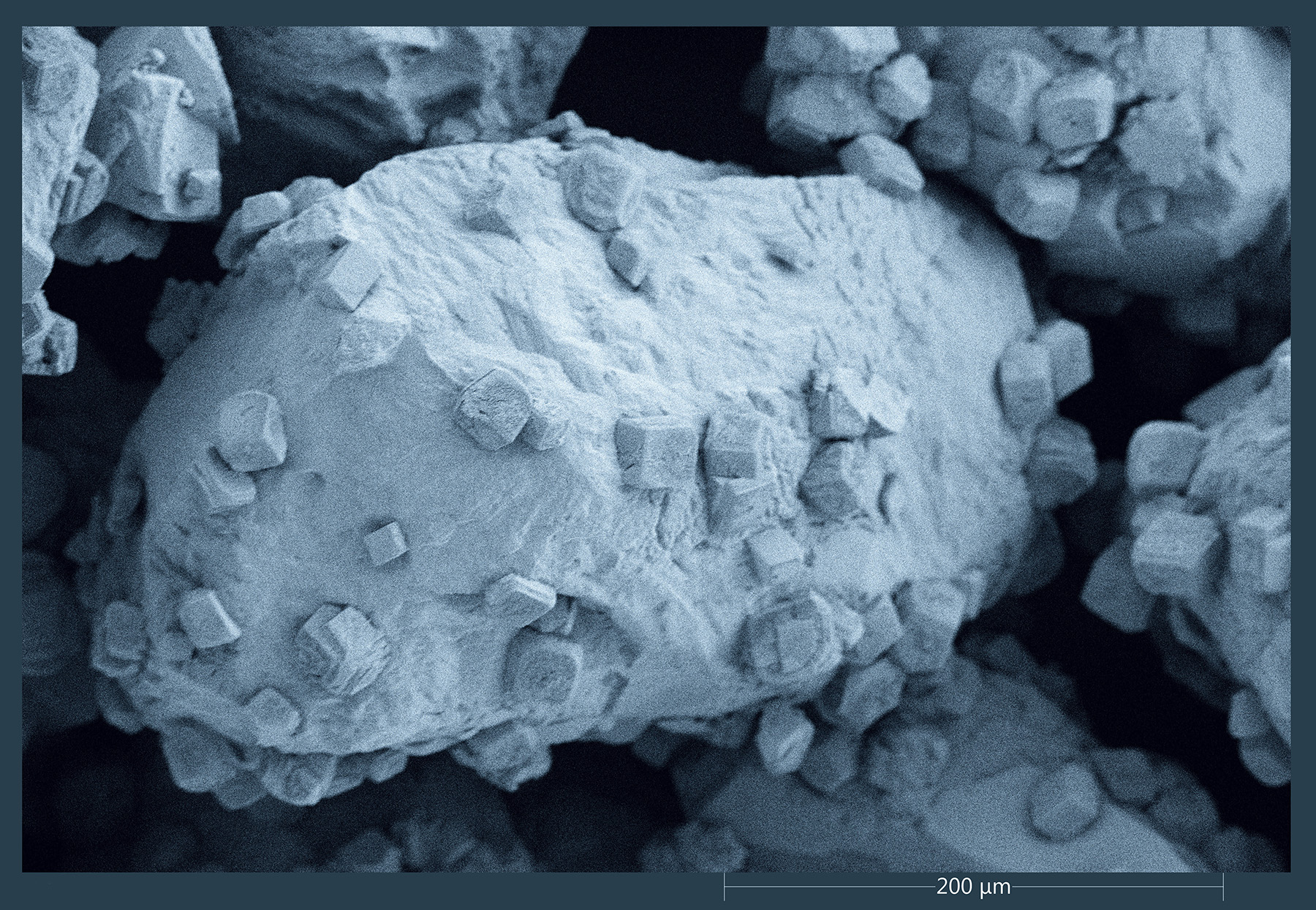
Healthy soil is not just made up of gas, water, clay, silt, and sand. It is also home to countless microorganisms — fungi, bacteria, archaea, protozoa, and viruses. In fact, experts estimate that there are millions to billions of microbes in just a few grams of dirt, and those tiny organisms can play an integral role in soil stabilization, producing a sort of biological glue to improve soil structure and reduce erosion.
Researchers are hoping to harness the unique biology and chemistry of these microbes to improve sandy soils using a biologically induced process known as biocementation. This process involves stimulating native microbes in the soil, injecting non-native microbes into the soil, or directly introducing enzymes contained in the microbes to coax different compounds to precipitate and help bond and fortify soil grains.
You may recall the term “precipitation” from Chemistry 101. Think of stirring some sugar into hot tea. At the right temperature, the sugar will dissolve with a few stirs of the spoon. But if you change the conditions of the tea — rapidly cooling it, for example — the solution becomes supersaturated and sugar crystals can form, settling on the bottom of the cup. That formerly dissolved substance is the precipitate of the solution.
In soil, the process is a bit more complex, but the end result is the same. Microorganisms that contain urease enzymes can facilitate a geochemical process in which they break down urea, a highly soluble nitrogen-containing compound, to produce carbonate species that can react with supplied calcium to help form calcium carbonate minerals within existing soils. When those minerals are precipitated on soil particle surfaces, including soil grains, looser packings of soil grains will cement together and begin to act similar to soft rock.
“Microbes can precipitate solid mineral phases that separate from a liquid solution, by mediating a chemical reaction, thereby binding sand grains together,” said Michael Gomez, Ph.D., M.ASCE, an associate professor in the Civil and Environmental Engineering Department at the University of Washington and the 2025 awardee of the ASCE Arthur Casagrande Professional Development Award for his work in this area. The calcium carbonate can provide a tensile strength to soils, he said, allowing the soil to behave less like a particulate mineral and more like soft rock. “There are a lot of geotechnical things we could apply this to, including slopes, levees, erosion control issues, and liquefaction.”
From landfill to land stabilizer
Edward Kavazanjian, Ph.D., P.E., BC.GE, NAE, Dist.M.ASCE, is a regents professor in the School of Sustainable Engineering and the Built Environment at Arizona State University and a prior director of the Center for Bio-mediated and Bio-inspired Geotechnics, a National Science Foundation-funded engineering center. He discovered the power of microbes more than 20 years ago when he worked in industry trying to address clogs in landfill liquid collection systems.
“At some point, it occurred to me, in the context of the landfill, this clogging is a bad thing,” he said. “But I also realized that there are other contexts where it would be a good thing. Like, if I wanted to support a foundation for a building instead of driving piles, or if I wanted to mitigate earthquake-induced soil liquefaction.”
Once he returned to academia, he and one of his graduate students began investigating the biological and chemical processes that facilitate biocementation, identifying different mechanisms by which minerals precipitate. To date, there are two main methods used to bring about biocementation: microbially induced calcite precipitation and enzyme-induced carbonate precipitation.
Both can induce the specific chemical reaction that precipitates calcium carbonate to bind the soil particles. While the chemistry is similar in both methods, said Kavazanjian, MICP approaches either stimulate native microbes that contain the enzyme urease or inject urease-containing microbes — sometimes non-native species, sometimes adding more of what is already in the ground — as well as nutrients and chemicals like calcium chloride and urea, to get to the intended soil strength. In the EICP method, urease enzyme is extracted from soybeans or jack beans (a close relative of the soybean) and is then injected directly into the ground along with other chemicals necessary for precipitation.
For the most part, Kavazanjian’s lab has focused on applying EICP to solve different problems. Initially, he said, researchers would induce the precipitation of calcium carbonate over more than a dozen cycles to get to the soil strength they needed.
However, he and his students are seeking a more “one and done” process.
“I want to inject the enzymes once into the ground and be able to walk away,” Kavazanjian said. “And we discovered, for some applications, we can do that.”
In fact, he said, his work suggests that when the soil has low concentrations of precipitated carbonate, the enzyme process can provide greater strength than the microbial one.
Test case
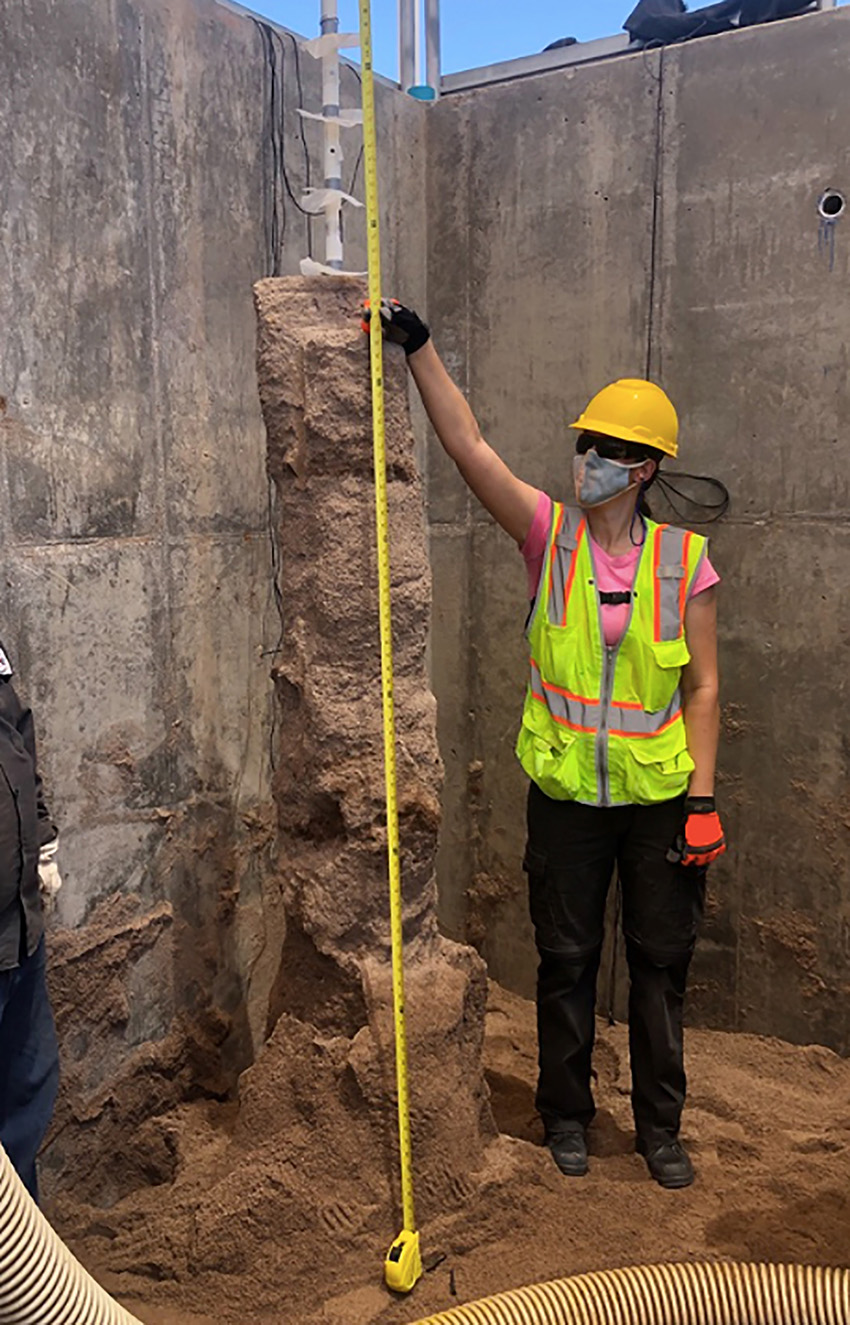
At ASU, Kavazanjian and his team have created 8 ft tall columns of biocemented soil of the sort that would support building foundations. When they applied a plate load test to the columns — a common technique to test bearing capacity by adding increasing vertical loads to a steel plate on the ground above the column — they found a threefold increase in capacity compared with the untreated soil.
They also saw an increase in shear wave velocity of at least 100 m per second, suggesting that the soil had become stiffer.
One of the most promising potential uses for biocementation is mitigating soil liquefaction during an earthquake. Strong ground shaking can cause loose granular soils beneath the groundwater table to contract and behave in a liquid manner, resulting in major damage to overlying infrastructure.
It is an important area in which Gomez believes biocementation soil improvement can offer great benefits. “Our team is largely focused on developing biocementation to mitigate earthquake-induced liquefaction beneath existing infrastructure,” he explained. “In these situations, treatment fluids (which are similar in viscosity and density to water) can be injected without disrupting the use of the infrastructure, helping to fortify soils that civil engineers may not have realized were susceptible to liquefaction prior to construction.”
Ready for prime time?
While there have been several field applications where biocementation has been deployed successfully, most have focused on near-surface soils. None have been completed in the deeper subsurface for liquefaction mitigation, said Gomez. As a result, he and Kavazanjian agree there is still work to be done before this promising technique can be scaled up for widespread use. Gomez said that part of that work involves helping stakeholders understand what biocementation is and providing data to show it is effective and can achieve resilient and sustainable outcomes.
“Inherently, when people hear that the process relies on bacteria, most people say, ‘Hey, what kind of bacteria?’” said Gomez. Bacterial species needed for the biocementation process can either be cultured in a lab and injected into soils or stimulated in situ. In nearly all cases, the microorganisms’ use falls into a classification known as biosafety level one, meaning they do not cause disease in healthy humans and present minimal risk to the environment.
While these bacteria already exist in many soils and pose little risk, Gomez stated that the broader ecological consequences of introducing non-native species of bacteria into a new environment should always be carefully considered before use.
Gomez and his team are concentrating on the use of native microbes to complete the biocementation process rather than injecting non-native species — as well as answering those critical questions about biocementation’s use, ranging from where it can be applied to how it might perform decades after application. Finding those answers should help people grow more comfortable with the process, he said, as well as understand that like any ground improvement method, it is not a one-size-fits-all solution.
“As researchers we aim to answer critical questions about the technology to encourage practical adoption, including those related to understanding the long-term durability of biocementation at a particular site, possible soil ecological changes, and advantageous impacts on the performance of larger engineered systems,” Gomez said.
As biocementation research continues, Gomez hopes industry will continue to partner with researchers to further develop these processes.
Kayt Sukel is a science and technology writer based outside Houston.
This article first appeared in the May/June 2026 issue of Civil Engineering as “Strengthened by Microbes.”