
By Mackrena L. Ramos, P.E., M.ASCE, Melissa C. Mack, P.E., PMP, M.ASCE, and Panduranga Kuruva, P.E., CCM
The city of Houston manages more than $1.2 billion worth of capital improvement projects for the region’s water system. The ultimate goal: converting the area from groundwater to surface water usage.
Since 2011, the city of Houston has designed and constructed more than 300 mi of major water transmission lines across the city, ranging from 24 in. to 120 in. in diameter. Involving multiple agencies and regional partners, the installation of these new transmission lines will transport surface water to regions currently supplied by groundwater, which will allow the area to reduce or eliminate groundwater pumpage and rely more on surface water.
The origins of this undertaking date to 1985, when the city started the Surface Water Transmission Program to address various mandates and regulatory plans under the Harris- Galveston Subsidence District, which the Texas legislature created in the 1970s “to regulate groundwater withdrawal in Harris and Galveston counties to end subsidence,” according to the district’s website. The subsidence district then focused on scientific research to develop its regulatory plan and enforcement between the 1970s and 1985. In 1985, the subsidence district expanded its regulatory plan by dividing the region into multiple regulatory areas with phased targets to reduce groundwater usage.
For more than 40 years, Lockwood, Andrews & Newnam Inc. has been the program manager for the surface water program, focusing on strategic decisions regarding routing, modeling, funding sources, pipe materials, procurement methods, and contractor coordination to balance schedules and accommodate field changes. The city and LAN have addressed challenges such as disinfection issues and supply chain delays while staging the commissioning of multiple contracts.
Throughout it all, the emphasis has been on meeting the needs of the city’s Drinking Water Operations Branch, which runs the system that delivers reliable drinking water to the fourth-largest city in the United States.
Planning the program
Effective program delivery begins with a clear strategic plan. Long-range planning was essential to developing Houston’s surface water program and enabling the city and its regional partners to meet the subsidence district’s groundwater conversion requirements. The district organized the region into three regulatory areas, each with specific conversion goals, and developed an initial regulatory plan that has been updated and revised as groundwater models were refined. As the district’s regulatory framework evolved and water needs grew in Houston and Harris County, the surface water program evolved to provide technical standards across agencies, municipalities, and regional water authorities.
For example, in 1985 the city and LAN developed the first computer models of Houston’s water system to evaluate and size transmission mains needed to convey surface water from the east toward the central and western areas of the city and to regional partners. Over time, hydraulic modeling helped the team prepare surface water conversion master plans and identified the phased water transmission line projects required to meet the subsidence district’s objectives.
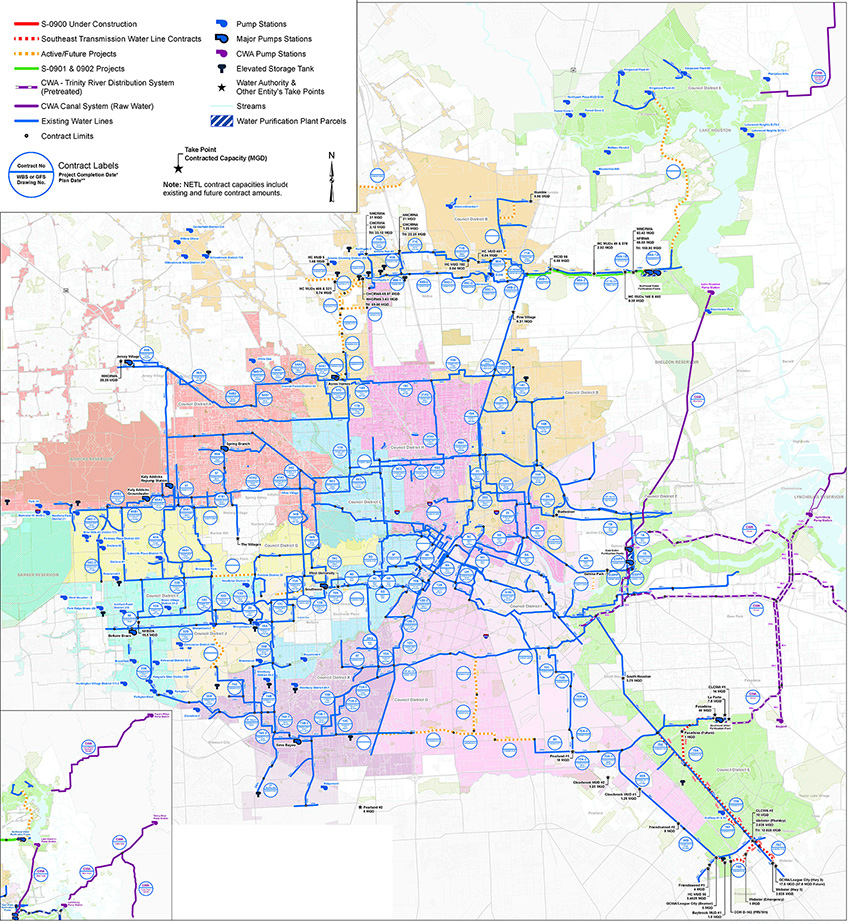
Figure 1 illustrates the evolution of the surface water program’s large-diameter transmission network for the Houston water system from program inception to current projects.
Managing the program
Successfully managing a complex program requires disciplined collaboration among all stakeholders. To support this approach and create a strong foundation for the city’s long-term success, Houston Public Works, one of the surface water program’s stakeholders, has aligned its work with a clear mission and vision: to provide an improved quality of life for everyone and to excel as a public works agency.
The surface water program team integrated this vision into its principles and processes, developing a strong communications plan, maintaining an organized system for tracking projects, and standardizing technical guidelines and best practices across the program. With these shared values and principles, the team maintained a consistent delivery process over many years and multiple projects.
Most of the surface water program’s annual capital improvement projects served customers within the city limits. Between 2011 and 2026, for example, this program involved 41 projects worth $584 million. During the same period, Houston also launched another 20 collaborative efforts with regional water authorities and water utility partners to expand major system improvements in the northern and southern parts of its water system. A key to the program’s success has been managing the work in sectors to focus on the specific challenges and demands of each area. As the program grew, the city organized its team to handle the three sectors along with 12 partners, with the city acting as a managing partner.
For instance, water transmission projects in the northern section of the city included conveying water from the Northeast Water Purification Plant, which completed an 80 million gal. per day expansion in the summer of 2024 and a second 80 MGD expansion in January 2025. This growth provides potable water for four partners to the west of the city. A final phase of the expansion is pending, and when completed, it will represent a total expansion of 320 MGD from what had been originally an 80 MGD plant. Key infrastructure for these improvements included the Northeast Transmission Line, a 16.5 mi long conveyance with 13 contract segments, which was completed in 2023.
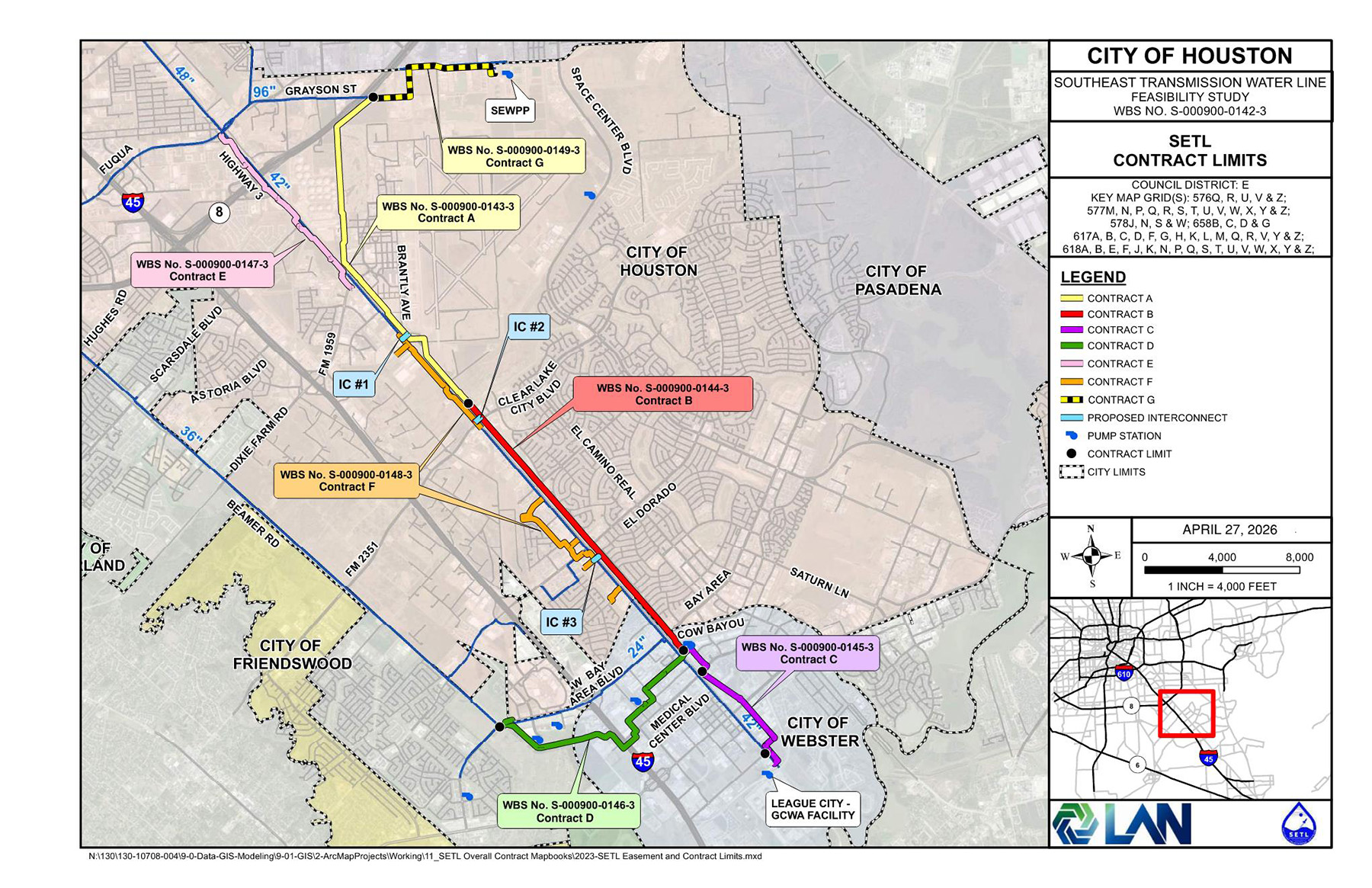
Water transmission projects along the southern portion of the city convey potable water from the existing Southeast Water Purification Plant, reaching multiple delivery points for eight partners. The projects, known collectively as the Southeast Transmission Line, total 17 mi long with seven contract segments that are expected to be completed by 2035 with a transmission capacity of 75 MGD (Figure 2).
The table below provides highlights of the last 15 years of the overall surface water program.
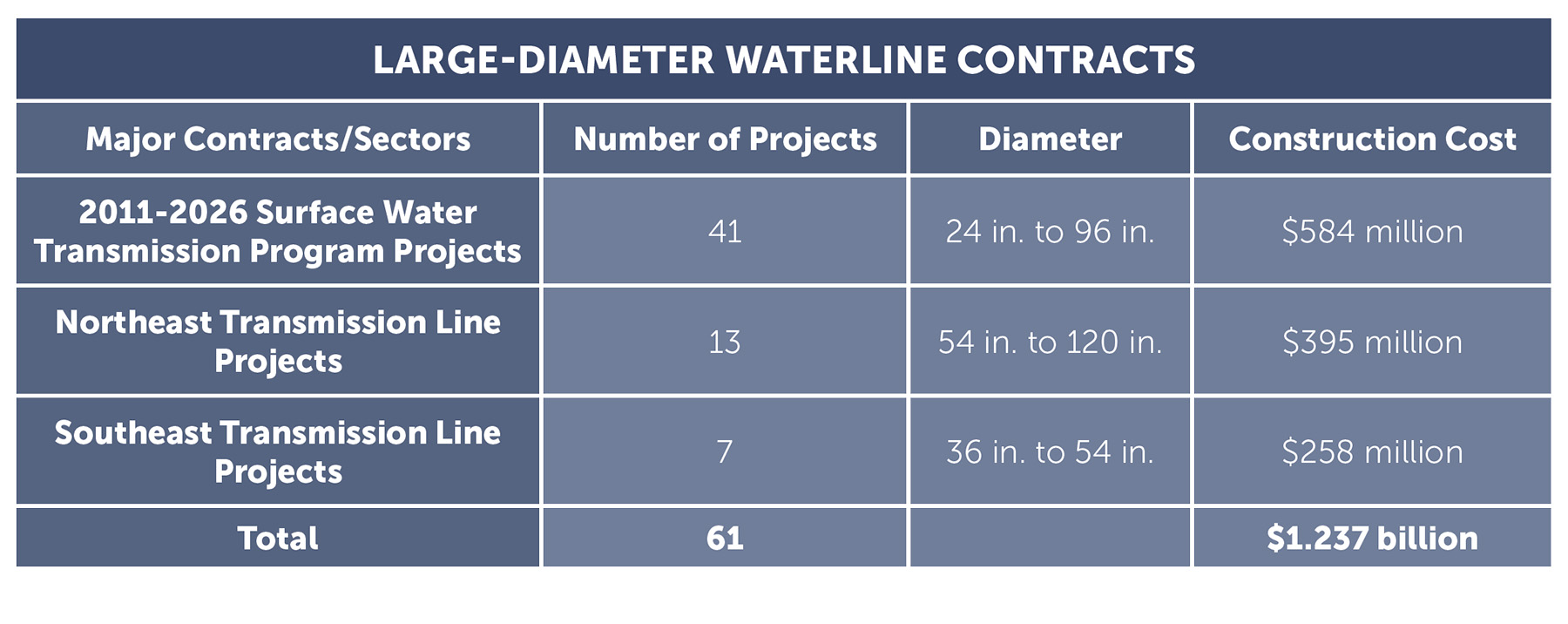
To deliver these 61 projects, the city engaged several Houston-based consultant firms to design them in collaboration with LAN, which served in the capacity of program manager for the general capital improvements projects and the Northeast Transmission Line projects, and as technical advisor for the Southeast Transmission Line projects. The city also augmented the team in 2018 to include BGE Inc. to provide program services for a limited area within the city’s system.
To maintain consistency across the surface water program, many strategic decisions were made to direct and guide the design teams. For example, if a routing or feasibility study was warranted, preliminary engineering efforts included multiple modeling scenarios, cost models, and easement determinations.
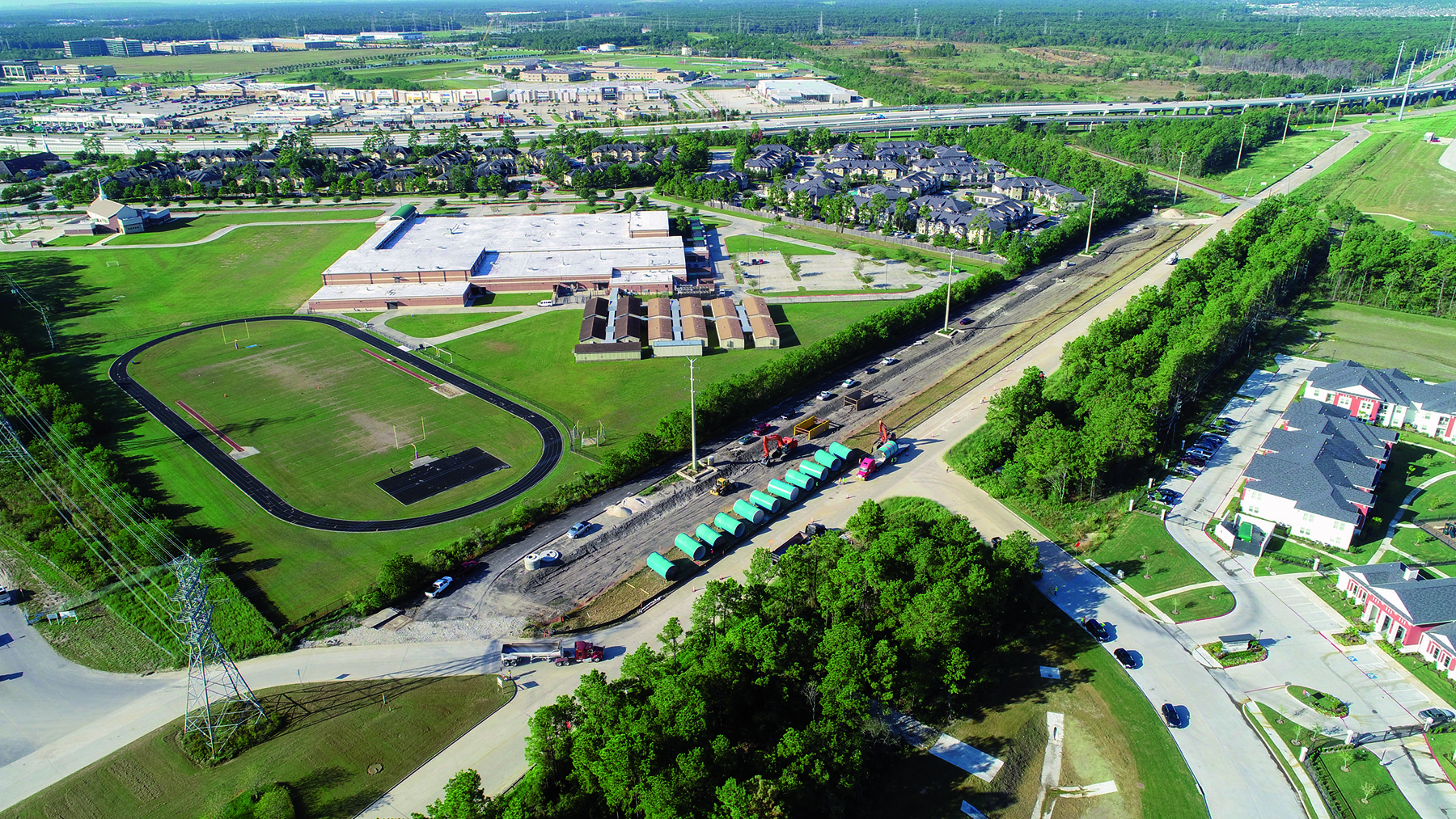
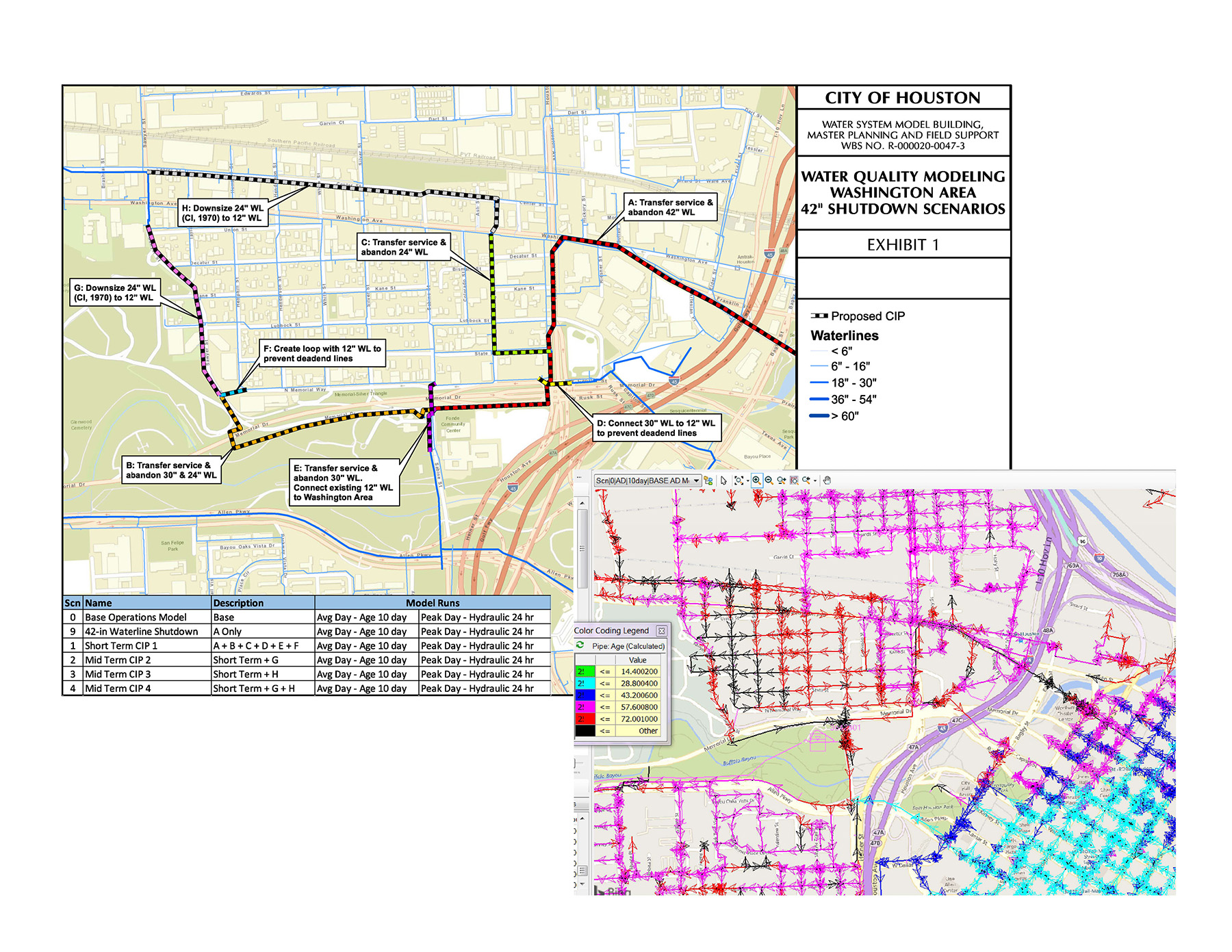
Hydraulic modeling was also critical. The city has an internal water infrastructure planning group that typically performs system-wide modeling and individual projects. For larger project contracts, the surface water team performed hydraulic and transient modeling to provide consistency across the multiple segments and design teams (Figure 3).
With partner approval, the city pursued and received Texas Water Development Board funding for the Northeast Transmission Line projects given the higher cost of these extra-large diameter (greater than 96 in.) pipes. Funding covered design plus the $350 million required to construct the transmission lines. The projects that qualified had to be new, large, and public water supply projects versus routine maintenance or rehabilitation projects.
Houston’s design consultants evaluated appropriate pipe material for the diameter of the individual capital improvement projects and the Southeast Transmission Line projects. The city and LAN reviewed the evaluations and collaborated with the design consultants on final selections, such as steel, bar-wrapped concrete, or ductile iron.
The city considered different procurement methods, instead of low bid, for major contracts with complex issues. Because of the waterline size or the cost and scope of the contracts, several of the capital improvement projects, as well as the Northeast and Southeast Transmission Line projects, were procured through the competitive sealed proposal method, which allows the city to evaluate the contractor’s technical qualifications and experience with large-scale projects.
The city also worked with the contractor community to conduct a series of workshops to present the projects, discuss design complexities, review technical details, and garner interest in the project for the best bidding opportunities and value for the city.
Community outreach
In addition to the strategic decision-making needed at every stage of the overall conversion project, the surface water program team worked extensively to inform local community leaders and the city’s partners on the status of efforts and to track the progress of all projects.
For example, the Northeast Transmission Line projects were reviewed monthly and the data compiled in a status report during the design phase. This report provided detailed information on design elements, team progress, and delivery dates. The Northeast Transmission Line projects also tracked the construction progress of the 13 segments via monthly project videos that used drone footage and narrated technical elements of the work.
Highlights of the work on the northeast line included the tunnel crossing at U.S. Highway 59 and Interstate 69, which featured a 135 in. diameter earth pressure-balance machine. The monthly construction progress videos were a key tool to update the city’s internal teams in a timely manner as well as the four water authority partners vested in the Northeast Transmission Line projects. Per the interlocal agreements, the partner water authorities had approval authority for major change orders and claims. Their familiarity with the construction progress was a critical-path item to avoid contractor delays and resolve claims.
Another major factor in managing this large-scale surface water program was establishing standard technical guidelines and best practices across the program. Each project had its unique features and challenges, such as conflicts with other major utilities, contractor bankruptcy, and competitions for rights-of-way with light rail and other developments. But the surface water program team regarded operations and maintenance as vital components of a well-designed project and therefore needed consistency across the water system.
With this in mind, the surface water transmission program team developed the criteria and specifications for large-diameter waterlines to address the critical issues complex projects encounter, such as navigating construction of large-diameter waterlines through fully developed urban areas, as well as connecting new pipes to existing pipes without major service disruption to the Texas Medical Center, downtown Houston, or other major business and shopping areas.
The surface water program team participated in reviews of the city’s technical specifications, which provide requirements as to how projects must be constructed and tested. The team also developed content for the city’s Infrastructure Design Manual, which sets the technical standards and design requirements for the city’s infrastructure projects, and they supported the technical vetting of products for the approved product list for use in the city’s infrastructure projects. The details and specifications for a typical large-diameter line were generated for a maximum of 96 in., but the Northeast Transmission Line equipment involved 120 in. waterlines that needed new, extra-large-diameter criteria.
In addition, the surface water program established minimum horizontal separation distances and backfill criteria for the new and existing utilities to support and protect lines larger than 96 inches in the event of future excavations. Construction in an urban environment is very congested; therefore, technical criteria were created for ingress and egress haul routes, loading limitations above vulnerable utilities, and equipment/material staging areas.
Meeting challenges
Many technical issues have been addressed over the decades, and the surface water program team provided creativity in its solutions. For example, the technical challenges included considerations for sustainability and resilience, such as providing project-specific criteria to address environmental issues and guidelines for handling and disposing of contaminated soils. The project also addressed the presence of migratory birds in the project corridors, performing surveys for bald eagles and nesting birds. Biologists were engaged during construction to find and safely relocate the birds.
Moreover, the surface water program team worked to preserve sites of high ecological value and identify protected vegetation areas. In some cases, trenchless methods were used to avoid protected vegetation, or the areas were fenced off to protect wetlands.
The question of when to fill the pipelines with water was another challenge. Because intermediary contracts might be completed years before the final segments, it was unclear when to tie the intermediary portions into the water system. So, the surface water program team worked closely with the Drinking Water Operations Branch to determine if a particular new line would remain empty or be filled, and whether it needed to be disinfected and regularly tested. Collectively, the decision was made to fill the waterlines and test the water based on the city’s standard protocols. Fortunately, the lines required only minimal flushing and did not need additional disinfection before the lines could be put into regular use.
Supply chain delays, especially the delivery of material and equipment, hit the project hard during the COVID-19 pandemic as well as during several severe storms. These events, lasting a few days to two to three years in the case of the pandemic, made it difficult to stay on schedule and maintain a sufficient workforce. But contractors shared supplies and augmented work staff, and the city provided materials from its own inventories.
On the geotechnical side, tunneling design, groundwater control, mixed soil conditions, and shaft design presented technical challenges across multiple contracts. The surface water program team provided technical guidance to the engineering firms’ design teams or performed the tunneling design itself. The tunnel crossing designed by LAN for the Northeast Transmission Line under Highway 59 demonstrated the sort of challenges the project encountered, as the tunnel was constructed at a depth of 50 ft beneath the road surface (Figure 4).
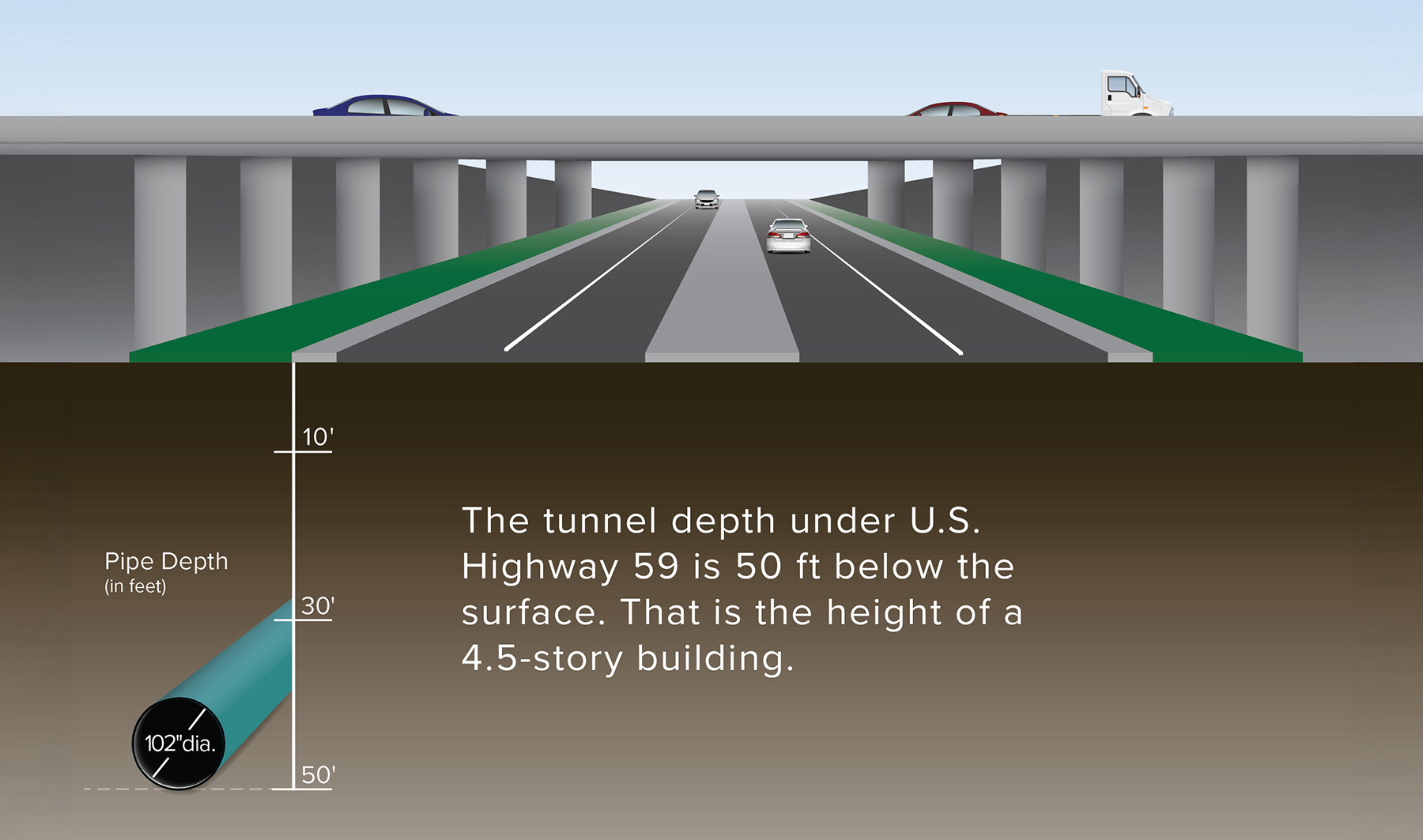
Challenging items for this crossing included the need to stabilize soil to avoid highway settlement. This work required the largest earth pressure-balance machine ever used by the city. The earth pressure-balance machine is for digging into soft soils to prevent the tunnels from collapsing.
Resolving such challenges enabled the city, the program manager, the design engineers, and the contractors to deliver award-winning projects for the Houston region. Indeed, several contracts within the overall program have been recognized at the local and national levels for civil engineering awards, including from the Texas chapter of the American Public Works Association, the state and national offices of the American Council of Engineering Companies, and ASCE, which honored the Northeast Transmission Line with a 2025 Outstanding Civil Engineering Achievement Honor Award.
Mackrena L. Ramos, P.E., M.ASCE, is vice president and Melissa C. Mack, P.E., PMP, M.ASCE, is a vice president at Lockwood, Andrews & Newnam Inc.
Panduranga Kuruva, P.E., CCM, is a managing engineer for capital projects for the city of Houston.
A note from the authors: Houston’s engineering and contractor communities also deserve credit for their tremendous contributions and collaboration to make the Surface Water Transmission Program a success for the city and the surrounding region.
The authors will be presenting this topic at the UESI Pipelines 2026 Conference August 1-5 in Detroit. Find out more at www.pipelinesconference.org.
This article first appeared in the July/August 2026 issue of Civil Engineering as “A Complex Program.”


