 Courtesy of Revizto SA
If you’re worried about what might cause delays, cost overruns, or other challenges for mega infrastructure projects globally, you’re not alone.
Revizto SA, a Swiss-based provider of integrated collaboration software tools for the architecture, engineering, and construction industries, conducted in-depth interviews with a dozen infrastructure project experts in the United States, the United Kingdom, Australia, and New Zealand. The views of these designers, policymakers, operators, and sustainability leaders are explored in the report Beyond Short-Term Gains: Infrastructure Strategies for Lasting Economic Impact.
Further reading:
- Project management tools with an eye on risk
- Fundamentals of establishing a company risk-mitigation program
- Cities want to invest in infrastructure, but resources are lagging, report finds
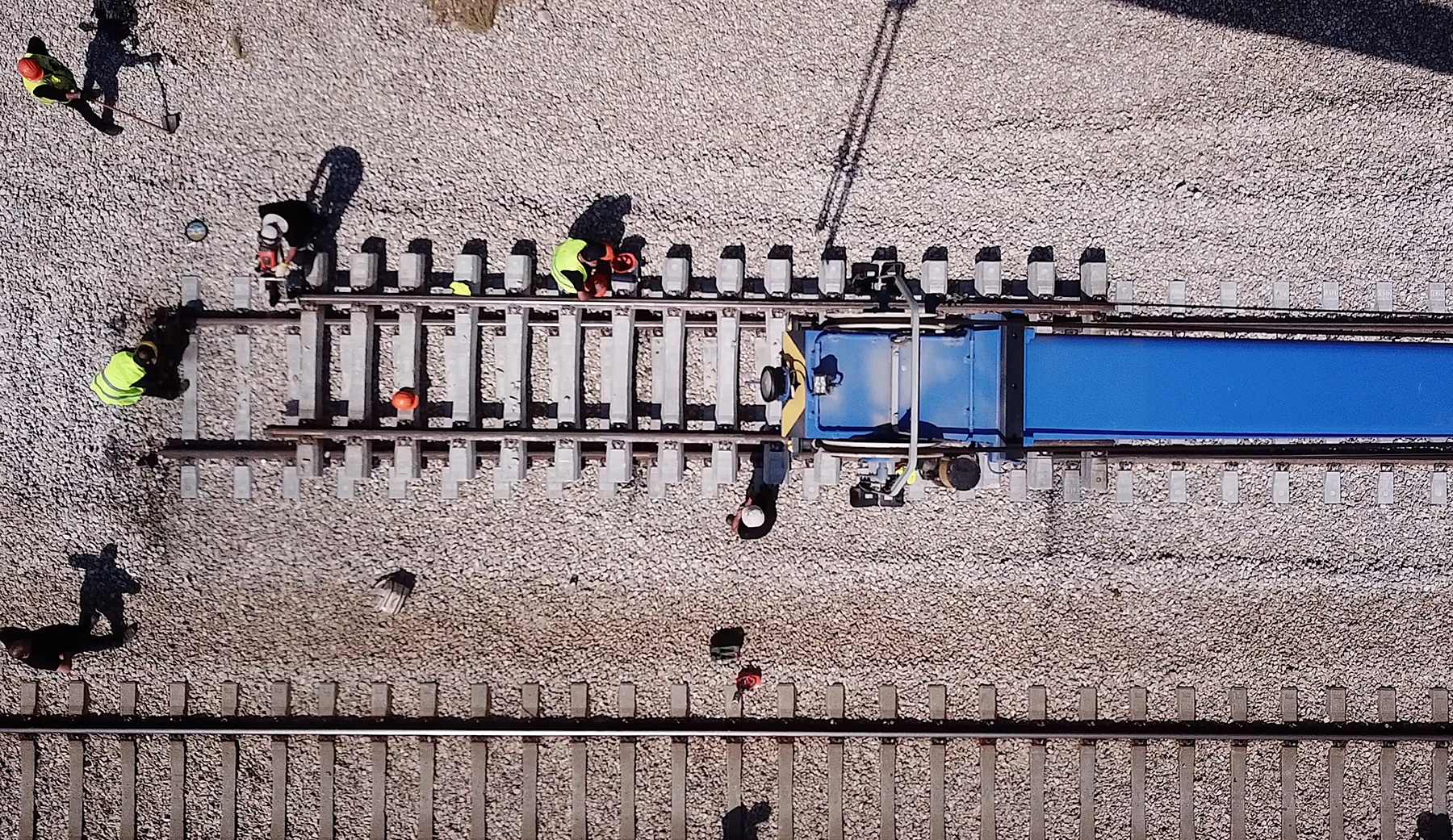
The document discusses the “significant barriers, from politics to supply chain disruptions” that create complications for major infrastructure efforts, including rail projects in the U.K., expansions at the U.K.’s Heathrow Airport and John F. Kennedy International Airport in the U.S., and other of “the world’s most ambitious projects,” Revizto explained.
The report identified five key challenges to better delivery of infrastructure projects, including:
- Political and financial risk, which encompasses shifting governmental policies and changing priorities
- Lack of standardization, which manifests as inconsistent design and delivery approaches that lead to costly inefficiencies and rework
- Outdated practices, caused by slow adoption of digital tools, leading to limited collaboration and further inefficiencies
- Fragile supply chains, made even more vulnerable by geopolitical challenges, climate change, and other factors
- Fragmented collaboration, resulting from competing incentives and piecemeal delivery models that slow progress
Confronting challenges
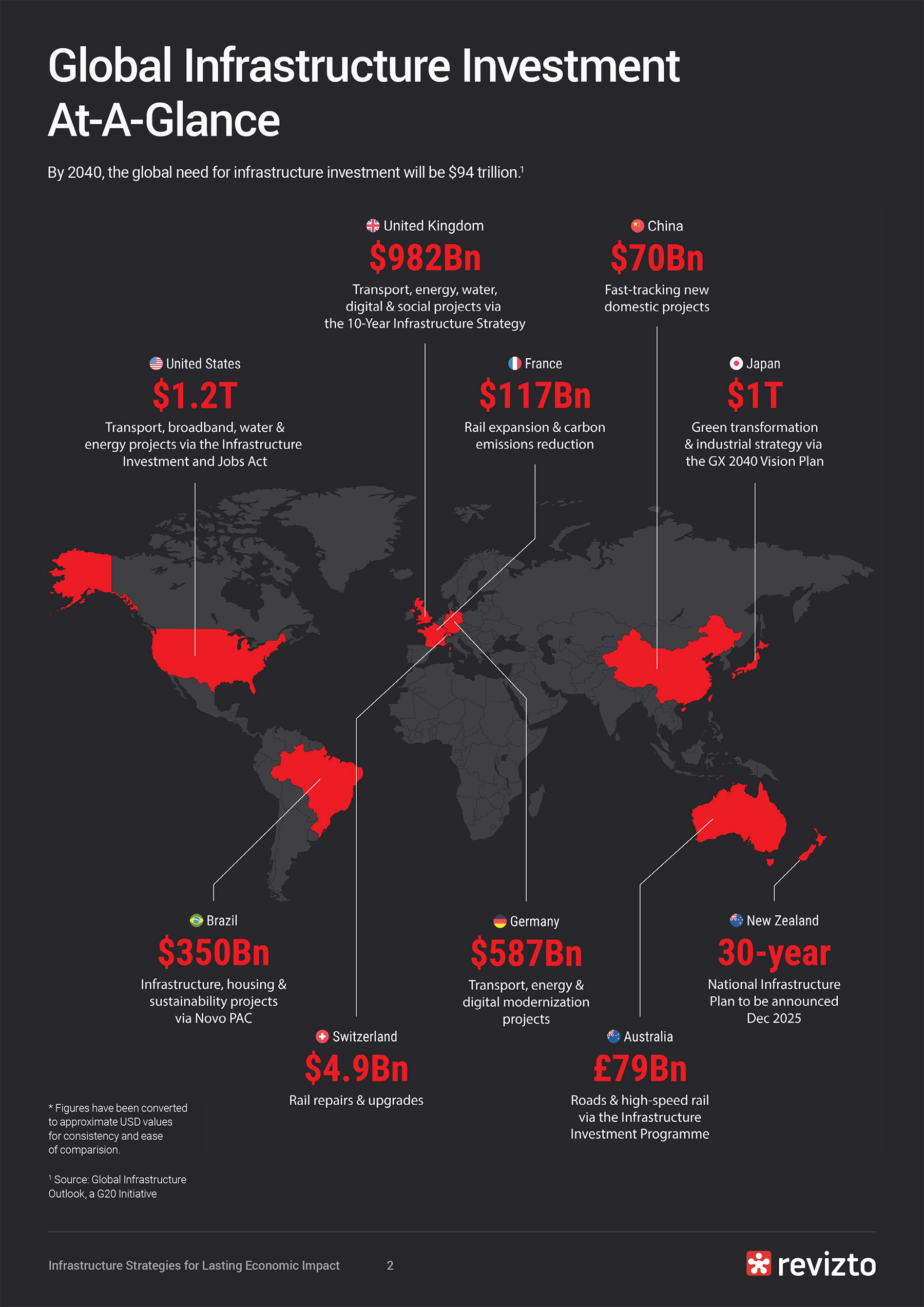
The report highlighted the need for global infrastructure investments worth $94 trillion by 2040 – including $1.2 trillion in the U.S. – and outlined details on several of the aforementioned challenges to such projects.
For example, the length of time it often takes to complete large-scale infrastructure projects means that such efforts “inherently span multiple political terms, creating substantial risks as administrations and policies shift,” the report noted. In the U.K., plans for a third runway at Heathrow have been a “decades-long saga” that was first proposed in 2003 and twice enjoyed support from the national government, the report explained. But the plans were delayed again and again when a new prime minister took office.
Under the current Labour government, the third runway is “firmly back on the table,” the report noted, with Nigel Milton, Heathrow’s chief communications and sustainability officer, stating that national political support is “the only thing you absolutely need because with government support, other things fall into place.” Such support from the government “can’t be taken for granted and must be continuously maintained,” the report concluded.
But even the best-laid plans of mice and men, as the old saying explains, can go wrong – quite literally in terms of the mice! Chris Heaton-Harris, a former U.K. transport minister, recalled how everything seemed to be moving along smoothly for the reinstatement of the Okehampton Line rail link in southwestern England in 2021. Then 120 endangered hazel dormice were discovered living along the route, which added £4 million (U.S.$5.2 million) to the project’s costs to create a new habitat for these members of a legally protected species, explained Heaton-Harris.
“We thought we had everything lined up: national government, local government, the contractors,” Heaton-Harris noted. Then all of a sudden, something can happen like the dormice dilemma. Still, empowering leadership, strong collaboration, and close attention to “all the nitty gritty” details meant that the Okehampton project was completed under budget and a few months ahead of schedule, he explained.
Building resilience
Other respondents in the report stressed the need for “building resilience through diversified sourcing and reducing dependency on vulnerable global supply chains.” For Andrew MacMillan, an aviation infrastructure leader in the U.K., greater onshoring and near-shoring is a welcome trend he has seen developing over the years. Network Rail, in particular, relies on steel made in the U.K., the report noted.
“Infrastructure projects frequently suffer from fragmented business models and conflicting stakeholder incentives,” the report noted. But strong leadership and a collaboration culture can be a remedy, especially for complicated projects in which the scope and ultimate costs cannot be easily defined at the beginning of the effort.
In such scenarios, “the only way forward is a ‘shared endeavor, where all parties have some share of the pain and gain, and everyone has a stake in how the project is delivered,’” according to Tim Chapman, a partner and director at Boston Consulting Group.
 Courtesy of Revizto SA
Transparency is also critical “for building the trust needed to collaborate effectively,” the report stated. When people “think you’re hiding something from them, or they’re not hearing the full story, they’re not going to fully collaborate,” explained Tony Caccavone, who is leading the New Terminal One project at JFK airport. So Caccavone urges project leaders to be transparent “about why you’re doing something and why you’re doing it in a certain way.”
Standardizing strategies
Standardized infrastructure design and delivery also represent a “long-term strategic approach to minimize costs and boost efficiency,” the report argued. For example, if a country decides to construct an efficient tram system in every city of more than 250,000 people – which several European countries have done – it would be helpful to have a standardized system that can be deployed anywhere, rather than differently shaped trams or tram stops in each city, the report explained.
Digital technologies can help enable such standardization, the report added. Integrated collaboration platforms, for example, can help teams “create and refine designs before construction begins,” which can boost efficiency and consistency and also reduce errors and rework, the report noted.
The use of robotics at construction sites can also improve efficiency and safety, the report added, pointing to the use of a robotic dog at Heathrow to safely collect data from a 1960s-era tunnel. “This data is then used with 3D models and augmented reality to monitor progress and accuracy,” the report explained.
Likewise, artificial intelligence can assist with “mundane tasks like note-taking and assigning next steps,” the report stated, which along with other automated efforts can produce the marginal gains in efficiency for a project that could prove to be “the difference between finishing on time and not.”