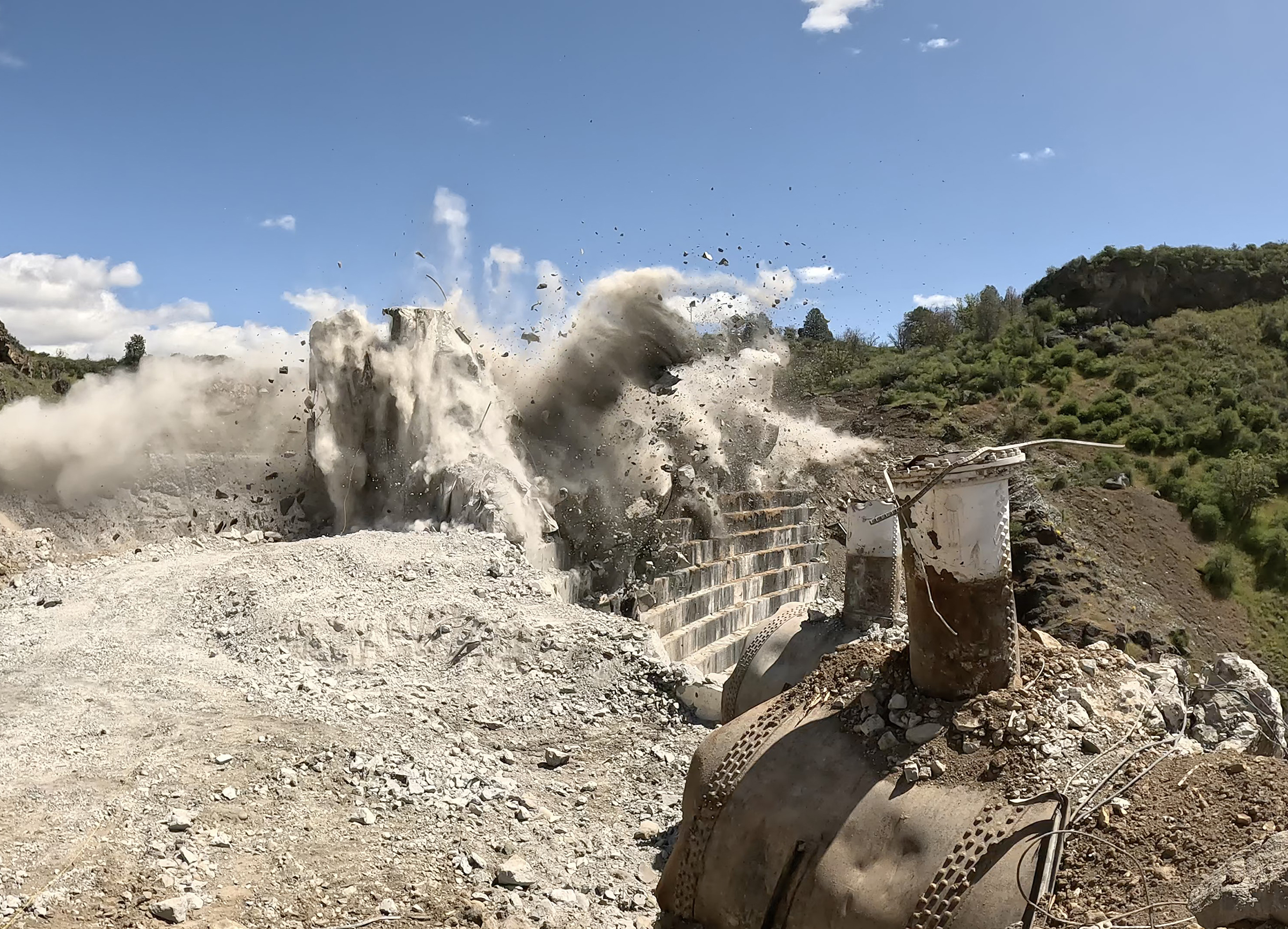
 Shane Anderson, Swiftwater Films
 As the Hoover Dam turns 90, this is the second in a multipart series looking at the status of dams in the U.S. Read the first installment here.
Ninety years after the Hoover Dam opened to great fanfare, and following decades of rapid dam building across the country, more dams in the U.S. are now being removed than built.
Further reading:
- Hoover Dam is iconic at 90, but rise in US dam removals signals changing mindset
- Benefits flow quickly as historic dam removal restores Klamath River
- Giant Ethiopian dam promises greater flood control and water management
In 2024 – which tied 2019 for the most dams (108) removed in a single year – the largest dam removal effort in U.S. history was completed. The Klamath River dam removal project dismantled four aging hydroelectric dams along the 257-mile Klamath River in Oregon and California.
Led by the Klamath River Renewal Corp., the $500 million project involved a meticulously planned drawdown and dam deconstruction sequence designed to manage flow and sediment transport through the hydrologic reach and restore the river to a free-flowing condition.
Positive results were visible almost immediately. Within 10 days of completing the in-water work at the farthest downstream dam, more than 6,000 Chinook salmon were observed migrating upstream into newly accessible habitat that had been blocked for more than a century.
Several more dam removal projects across the nation are in the works. Dams slated for removal include the Scott and Cape Horn dams on the Eel River in Northern California, the 168-foot-tall Matilija Dam in the Ventura River watershed in Southern California, and the Lockville Dam on the Deep River in North Carolina.
As these efforts and others move forward, what lessons from the Klamath project can help increase the likelihood of similarly positive outcomes?
Ann Willis, Ph.D., California regional director of American Rivers and an alternate member of the KRRC board of directors overseeing the Klamath removals, characterized the project as a compelling proof of concept for successful large-scale dam removal.
“Not only was it completed on time and on budget, but it was managed in a way where the process of removal itself was part of the restoration of the river,” she said.
That outcome was the result of a holistic evaluation of the interconnected ways the removals would affect the river system, particularly the potential consequences of draining the reservoirs, which held several million cubic yards of accumulated sediment.
“Does the sediment contain heavy metals or other contaminants, and if so, how much is there and how likely is it to mobilize and move downstream?” Willis asked. “What is the risk to the environment and water quality below the dams? These are some of the questions that were asked ahead of time.”
From bathymetric surveys and sampling, the KRRC team determined that sediment trapped behind the dams consisted largely of algae and other organic material – a major contributor to the water quality problems within the reservoirs. With this knowledge, engineers evaluated potential outcomes from exposing the material to oxygen during the drawdowns, including how it might alter river water chemistry and dissolved oxygen levels.
They also considered the unanticipated risks of downstream sediment transport in terms of deposition, flooding, landscape changes, and impacts to communities living below the dams and around the former reservoirs.
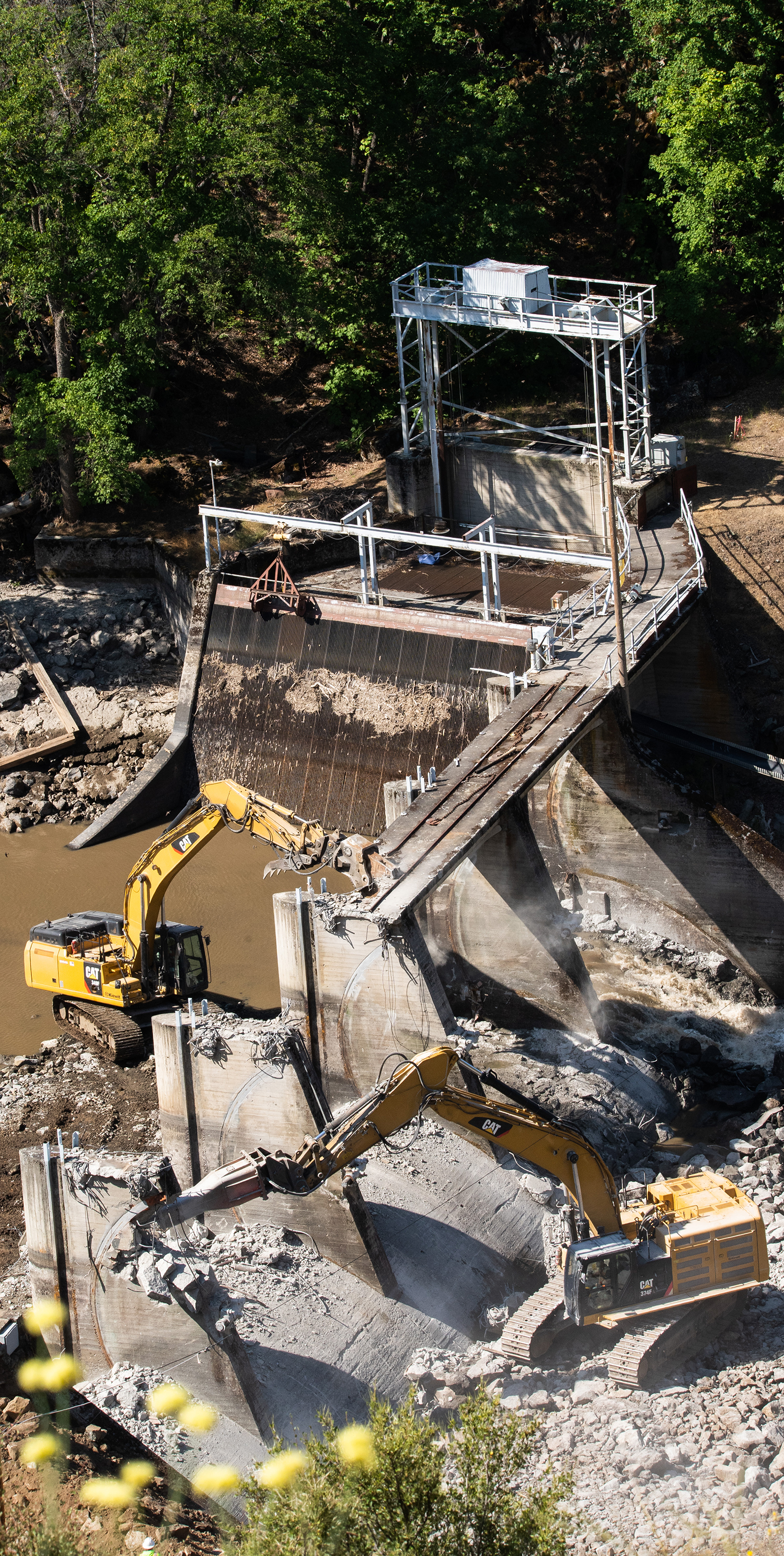 Katie Falkenberg
“A tremendous amount of modeling went into answering these concerns,” Willis said. “That’s the value of engineering – it brings some clarity to uncertainty. It can't answer every question precisely, but it can tell us enough to help make informed decisions.”
Engineering a natural recovery
Understanding that the reservoir drawdowns would create a major disturbance within the watershed, the KRRC team explored how to align that disturbance with the river’s natural seasonality and environmental processes.
“One of the things we know about rivers is there’s no such thing as a stable baseline,” Willis said. “The river is also defined by disturbance. It has different patterns of flow throughout the year, and those patterns are really the heartbeat of the ecosystem that evolves around it.
“We’re trying to plan for the impact of sediment moving downstream, but when considering the life cycle of rivers like the Klamath, when does that naturally occur on its own? During winter rainfall and spring snowmelt.”
According to Willis, those high-flow pulses act like a natural flushing mechanism – collecting organic material and detritus that settled over the past dry season and moving it downstream.
“It’s a conveyor belt of nutrients going from land to ocean,” she said. “Those key moments also represent ecological cues for some of the species that live in the river. It’s telling them that it’s time to move and redistribute.
“Some might assume that the drawdowns should occur when the reservoirs are mostly empty to minimize impact, but in fact the opposite is true. We wanted to schedule it when the river would naturally experience high flows.
“By mimicking the pattern of flooding and sediment transport, we can not just mitigate harm but enhance the benefit of the key ecological functions that support the overall health of the river. And we are doing that during a time that won’t interfere with other really important processes – specifically, when the salmon migrate upstream.”
Addressing community impacts
Because the removals and reservoir drawdowns could negatively affect nearby residents and infrastructure, project leaders established a mitigation fund to address potential risks.
“These risks include destabilized riverbanks, loss of access to drinking water from groundwater wells as reservoir levels declined, or increased flood risk from sediment being transported downstream,” Willis said. “Including potential community impacts within the overall scope and cost of the removals was another great example of why this project was successful.”
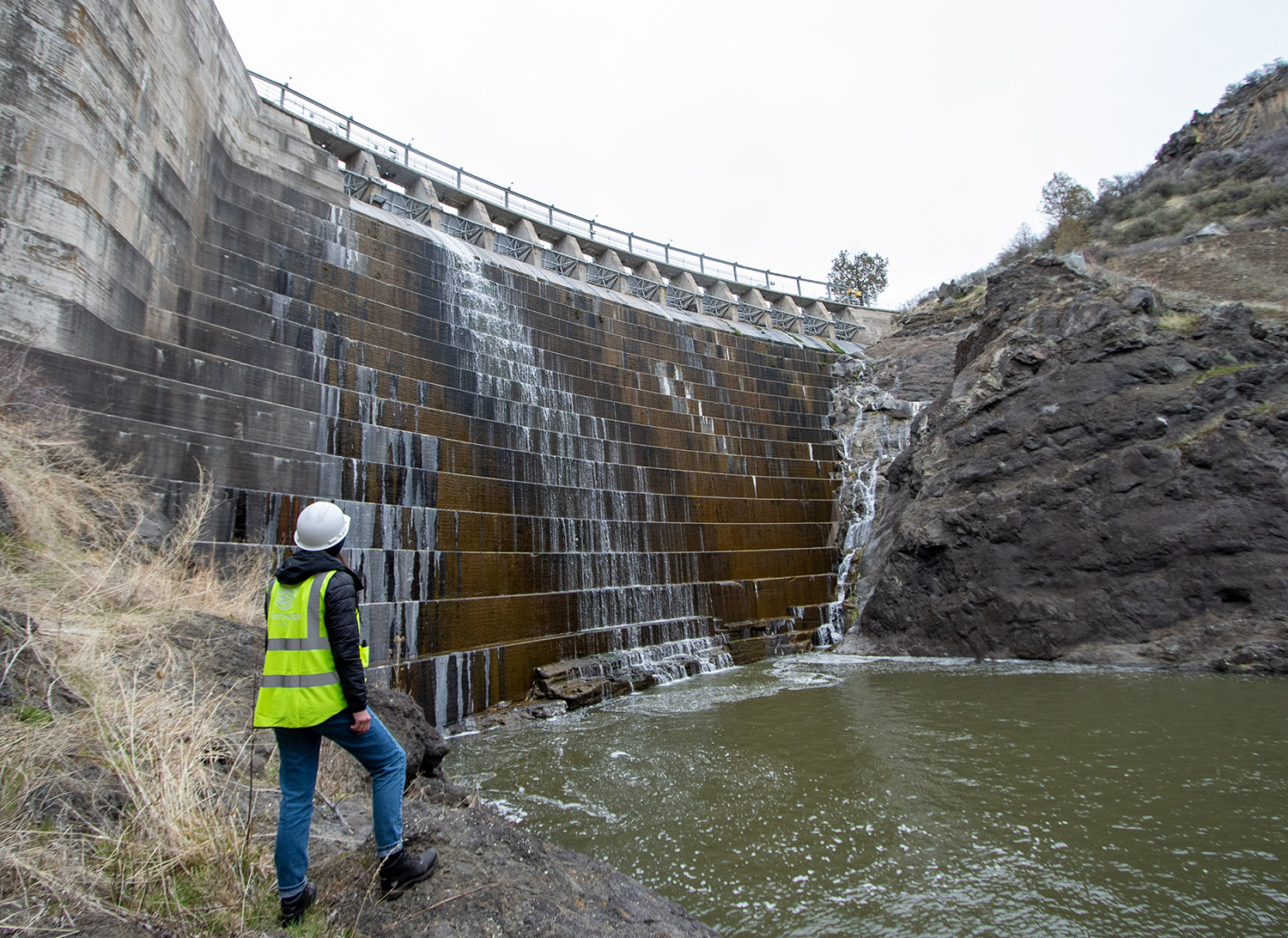 Shane Anderson, Swiftwater Films