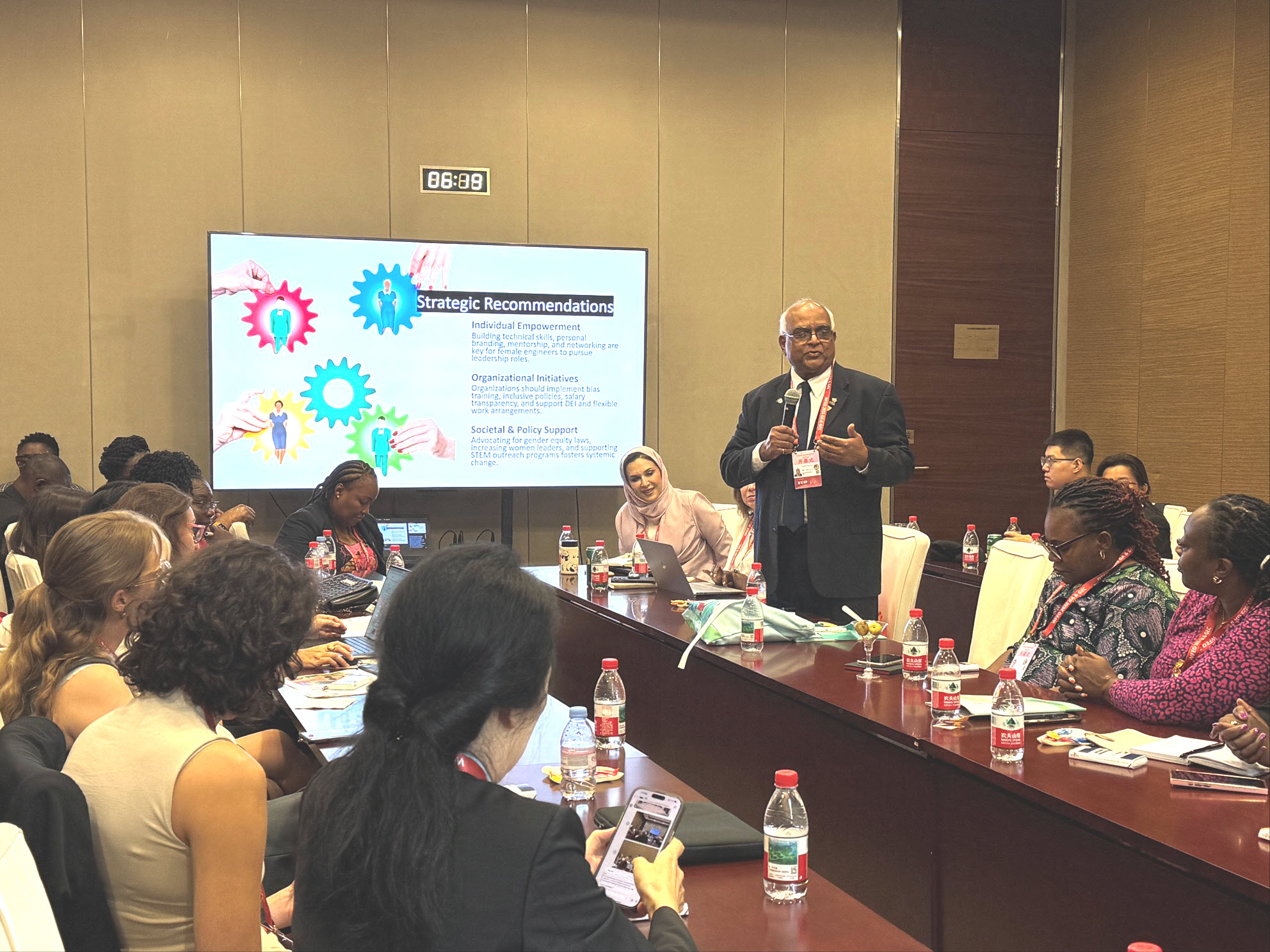
ASCE has prioritized international partnerships for decades. So it was welcome news in October to learn that ASCE 2020 President K.N. (Guna) Gunalan had won election as the new president-elect of the World Federation of Engineering Organizations.
Gunalan, Ph.D., P.E., Pres.20.ASCE, BC.GE, NAC, will be the first American in 30 years to lead WFEO since another former ASCE president was at the helm: William Carroll, WFEO president from 1991 to 1995 and ASCE president in 1989.
It’s just another example of ASCE and civil engineering's influence on the world’s stage.
“ASCE has been a global leader in a number of different areas,” Gunalan said. “We as civil engineers have both a professional and a moral obligation to help shape the infrastructure conversation and make sure that things get done in the right way across the world – no matter what the politics are.
“So I am humbled and honored to have this opportunity to lead.”
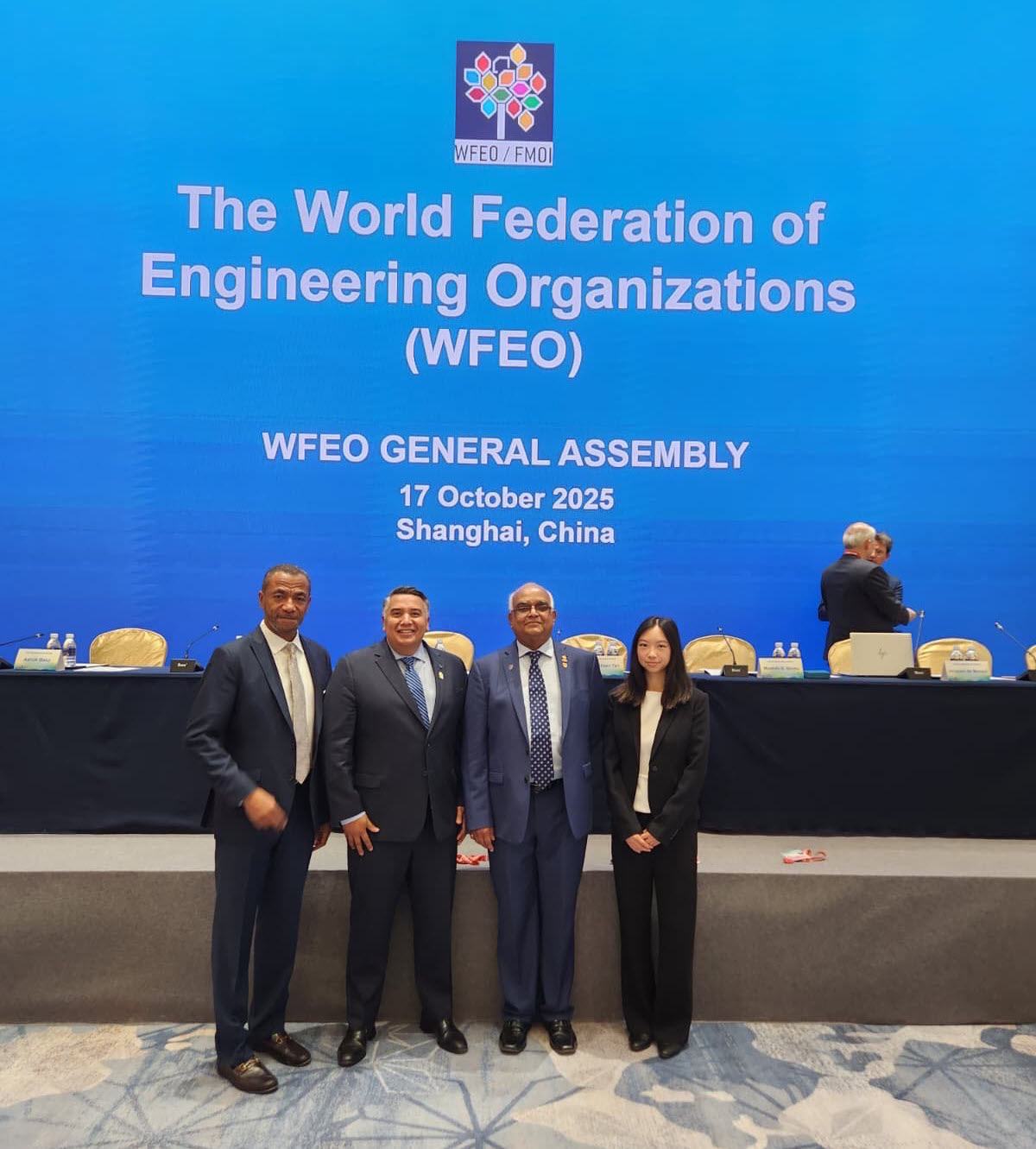
Founded in 1968 under the auspices of the United Nations Educational, Scientific and Cultural Organizations (UNESCO) in Paris, WFEO unites national engineering organizations – including ASCE – from more than 100 nations.
Gunalan also recently served as chair of the WFEO-UN Relations Committee.
His election victory capped a busy season of ASCE global activities.
ASCE signed the Triennial declaration on resilience and sustainability with the Canadian Society for Civil Engineering (CSCE) and Britain’s Institution of Civil Engineers (ICE) during the ASCE 2025 Convention in Seattle to “affirm the urgent necessity of transforming how we design, construct, and sustain the built environment.” The organizations collaborated on a related series of Triennial and global sessions at the convention as well.
Additionally at the convention, ASCE signed renewals of agreements of cooperation with the Japan Society of Civil Engineers (JSCE), the Korean Society of Civil Engineers (KSCE), the Philippine Institute of Civil Engineers (PICE), the Order of Engineers Portugal (OEP), and the Spanish Association of Civil Engineers Asociación Caminos (AICCP).
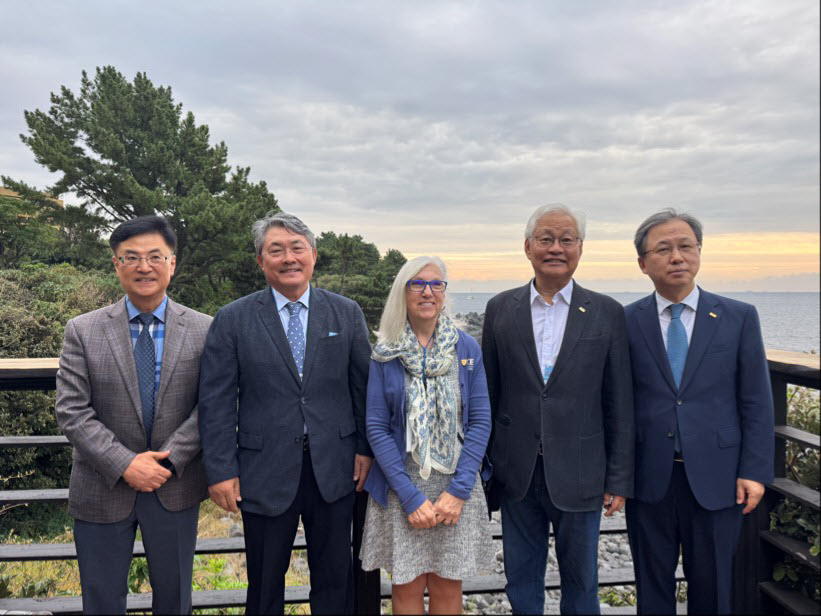
One week later, ASCE was well-represented at the WFEO General Assembly in Shanghai, China, and CECAR10 (Civil Engineering Conference in the Asia Region) at Jeju, South Korea. Newly installed ASCE 2026 President Marsha Anderson Bomar, Ph.D., H.ITE, AICP, ENV SP, NAE, F.ASCE, delivered the keynote address.
Another key factor in ASCE's expanding global reach has been its work with the Engineering Societies of America. Supported by the United Engineering Foundation, the re-establishment of the ESA has unified the U.S. engineering voice as a liaison to WFEO, no doubt both bolstering and being bolstered by Gunalan's leadership.
Meanwhile, ASCE continues to work closely with the Pan-American Federation of Engineering Societies (or UPADI), with ASCE members Ari Herrera, MSCE, M.ASCE, serving as president and Raymond Issa, Ph.D., P.E., F.ASCE, as vice president of UPADI Region 1 North.
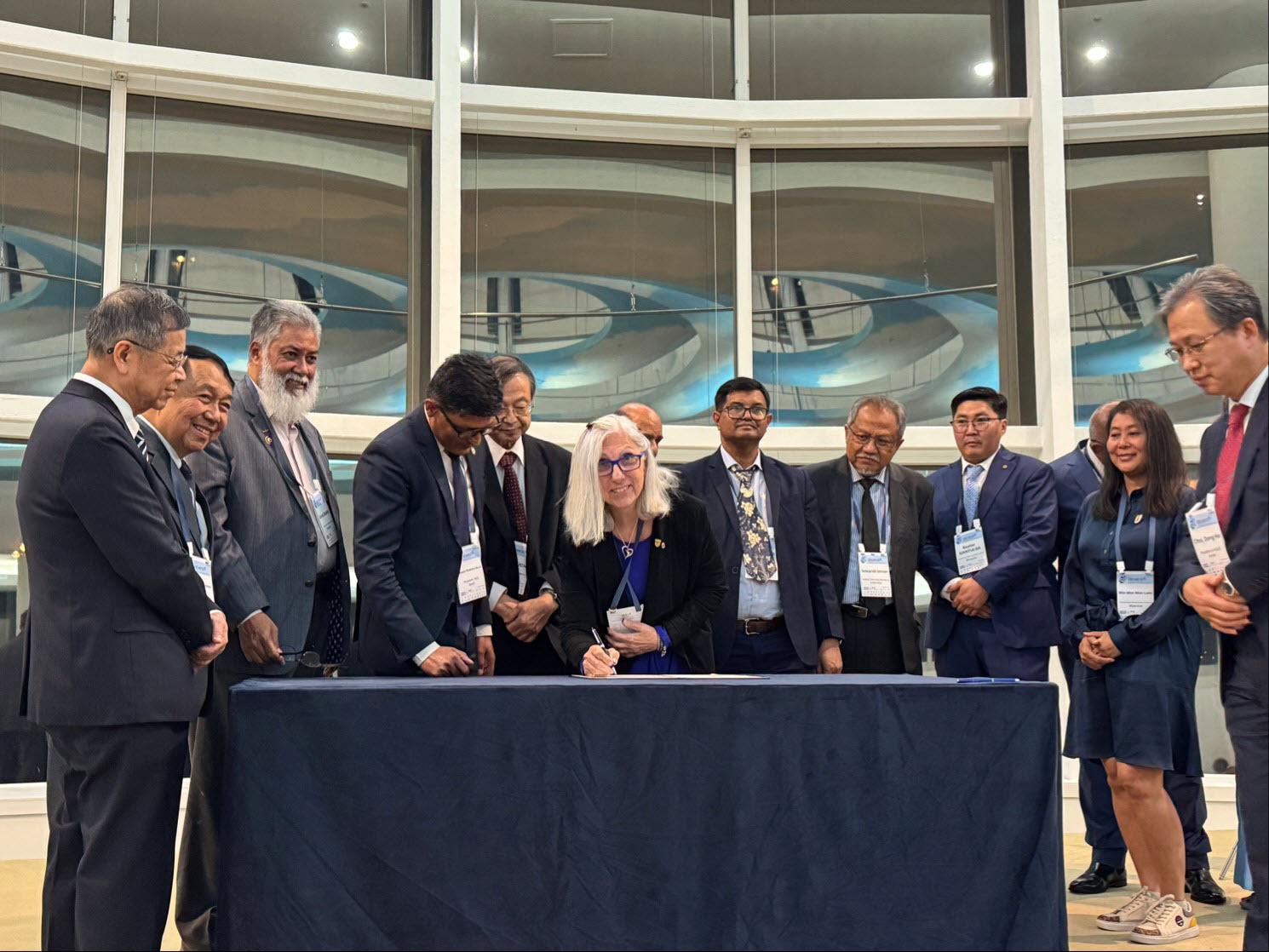
The Asian Civil Engineering Coordinating Council continues to be an important partner as well. ASCE was a founding organization of ACECC back in 1999. ASCE member Udai Singh serves as the ACECC secretary general and was part of the Society contingent at CECAR10. April Lander, who recently completed her term on the ASCE Board of Direction as Region 10 director, has been critical in uniting the various pieces.
“ASCE made the commitment to this partnership 26 years ago, because we know the importance of sustainable infrastructure around the world,” Singh said. “ASCE has been deeply involved in this all along.”
Singh and ACECC are working on programming for early-career civil engineers, along with bringing expertise from ASCE leaders and standards to help make structures in Asia more resilient.
ACECC, as well as WFEO and UPADI, each endorsed ASCE 73-23, Standard Practice for Sustainable Infrastructure, a move that will go a long way toward better incorporating sustainability principles into the entire life cycle of infrastructure projects throughout the world.
But these partnerships are always a two-way street, Gunalan emphasized.
“I always say an educated community is an enlightened community,” Gunalan said. “A simple example: I learned so much in these sessions at CECAR10. I’m still learning. And I'm going to take that knowledge back to my firm, HNTB: ‘Here is some new information.’
“So there is a lot of knowledge like this that goes back and forth. It’s a very natural thing. There are a lot of people around the world doing a lot of good work. These global partnerships allow us all to leverage these efforts and this knowledge together.”
Ultimately, too, civil engineering organizations are about the civil engineers. The technical advancement and knowledge transfer is critical. But it’s the people – the personal connections – that make it all happen.
A quick example:
Anderson Bomar flew into South Korea for CECAR10 with quite an itinerary. It was the middle of the night, and she needed to catch a train from one airport in Seoul to another so she could fly over to Jeju Island. So it’s dark, it’s quiet, she’s tired, and a man approaches her on the train. He asks if her name is Marsha. He has a photo of her called up on his phone.
Strange?
No, just the power of ASCE connectivity.
Turns out he was a student at Georgia Tech 15 years ago and had seen Anderson Bomar speak in Atlanta. His family lives in the same county in Georgia as hers. His wife teaches at the same STEM high school where Anderson Bomar used to serve on the board. He spends a lot of time in South Korea now teaching English, and goes back and forth, and just wanted to say hi to a familiar face on the train. He wound up escorting her to the airport and making sure she got on her flight on time.
“The kindness he showed is just amazing, the relationships we form and the global family we have,” Anderson Bomar said. “And this is not the first time I've had that kind of amazing experience – even in a place I’ve never visited before.”
Anderson Bomar called this kind of connection a “sewing into the future.”
Certainly, that civil engineering quilt will only grow with Gunalan installed as WFEO president-elect.
“Civil engineering is truly a global community,” Gunalan said. “And I believe there has been a lot of vision and leadership within ASCE embracing that. It’s the American Society of Civil Engineers, but everybody now understands that ASCE is truly a global organization.”
Keep up with all ASCE's global activities.