Roadway fatalities in the United States hit an unfortunate high in 2021.
That year, 43,230 people died in motor vehicle crashes, the worst since 2005.
“Most people don't realize what that number is,” said Blaine Leonard, P.E., BC.GE, Pres.10.ASCE, a transportation technology engineer at the Utah Department of Transportation. “If we were to crash a Boeing 737 every two days consistently throughout the year, we would kill about 43,000 people. That's what we're doing on our highways.”
The number of deaths dropped slightly in 2022 and again in 2023, when 40,990 people were killed.
But how can the U.S. continue to reduce roadway fatalities? Car crashes have a wide range of causes, and their severity is determined by many factors, one of which is human error. Autonomous vehicles might offer a solution.
AVs aren’t new
AVs have gotten a surge in publicity in recent years.
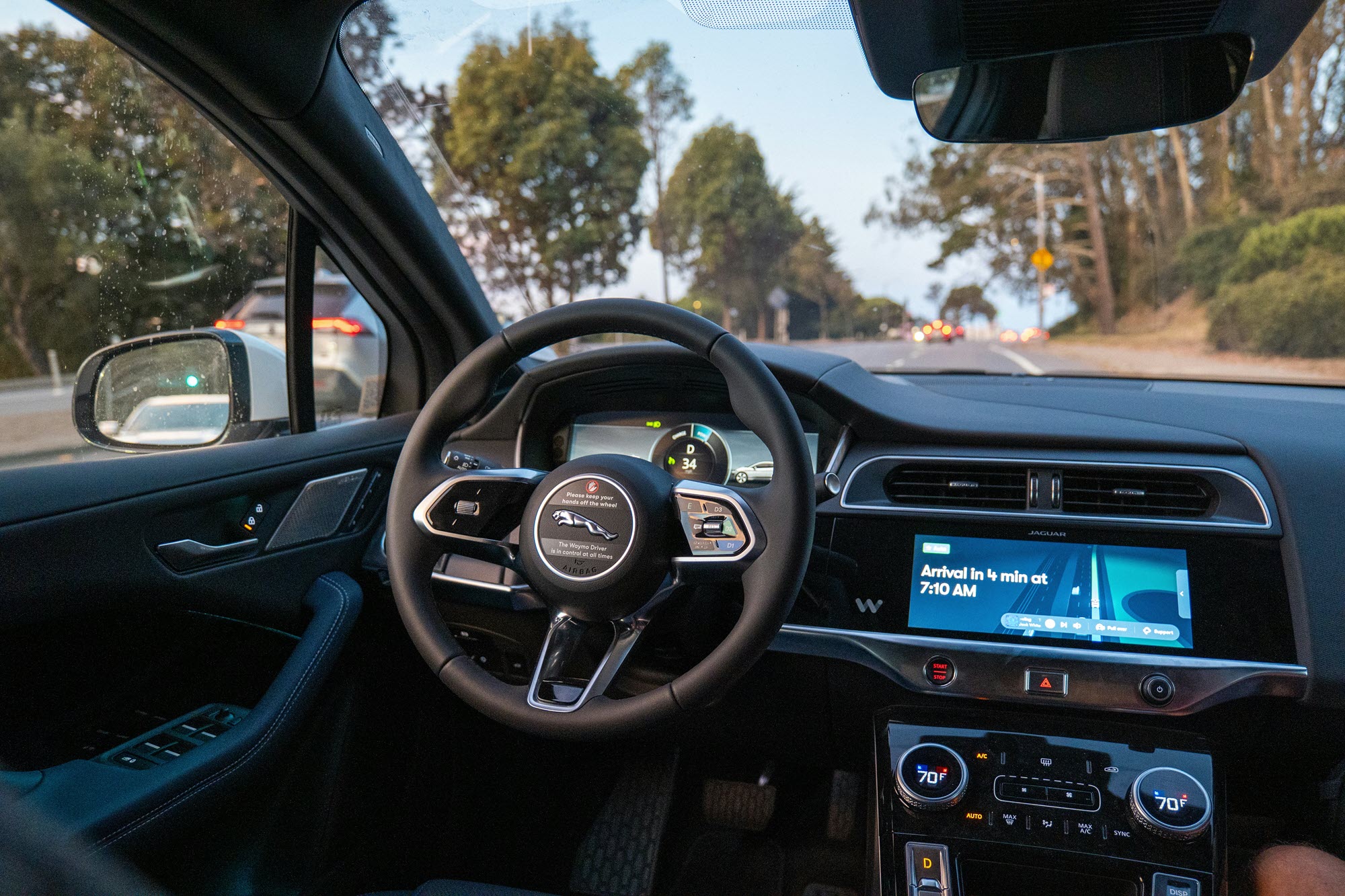
With brands offering more and more autonomous features in their vehicles, drivers now have the option to transfer some driving responsibility to the vehicle itself. Commercial ride-sharing services – most notably Waymo, an autonomous taxi service – are gaining traction in cities across the U.S. But AVs aren’t necessarily new.
Airplanes, for example, have used autonomous technology for decades, noted Tom Fisher, a professor of architecture at the University of Minnesota and director of the Minnesota Design Center.
“It's simply the technology that keeps airplanes safe being brought into surface vehicles,” Fisher said. “It's lidar, it's radar, it's GPS, it's all the technology that we use in an airplane.”
Autonomous surface vehicles are designated as levels 0-5, with a Level 0 vehicle being an older vehicle with no automation at all and a Level 5 being completely autonomous and capable of driving in any condition a human can – Leonard used a “dirt road at night in a snowstorm” as an example.
Although Level 5 vehicles are still conceptual, many passenger and commercial vehicles offer a range of autonomous features. For example, adaptive cruise control – a Level 1 technology – is available in most cars. Highway pilot – a Level 2 feature that can enable vehicles to control speed, brake, and maintain their position in a lane on the highway – is offered by some makes. Waymo and some interstate trucking companies use Level 4 features that allow the vehicle to operate without a driver.
And trucking companies that have deployed AVs have already seen benefits.
“With interstate trucking, there are companies operating out of Texas and Arizona who are currently hauling freight along corridors in the southern part of the United States, sometimes without a driver,” Leonard said. “The use case there is you've got open interstates that are relatively flat, relatively straight, have relatively dry weather, and the automated driving system is more efficient than a human from the standpoint of speed control and fuel use.”
Although some truckers are concerned about AVs filling jobs, there is still a major shortage of long-haul truck drivers. Autonomous trucks offer a long-term solution if the problem persists.
Opportunities abound
Trucking isn’t the only area in which AVs have been successful. The Waymo ride-sharing service, which aims to provide a transportation option not subject to human error, is growing steadily and has high safety ratings.
According to Waymo, its fleet of vehicles has recorded 91% fewer “serious injury or worse crashes,” 79% fewer “airbag deployment crashes,” and 80% fewer “injury causing crashes.”
“The research shows that the main causes of accidents with autonomous vehicles have been human drivers driving into them, or somebody engaging some aspect of the autonomous vehicle so it wasn't fully in operation mode, or taking autonomous vehicles into places they weren't designed for, like farm fields,” Fisher said.
Cases like these get a lot of media attention, but AVs have a strong safety record, and Fisher believes that public doubt will be reduced as more people experience them.
“I think a lot of people have been skeptical of autonomous vehicles until they ride in one and they realize that they obey the speed limits, they operate pretty smoothly, and if there's any issue, they come to a stop until whatever thing is in the way clears up,” he said.
Shane McKenzie, P.E., M.ASCE, connected and automated vehicle technology lead for the Kentucky Transportation Cabinet, cited a study done by AAA that found low public trust in AVs.
According to the 2025 survey, 61% of U.S. drivers are still skeptical of self-driving vehicles, with only 13% of respondents reporting trust in these vehicles and 26% remaining unsure. However, 78% of respondents think improving vehicle safety systems is a priority.
McKenzie believes “education and exposure tend to calm fears and uncertainty among most riders.”
Beyond safety, AVs can make mobility much more accessible to those who otherwise could not use a vehicle on their own. Advocacy groups for disabled and blind individuals are “enthusiastic about the improved mobility these vehicles offer,” said McKenzie.
“These communities often face significant transportation barriers compared to individuals who can drive themselves,” she said. “Public transportation may significantly increase travel times, and relying on family and friends can be burdensome. Autonomous vehicles offer a level of independence that is otherwise difficult to achieve.”
Although autonomous ride-sharing services like Waymo currently operate only in a limited number of cities, there is potential for autonomous ride-sharing options to help patch major gaps in transit in rural areas as well, Leonard said.
“In rural areas, people who can't drive or don't drive for a variety reasons don't have other options,” he said. “There's generally no cab service in smaller towns. There's generally really limited, if any, transit service in smaller towns.
“A ride-hailing company or some kind of an autonomous vehicle system in a small rural town could really fill a need that's not being satisfied otherwise,” he continued. “For the person who needs to get to the store or the hospital but can't drive because of some disability or age, you could really fill a need today. The challenge is the business case – making the cost of the service reasonable.”
On a broader scale, more AVs driving alongside manually operated vehicles might increase traffic. But on the flip side, commuters using AVs could see major benefits in their life satisfaction.
“You're not driving the car, so you have time to do whatever you want, to scroll on your phone, to do work, or to get your laptop out, to read, or take a nap,” said Leonard.
Challenges persist
Although AVs have often outpaced humans in terms of general crash safety, there are areas where their performance lags behind human drivers.
Loren Stowe, a certified functional safety engineer and senior research associate at the Virginia Tech Transportation Institute, or VTTI, noted that AVs are rear-ended at a much higher rate.
A 2021 study showed that 73% of crashes involving AVs are rear-end crashes – or 4.8 times more than those involving only human-driven cars.
Another study published in 2024 found that rear-end crashes made up 59% of AV crashes but identified several specific factors – “location outside the intersection in the intersection-related area, traffic signal control, autonomous engaged mode, mixed-use or public land, and weekdays” – as key contributors to this specific issue.
“So, it's disproportionate, which says that they are operating in a way that is not consistent with what the human expects,” Stowe said. “Most of those are low-speed collisions, so they don't result in injury, but there are a lot of rear-end accidents that have occurred associated with AVs that wouldn't have if they'd had a human driver.”
He noted that there are still a small number of AVs operating compared with driver-operated vehicles, and those on the road are restricted to very specific driving conditions, so the crash data might not be entirely representative.
The national human-driver rate is 1.2 fatalities per 100 million miles driven, McKenzie said. But for AVs, “there is not yet enough real-world mileage to produce a statistically valid comparison.”
Another recurring issue with AVs is their confusion when faced with nonstandard road conditions.
Leonard used responding to emergency vehicles as an example: “The AV doesn't know it just parked on the hose, and there's no way to say to the driver, ‘Can you move this? You're on the hose,’ because there's no driver.”
Other conditions, like roads without visible paint stripes or parked vehicles blocking lanes, can also cause problems for AVs. And when AVs get confused, they can block roadways and contribute to traffic buildup.
But Leonard views these as “edge cases” that don’t occur in the vast majority of AV trips.
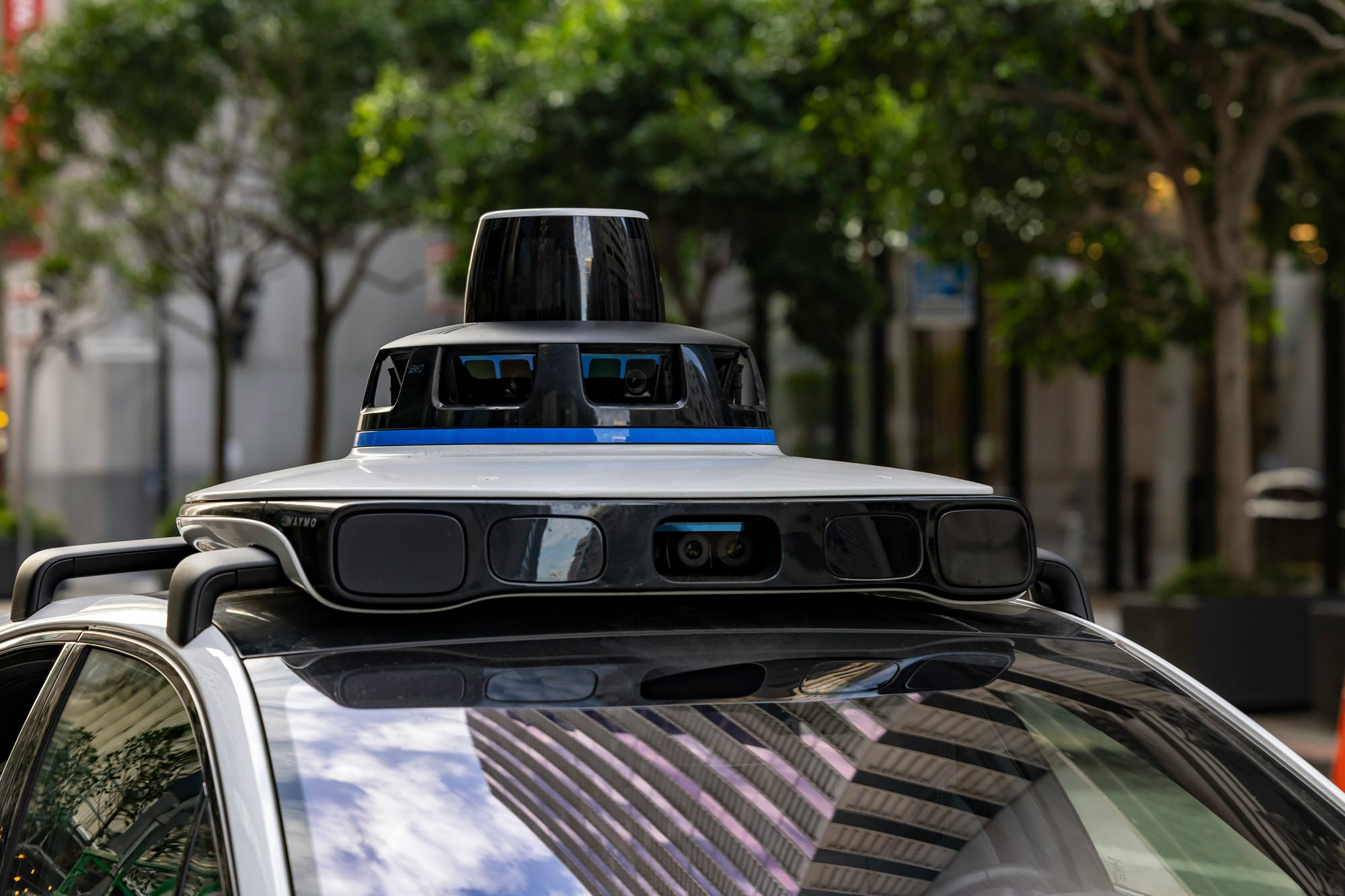
A more consistent challenge comes with weather.
“If we can't see what's out there, we tend to drive very slowly,” Stowe said. “We don't drive until we make sure that the windshield is scraped off so we can see just as we turn the lights at night. You must be able to see to execute the operations that are necessary to safely drive the vehicle. That’s true of AVs as well.”
Like human drivers, AVs need to be able to adapt to their surroundings. But the technology hasn’t been able to thrive in areas with inconsistent weather.
“That's the reason they're in Phoenix, Austin (Texas), and Atlanta and not in Albany (New York) or Alaska, where in the winter there are no paint stripes because they allow the roads to become snow and ice covered,” Leonard said.
And in rural areas, roadways are often less consistent, with many being windy and narrow with less shoulder space.
“Rural roadways are typically narrower, often one- or two-lane, with higher speeds (around 50 mph), fewer traffic controls, and more curvature – all of which create challenges for automated systems and unfamiliar drivers,” McKenzie said.
Are we ready for AVs?
AVs aren’t going away, and there is research being done to address their current issues.
“One of the things we get to see at VTTI – because of the facilities and the weather capability that we have – is what industry is doing to look at how perception systems and the AV planning and execution of the driving task do in these different weather conditions,” Stowe said. “So, we're able to see the industry trying to move beyond this idealized type of condition that they currently are operating in – and arguably have to operate in at this point – to be able to start working in the public domain,” Stowe said.
Waymo is moving into Detroit, which has a much more diverse set of weather conditions than its current operating areas. And when AVs learn to adapt to different road conditions, they may have more of a path into rural areas.
Like with the transition from horses to automobiles, there is skepticism around AVs, Fisher said. But even then, people were able to adapt quickly.
“When we had both cars and horses on the street at the same time, we had lots of accidents. Cars were running into horses, horses were kicking cars,” he said. “The two technologies didn't work, and the roads didn't work.”
With AVs proving themselves a safe option, Fisher expects a similar switch.
“I don't know when that tipping point will happen,” he said. “But if the history of automobiles in the automotive industry is any indication, it's going to happen faster than we think.”