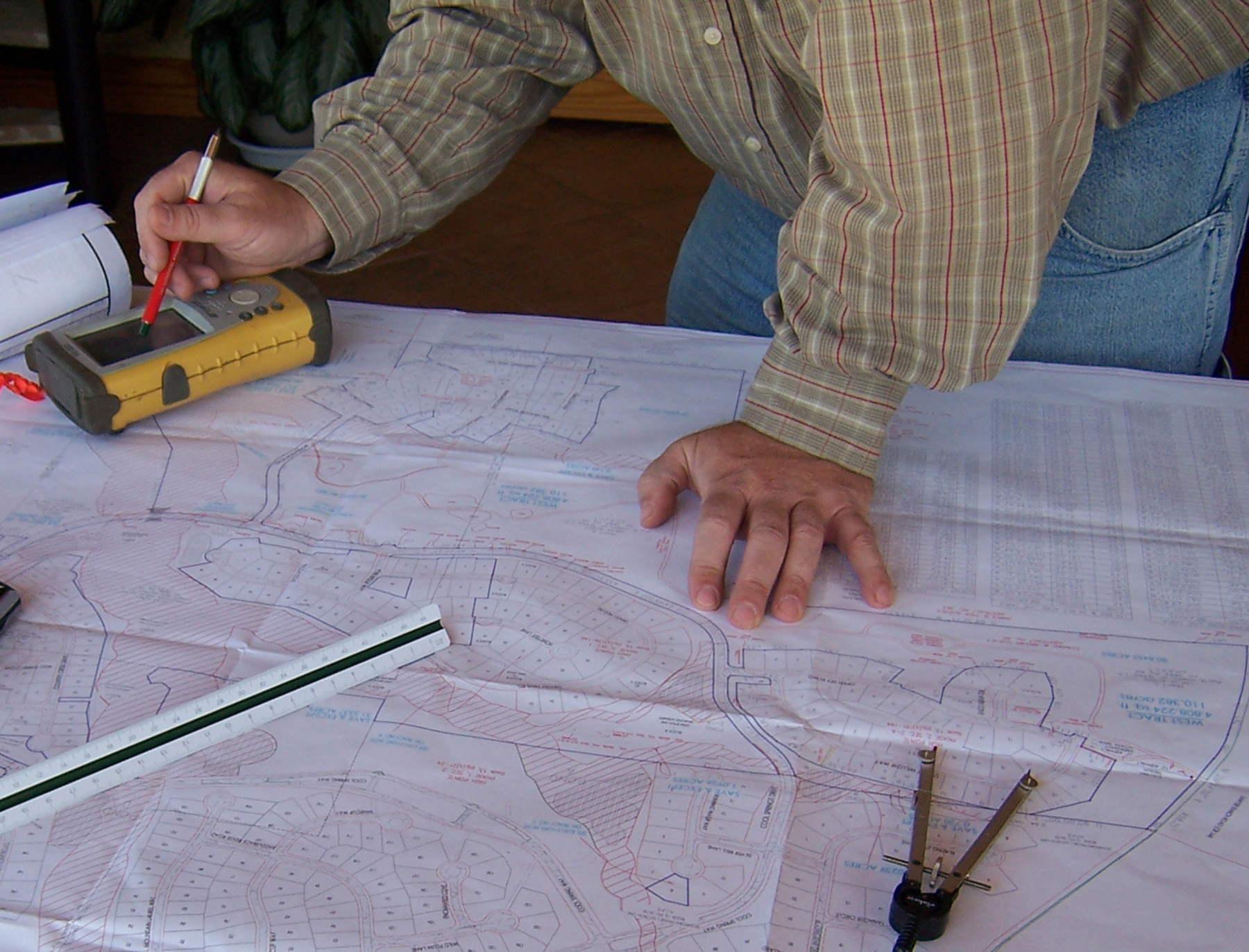
 Courtesy of Wikimedia
 Concern over a possible paring down of the federal government’s list of “professional” careers has centered on nursing, but engineers have something to say about it too.
Since the earliest part of the 20th century, civil engineers have sought professional designation through exams and state licensing – an official nod demonstrating they have the knowledge and skills required to ensure safety, quality, and regulatory compliance for infrastructure projects.
Further reading:
- States weigh changes to civil engineers’ licenses; advocates hold firm
- Get ready for an all-new P.E. exam format; here’s what you need to know
- Agreement streamlines reciprocal licensure for engineers in the US and UK
Despite this important certification, however, the U.S. Department of Education has never explicitly listed engineers, regardless of P.E. status, as part of its professional category of career paths.
For decades, this discrepancy did not matter much. While the federal government’s official definition of a professional degree did shape who could access federal student aid as well as loan forgiveness, the designation did not attract much public attention. That changed when the One Big Beautiful Bill Act was signed into law in July.
The 800-plus-page bill includes a cap on how much students can borrow to fund their graduate education using lower-interest federal student loans, allowing those in the professional category to borrow double the amount of those seeking nonprofessional degrees.
The Department of Education has proposed an amended list of majors that meet the professional standard. One of the professions that would be removed is nursing, which has led to widespread public outcry. Architecture, too, would lose its designation, prompting the American Institute of Architects to protest.
And while engineering master’s or doctoral degrees were never explicitly considered to be professional degrees by the DOE, the previous list of professional majors included a clause leaving room for engineering majors to qualify under the professional category. The proposed changes, which would close that door, have caused some consternation in the civil engineering community.
“Being able to say you have a professional degree comes with a source of pride,” said Charles B. Chadwell, Ph.D., P.E., M.ASCE, dean of the Steve Sanghi College of Engineering at Northern Arizona University and the executive director of Chi Epsilon, the civil engineering honor society. “Engineering is a degree that requires a lot of study, a lot of diligence, and extensive education to graduate with an advanced degree and acquire licensure.
“Civil engineers, in particular, have fought long and hard to be seen as professionals, so I think this step, even if it is largely nomenclature, is a step in the wrong direction.”
In recent years, some states have made overtures toward eliminating licensure requirements, including for engineers. These efforts could gain steam if the federal government doesn’t consider engineers to be professionals.
The change isn’t official yet, as the DOE has not published a proposed or final rule. But if the proposal goes through, the new professional classification would only cover graduate degrees in 10 areas: medicine, law, dentistry, pharmacy, veterinary medicine, chiropractic medicine, optometry, podiatry, osteopathic medicine, and theology.
As a result, students pursuing degrees in these fields would be eligible for a lifetime aggregate of $200,000 in federal student loans. Nonprofessional graduate degrees, including those in civil engineering, would have a $100,000 cap. There also would be annual caps: $50,000 per year for those in the professional category and $20,500 for everybody else.
‘Panicking’ is not necessary
In a press release, the DOE stated that the term “professional degree” was an internal definition to “distinguish among programs that qualify for higher loan limits, not a value judgment about the importance of programs.”
Andrea Welker, Ph.D., P.E., F.ASCE, dean of the College of New Jersey’s School of Engineering, said she believes people are “panicking” over semantics – and, at its core, the proposed change will ultimately help engineers by limiting how much debt they accrue as they pursue advanced degrees.
“I would never recommend that any student get $200,000 in debt for an engineering degree,” she said. “Because, with a master’s or Ph.D. in civil engineering, most people will never make close to enough money to pay it back. … This cap on the maximum amount you can take out in federal student loans is a good thing when so many students, across fields, are becoming incapacitated with student loan debt.”
Welker added that the majority of civil engineering students pursuing graduate degrees should not need to borrow even $100,000, especially with many programs offering tuition assistance through teaching or research assistantships.
“I believe the Department of Education made a mistake by using this kind of terminology – the whole idea that one degree is professional and another is not has gotten everyone into quite a tizzy,” she said. “But when you look at what they are proposing, it’s a benefit for engineering students. It will stop them from getting over their heads in debt.”
Chadwell, for the most part, agreed with Welker.
But he said that ongoing uncertainty regarding federal science and education grants, coupled with rising tuition costs, means that such a designation, ultimately, may have greater implications than just a name. The true impact may take time to see.
“In general, public institutions are seeing dwindling state and federal support,” he said. “We are relying, more and more, on tuition and student fees to make advanced education work.
“As engineering becomes more advanced in terms of the technology we use and the kind of knowledge that engineers need to work in the field grows more vast, there’s going to be a gap in the funding we need to get our students where they need to be. And if our graduate students are capped on what they can pay in terms of tuition, where does that money come from?”
Advanced degrees are important
It’s a good question – and one that does not have a ready answer, given the many uncertainties surrounding educational funding at this time. And that is likely why, Welker noted, so many people are reacting negatively to the DOE’s proposed change even though it would ultimately help prevent many students from leaving school with “crippling debt.”
“There’s a general level of anxiety regarding everything from tuition hikes to tariffs that is making people read more into these things,” she said.
Despite that anxiety, Chadwell said that advanced civil engineering students should never doubt that they work in a professional field. They put in significant time and effort to achieve advanced degrees, and it is apparent in the vital work they do.
But he does worry that, as long as there is a strong job market, many talented civil engineers will not bother to pursue master’s or doctoral degrees.
“We see less and less engineers, particularly American-born students, come into our master’s and Ph.D. programs today,” he said. “And I worry, without adequate student or institutional funding, we are going to get to a point where there’s a huge gap in highly technical professional areas that do require civil engineers to get those advanced degrees (in order) to help maintain and replace our country’s aging infrastructure.”
Read a discussion of this issue by engineers here. And see an ASCE statement about this issue here.