
 Peter White
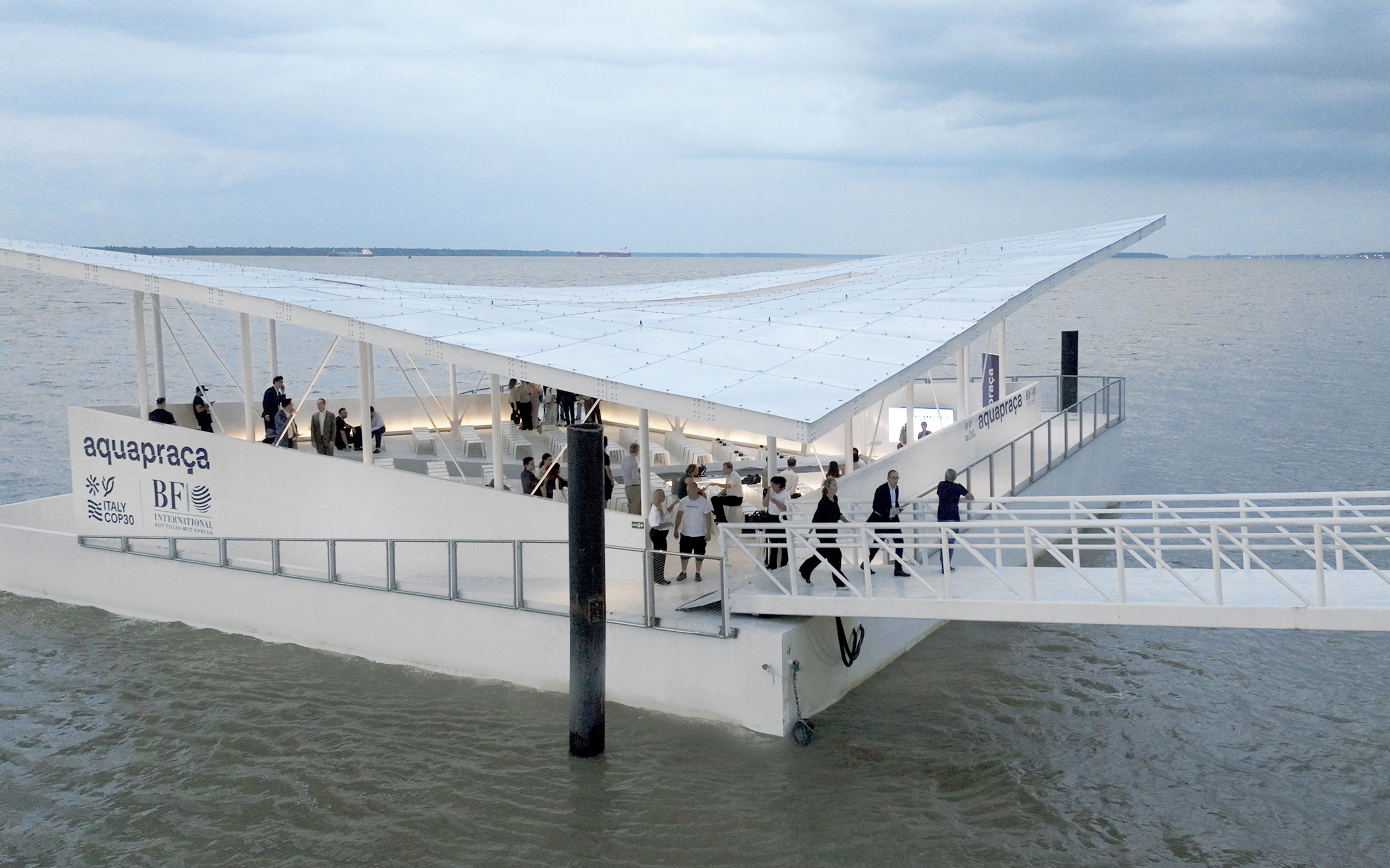
 A steel pavilion floating on the water, AquaPraca is an exercise in observation and contemplation.
The plaza directs guests to witness the rapidly evolving reality of rising sea levels. The structure is a literal and figurative platform that raises public awareness about climate change.
Further reading:
- Floating structures could be smarter option to cope with rising sea levels
- Warming Sun Belt cities turn to cool pavement to help mitigate climate change
- Collaboration combats climate change
“Proximity alters perception. The project is calibrated so that visitors stand only slightly above the waterline. As tides shift, the relationship between body, horizon, and surface changes subtly but continuously,” explained Carlo Ratti, founding principal of Carlo Ratti Associati. “The aim is to make environmental variability perceptible through direct experience rather than abstract data. It invites discussion about rising sea levels, shared ecosystems, and the political consequences of environmental change.”
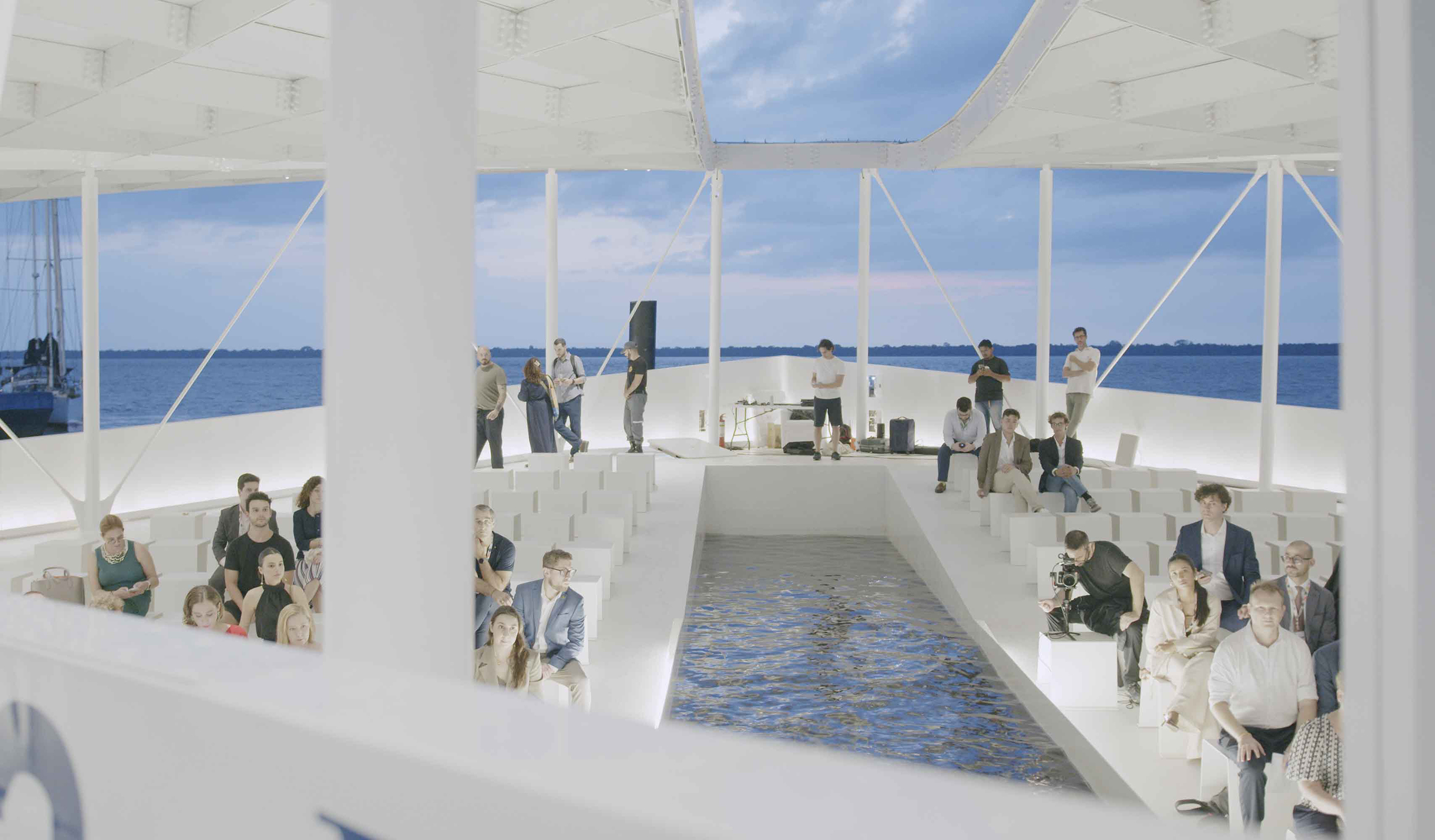
“By submerging visitors within the environment, AquaPraca promotes ecoliteracy,” added Eric Höweler, founding principal of Höweler + Yoon. “Being at eye level with the water stimulates reflection on the relation of the self to the environment.”
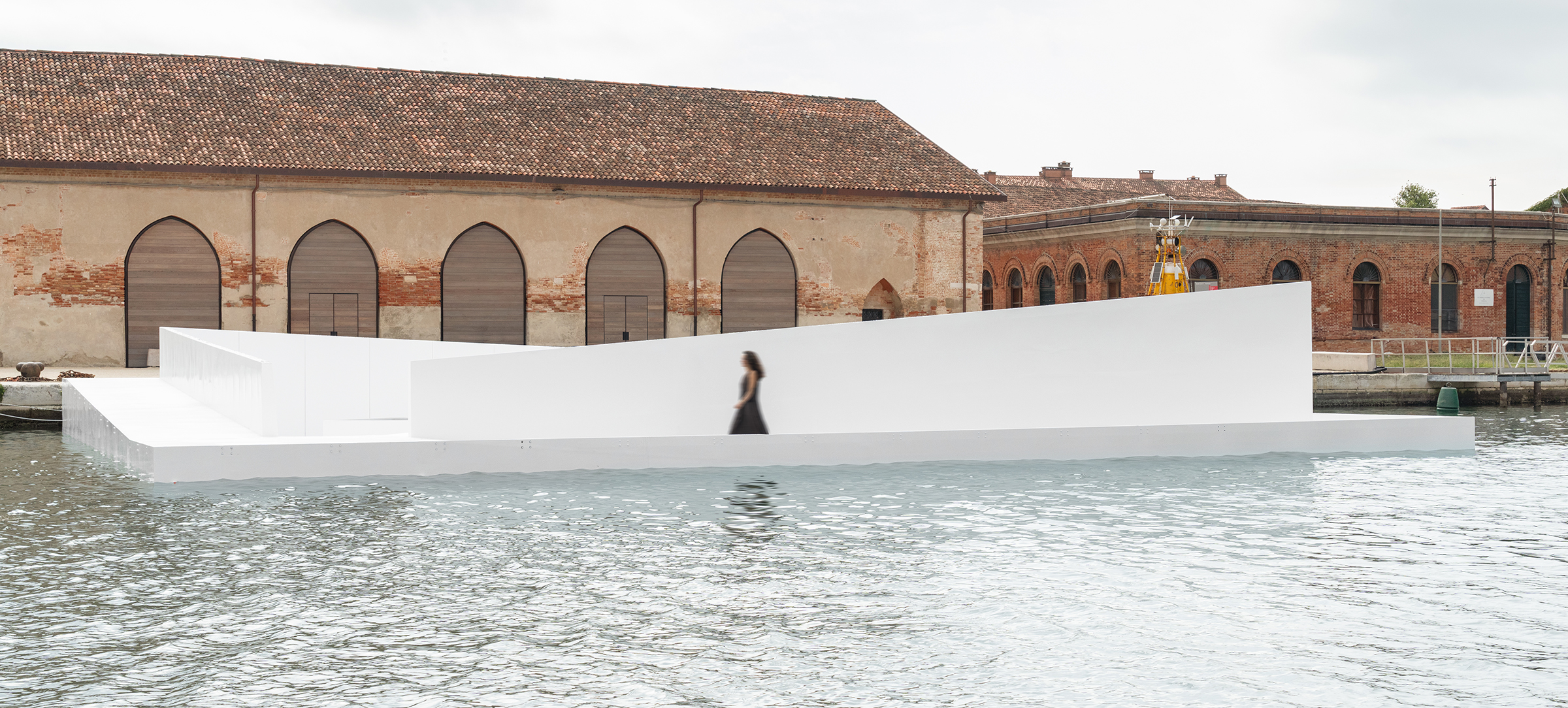
As part of a global dialogue on climate adaption, AquaPraca debuted in Italy at the 2025 Venice Architecture Biennale and then traveled to its permanent destination in Belem, Brazil, for the United Nations Climate Change Conference, known as COP30. The structure is engineered to maintain equilibrium across 6 feet of tidal rise while withstanding brackish water and tropical weather.
Constant calibration
Under an inviting canopy, AquaPraca provides 4,000 square feet for interactive events like lectures and presentations. The outer edges feature a walkway evocative of a ship’s promenade. At its core is a touchable water feature – a visual play on the word “water table” – that keeps the environment front and center.
Though the design is overtly nautical in nature, AquaPraca is not a vessel and has no engine or steering system. It is moored in place with piles and connects to the onshore electrical grid. It remains buoyant, however, by borrowing established technology from submersibles. This allows AquaPraca to maintain a minimal freeboard, which is the measurement from the water surface to the deck line.
“The substructure contains pumps, buoyancy chambers, and a control room, responding both to the presence of visitors and changing wave conditions,” Ratti explained. “Like any marine vessel, the platform will require ongoing inspection and maintenance. However, it was engineered according to offshore platform standards to maximize durability and resilience in harsh aquatic environments.”
 Peter White
 Design and construction were accomplished within a tight five-month timeline, aided by Maestro Technologies for digital twin project management and hull fabrication by advanced steel construction company Cimolai. Both Ratti and Höweler remarked how rewarding it was to collaborate with those from disciplines beyond civil engineering, including naval architects as well as electrical and mechanical engineers.
Aspiring adaption
AquaPraca launched as an open-air form, with the roof added to address Brazil’s heavy rainfalls. Both mooring sites have direct connections to the water, from Venice’s canals and flooding to Belem’s estuary position as the eastern gateway to the Amazon River. AquaPraca serves as a reminder of how climate resilience is integral to daily existence.
“Architecture has long focused on mitigation and reducing environmental impact,” Ratti said. “That remains important, but we now face a climate that has already shifted. The challenge today is how to design within instability. It’s why AquaPraca’s primary ambition is spatial and environmental rather than a technological display.”
“We want to create projects that don’t just consume less power or fewer materials but prompt us to understand ourselves in the larger flow of social, energy, and material impacts,” Höweler added. “Water makes people present because it demands attention as both a source of life and a potential source of destruction. Since it’s unusual to have a public space that’s floating, AquaPraca compels visitors to imagine a future that’s more buoyant.”
Could more architecture look and behave in a similar fashion to AquaPraca?
Since many coastal areas are facing permanent rises in sea levels, there is a growing need to mitigate this threat. AquaPraca offers a glimpse at how the built environment might be more intimately connected to the seascape.
“The relevance lies in the typology rather than direct replication,” stressed Ratti. “As coastlines become less predictable, cities may benefit from public infrastructure that accommodates variable water levels without sacrificing civic space. A floating platform offers one possible model.
“Its applicability depends on local environmental conditions, but the underlying principle aligns with the broader shift toward adaptation.”
 DSL Studio
