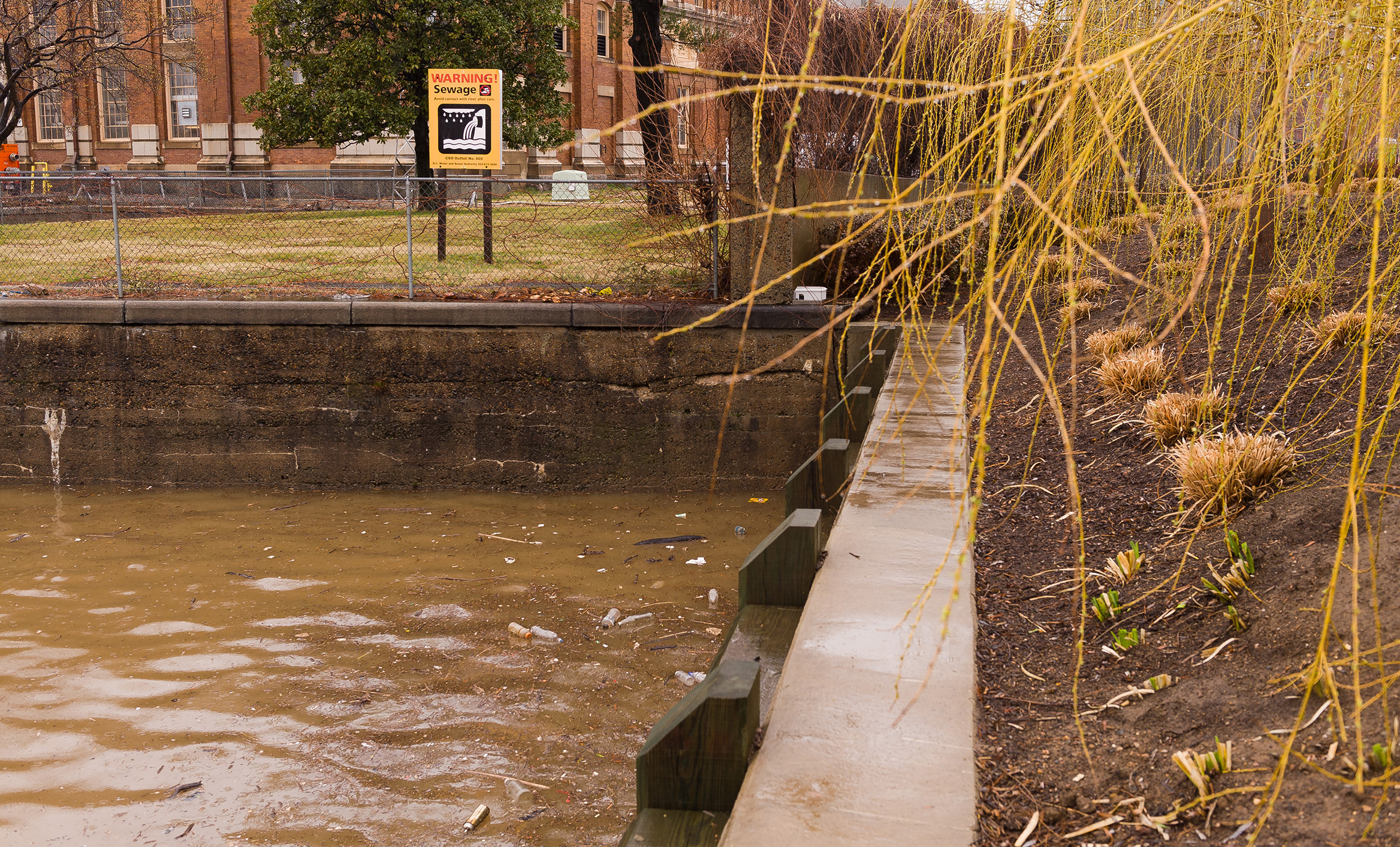
 Eric Vance, U.S. Environmental Protection Agency via DPLA
Ever since U.S. residents saw the Cuyahoga River in Ohio burning in 1969 – a stark symbol of unchecked industrial pollution – clean water advocates have had a vivid image to rally around.
Just three years later, Congress passed the Clean Water Act, putting water – humankind’s most precious resource – on the path toward recovery by establishing a framework to restore and protect U.S. waterways. The next chapter in the rebound story, however, includes legislative attempts to roll back key provisions of the landmark CWA.
Further reading:
- ‘Vast opportunity’: Captured stormwater could be urban boon
- States weigh changes to civil engineers’ licenses; advocates hold firm
- ASCE outlines WRDA 2026 water infrastructure needs with a focus on public safety
Provisions related to stormwater, in particular, have become targets of those seeking change to the law.
Troy Dorman, Ph.D., P.E., M.ASCE, called attempts to roll back stormwater regulations, including amendments adopted under the Water Quality Act of 1987, misguided. Stormwater received a D on ASCE’s 2025 Report Card for America’s Infrastructure, underscoring that the sector remains underfunded and in need of significant improvement.
Dorman, a board member of ASCE’s Environmental & Water Resources Institute and a vice president at Halff in San Antonio, noted that the U.S. has spent $850 billion responding to disasters stemming from stormwater-related flooding in the last 25 years.
All you have to do, he said, is watch the evening news to see stories about flooding in New York City’s subway system, flooded neighborhoods in California, or overtopped levees in the Midwest that leave entire towns covered in water.
The idea of rollbacks “conflicts with what we've seen over the last 50 years in stormwater management,” Dorman said, pointing to research by the U.S. Army Corps of Engineers and the Federal Emergency Management Agency.
“We know that spending money on mitigation up front and managing stormwater in a safe and effective way pays dividends,” he said. “There are multiple studies prepared by the Corps of Engineers and FEMA and others that show that it's somewhere in the 4-to-1 to 5-to-1 range of the benefit for each dollar spent on properly managing stormwater.”
Accountability is crucial
Heather Gacek, P.E., M.ASCE, president-elect of EWRI, said since its passage in 1972, the CWA has improved drinking water and led to crucial environmental and stormwater regulations that must be preserved.
“The biggest benefit is how we've placed accountability near the source of pollution,” said Gacek, a water resources engineer and watershed manager. “Those changing the land to have an impact on people downstream and within that same watershed are held responsible to mitigate some of the impacts that they are creating.”
That responsibility for developers often carries a financial cost.
Gacek said the costs that stormwater regulations put on developers are there for good reasons, including how removing trees and vegetation alters water’s natural interaction with the surface.
“When we remove all of that and then replace it with impervious surfaces, we increase the amount of runoff, we reduce the amount of groundwater recharge, and that has impacts on the entire watershed,” she said. “So the stormwater regulations, while adding a small cost at the development phase, protect everyone within that watershed.
“So, yes, you may develop your land, but you're still responsible for how that impacts everyone around you.”
Dorman said the CWA marked a turning point in how the U.S. approached the declining quality of its water.
Like Gacek, Dorman emphasized the benefits that the law has delivered.
“We actually have clean water now in a lot of cases,” Dorman said. “There's still room for improvement, but we don't have rivers on fire and other things that were happening in the past that were the direct result of pollution that was man-made. Water is so critical to everything we do. It's critical to us as humans, but it's also critical to the environment. It's critical to the food supply. It's critical to nature.
“Yes, there's a cost associated with it. Yes, there's a regulatory framework that's required to implement it. But you look at the benefits, and I would think most people would say the benefits have outweighed the costs.”
While there are costs on the front end, Dorman said it is more expensive later.
“It's more cost-effective to prevent the pollution than it is to try to clean up water supply later,” Dorman said. “It gets much more expensive to try to get pollution out of millions of gallons of water that we're using for drinking than it is to clean up that source of pollution from the beginning.”
And while rollbacks could bring short-term profit for developers, Dorman said, “in the long term, there's a big risk of financial ruin for communities, counties, state agencies, and, potentially, the federal government, as healthcare costs, drinking water cleanup, and disaster response costs spiral out of control.”
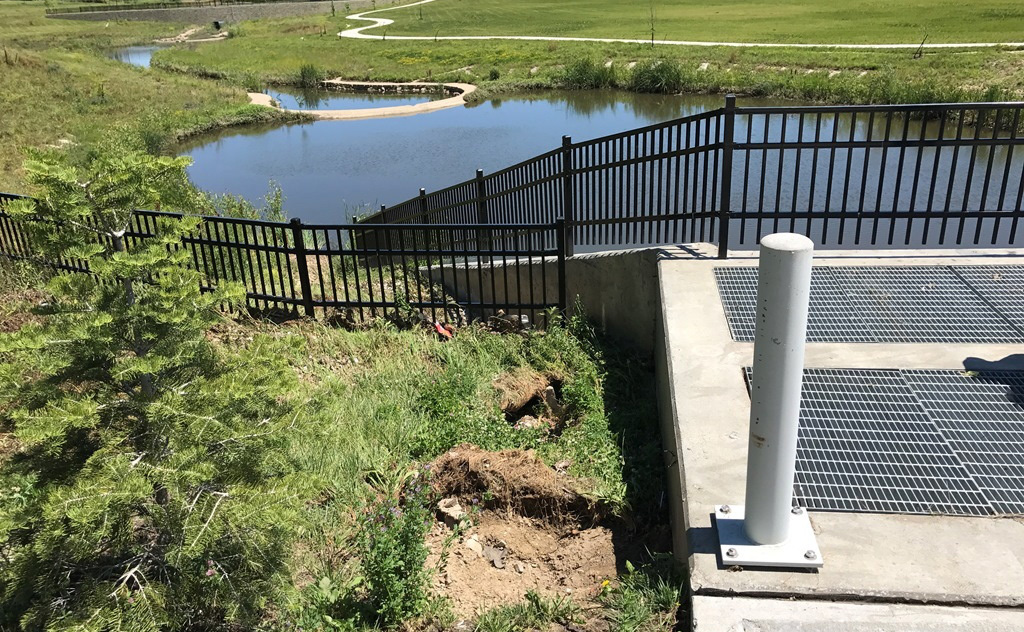 U.S. Geological Survey
Rollbacks would prove costly over the long run
Gacek added that rolling back stormwater regulations would bring significant increases in flooding and the accompanying costs, along with higher treatment costs to maintain high-quality drinking water.
According to a 2024 Senate Joint Economic Committee report, flooding already costs the U.S. between $179 billion and $496 billion a year. If proposed rollbacks are implemented, those numbers would likely soar.
Dorman stressed the importance of designing for the current reality, which is different than data assembled decades ago. Data shows storms are increasing in frequency and strength.
Over the past 20 years, major floods have coincided with an overall spike in death rates in the U.S. – up to 25% higher for common causes of death compared with normal, nonflood periods.
“These rainfall patterns, these storm events are different than what we've seen in the past,” he said. “We need to adapt to what we're observing now, not roll back things and return to a 50-year-old mindset of ‘just push the water off, and it's going to be fine.’ We recognize ignoring downstream impacts is not the solution. We really do have to manage stormwater on-site or close to the source of where it's being generated.”
Dorman noted that civil engineers’ guiding principle is protecting the life, health, and safety of the public. Dorman pointed to a tragedy in his state last summer. In what the Columbia Climate School called a “warning,” at least 135 people, including dozens of children, died as a result of July flooding along the Guadalupe River in a region of Texas known as the Hill Country.
“Those are the kinds of events that show us that we've got to do more, not less,” Dorman said. “We need to improve stormwater management to better protect people and infrastructure. We don't have the luxury of rolling back standards. … This is just the reality of the world we live in. These flood events are going to continue to happen, and if we roll back standards, what we see is that people will build in harm's way because the general public doesn't know these things.
“ASCE has expertise in being able to identify these hazards and allow people to understand where they can build safely and how to build roads, buildings, schools, and hospitals out of harm's way so that we can still function safely as a society.”
Gacek and Dorman said that if rollbacks of stormwater regulations are implemented at the federal level, states and municipalities would likely start rolling back some of their requirements, at least in the short term.
But soon, “we would start to see that has negative impacts,” Gacek said, citing increased flooding from stormwater runoff and declining water quality. “There's a real benefit to having a more standardized approach and having it come from the federal level where we're not all solving the same problem over and over again.”
Gacek emphasized that existing development is affected by new upstream development, which can mean increased flooding and accompanying issues, including impacts to drinking water supplies and increased pollutant load that stormwater can pick up on impervious surfaces.
Recent rollback efforts in many areas, including a 2023 Supreme Court ruling that narrowed federal protections for wetlands and streams under the CWA, reflect a broader push to undo long-standing regulations.
“The science shows that a lot of the laws and programs that were set up 40-50 years ago were headed in the right direction,” Dorman said. “Does that mean they're perfect? No. Let’s work to improve the regulations, not scrap them because there is an aspect that needs to be changed or refined.”
Also of note
- ASCE responded to a U.S. Department of Transportation request for input on its Rural Opportunities to Use Transportation for Economic Success Initiative, highlighting rural challenges such as aging roads and bridges, limited public transportation, heightened safety risks, and constrained local capacity to plan, fund, and deliver projects.
- An investment of more than $400 million will support rural infrastructure projects, benefiting 119 bridges in 12 states, the Federal Highway Administration said.
- The House passed the Airspace Location and Enhanced Risk Transparency Act by a 396-10 vote in response to issues highlighted by a deadly midair collision near Ronald Reagan Washington National Airport last year. Next, the House will negotiate with the Senate, which has passed a related bill.
- The DOT announced $4.7 billion in investments for rail projects along Amtrak’s Northeast Corridor to help revitalize iconic rail hubs, including New York Penn Station and Washington Union Station.