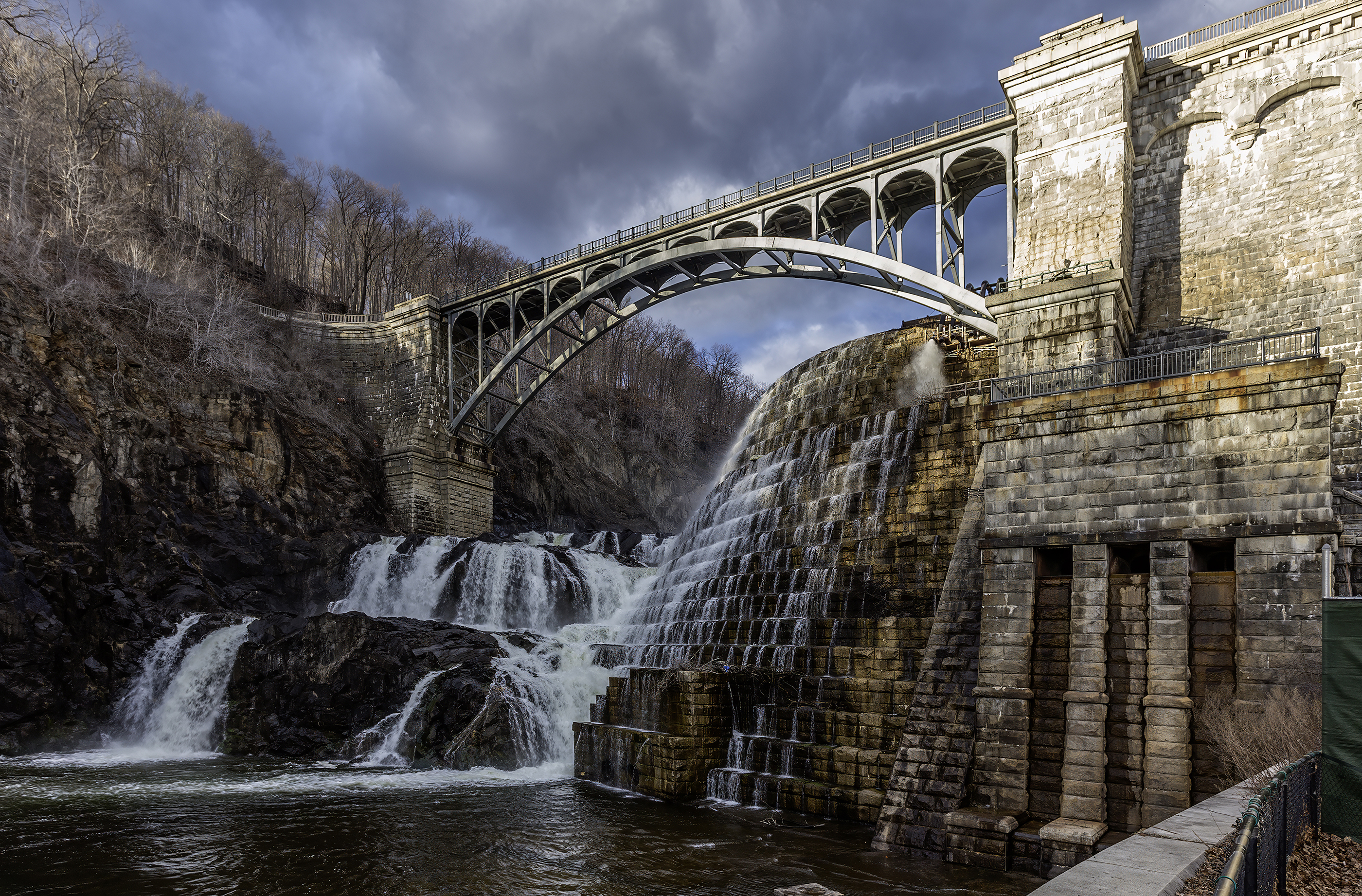
 Acroterion via Wikimedia Commons
Passage of the Water Resources Development Act has been biennial since 2014, and despite particularly partisan times in Washington, D.C., the expectation is that the pattern will continue in 2026.
WRDA last passed Congress in late 2024 and was signed into law by then-President Joe Biden in January 2025, keeping it on a two-year cycle. But there are no guarantees. Just in this century there have been two instances of seven-year gaps between passages of WRDA, which first became law in 1976.
Further reading:
- What’s your Legislative Fly-In infrastructure advocacy success story?
- Hoover Dam is iconic at 90, but rise in US dam removals signals changing mindset
- What can engineers learn from Klamath River dam removals as trend ramps up?
The wheels, though, are in motion to pass a 2026 version. Committees in both houses of Congress are in the review-and-draft stages.
Focusing on advocacy, ASCE has enumerated its priorities for the 2026 legislation, including:
- Reauthorizing the Federal Emergency Management Agency’s Rehabilitation of High Hazard Potential Dams Grant Program
- Revising the National Dam Safety Program State Assistance Grant formula to better reflect current dam safety regulatory structure
- Reauthorizing the National Levee Safety Program through 2033
- Addressing the water resources project backlog at the U.S. Army Corps of Engineers, which totals at least $100 billion
- Supporting maintenance dredging activities through the Harbor Maintenance Trust Fund
At March’s ASCE Legislative Fly-In in the nation’s capital, the Society held a panel featuring engineers and other experts to help members advocate on Capitol Hill for WRDA passage.
Ryan Hambleton, a staff director for the House’s Transportation and Infrastructure Committee’s Water Resources and Environment Subcommittee, said he was happy that legislation is “staying on track.”
“It's also a bipartisan bill, and you don't hear that a lot in Washington these days,” he added. “We might have our differences on things, but we always are able to hammer that out and find a way to move legislation forward so that the nation gets the (U.S.) Army (Corps of Engineers) civil works infrastructure projects that it needs.”
At the heart of the matter are dams.
Non-engineers in the U.S. might hear words such as “dam,” “levee,” and “flooding” and immediately think of the Corps, John Roche, P.E., M.ASCE, noted. But Roche, who is chief of Maryland’s Dam Safety Permits Division and president of the Association of State Dam Safety Officials, pointed out that the Corps controls less than 1% of the 90,000-plus dams in the U.S. More than 70% of these dams are regulated at the state level, and more than 60% of dams are privately owned.
WRDA “is the opportunity for our state regulatory programs – and I represent one of them – to interject into federal policy how we can cooperate and collaborate between the federal government and state-level governments,” Roche added. “It’s pretty hard to get a bill through Congress and to get it signed, so a bill that focuses on dams at the state level doesn’t get any traction generally. WRDA, though, is where we can take those state-level priorities and interject them into federal policy and the federal rulemaking.”
 Amie Otto Photography
 Time for change
Del Shannon, P.E., M.ASCE, who leads the dam and hydropower practice at Knight Piesold USA, noted that on average about 10 dams fail in the U.S. each year, which equates to more than 1 in 10,000.
Shannon urged funding to make people safer around U.S. dams, whose average age is 65 years, according to the Corps’ National Inventory of Dams.
“These things are old,” he said. “They were designed with slide rulers. They used antiquated hydrologic calculations that are no longer valid, and our hydrologic systems are in the middle of a significant shift and change.”
Without proper investment “failures will continue to occur,” Shannon said. “We have to invest in these structures. Otherwise, they will continue to perform poorly, and they will kill people.”
Roche agreed with that assessment.
Asked what the consequences would be of not reauthorizing the High Hazard Potential Dams grant program, Roche replied: “Death, destruction, devastation. A high-hazard dam is – simply put – a dam that, if it were to fail, people die.”
Roche noted that significantly more people now live downstream of dams, a phenomenon known as hazard creep. When combined with Shannon’s points about antiquated design and more extreme weather as a result of climate change, the nation’s thousands of high-hazard potential dams present a bigger threat than ever.
This creates urgency for funding.
ASDSO puts the price tag of rehabilitating nonfederal dams at $165 billion, including about $38 billion for high-hazard potential dams.
Even accounting for the $585 million funding for the program that came from the Infrastructure Investment and Jobs Act and increased funding in recent years, there is a huge gap that can’t be closed with current funding levels, Roche said.
“Let’s reauthorize it,” Roche said. “Let’s get the train moving out from the station. Let’s get the money to the dam owners who need it. And when we show success, we can ask for the appropriations increase.”
Low-head dam changes
ASCE backs rescinding the 2024 addition to the formula for the dam safety program’s state assistance grants, removing the new requirement to count low-head dams in the formula. Roche said the low head dam provision was added with good intentions in the 2024 WRDA passage but added that it’s not workable because states don’t yet track them or have regulatory authority over the often-dangerous structures.
Anybody who gets stuck in a low-head dam “will almost certainly drown,” Roche said. “Then, unfortunately, a friend or first responder says, ‘Let me save that person.’ They go in, and they suffer the same fate.”
Removing low head dams from the grant formula in WRDA 2026 would be a commonsense fix.
When it comes to levees, the safety program has made significant progress, but more mapping, assessing, and maintaining of these structures is needed, Shannon said. Similar to dams, many of them were built in a bygone era.
“A levee is like an insurance policy; you don’t think about it until you need it,” Shannon said. “Most U.S. levees were built by farmers a century ago. They weren’t designed to modern standards. With changing hydrology, we need to know whether levees can still perform their intended function.”
ASCE also suggests Congress should take steps to address the Corps’ water resources project backlog of more than $100 billion.
William Hanson, BC.NE(Dist.), M.ASCE, a senior vice president of market development at Great Lakes Dredge & Dock Co., notes that the Corps is his company’s biggest – and best – client.
Hanson remembers not long ago that the Corps was getting $750 million a year from the Harbor Maintenance Trust Fund. Under current WRDA legislation, that annual figure is $3.5 billion, “so the advocacy that we are doing here, it does work,” he said.
Shannon addressed an increased appetite for removing dams in the U.S. and what lessons engineers have learned from these projects.
The Klamath River dam removal, for example, occurred after relicensing would have required incorporating fish passage, water quality upgrades, fishery upgrades, and meeting considerations for tribal nations that would have run in excess of the revenue generated by the four dams that ultimately were removed in 2024 in Oregon and California.
“Yes, we are seeing more of what we call dam decommissioning,” Shannon said. “We currently don’t know what the life cycle is of a dam. That’s something we are trying to work on. Everybody has had three or four cars. We know when to get rid of a car. When do you get rid of a dam? I don’t know. We’re trying to sort all of that out.”
“Everything wears out,” he added. “I used to drive a 1984 Ford Tempo, and I could not wait to get another car. I was so sick of that car. … Things break. We need to maintain them. … We’re no different. We’re just super good at our jobs and our things last 50, 60 years or more.”
Revised thinking
As recently as 10 years ago, there was back-and-forth between dam removal advocates and engineers. But the sides have come together and “bridged that gap,” Roche said.
Fish passage and lower water temperatures are among the benefits of dam removal but more importantly: safety.
“The safest dam is the one you removed yesterday because it’s not there,” Roche said. “If it’s no longer needed for what the purpose is and it may be in bad condition, it’s a win all around to remove dams.”
Shannon and Roche pointed out that the U.S. has no national water policy – a situation that forces dams, levees, and water systems to be managed through a loose patchwork of authorities instead of through coordinated planning.
“Water is the one thing that there's like no substitute for,” Shannon said. “If you run out of water, there's nothing else, so WRDA is an attempt to bring that together, but we're still significantly lacking from a water policy standpoint of coordinating all of these activities that we desperately need.”
Shannon noted that water supply, flood protection, and hydropower are locally controlled. WRDA tries to “bridge that gap to bring this cohesiveness together,” he said.
For example, there are about 25,000 miles of documented levees in the U.S., projecting to at least $2 trillion of infrastructure, yet the U.S. has a piecemeal system of management of levees, Shannon said. He noted that it was only two years ago – in the 2024 WRDA bill – that the first guidelines for the design, construction, and maintenance of levees were released under Congress’ National Levee Safety Program.
Panelist Alexa Williams, a member of the professional staff for the House Transportation and Infrastructure Committee’s Water Resources and Environment Subcommittee, expressed confidence that WRDA legislation would pass. She touted the bipartisan nature of WRDA and the partnerships that ensure the legislation is “strong and coherent and addressing actual needs that are going on in the country right now.”
Also of note
- The Building Resilient Infrastructure and Communities program was reinstated after successful legal challenges. The Federal Emergency Management Agency has informed states, tribal nations, and territories that it is resuming support for BRIC awards and applications.
- The U.S. Department of Transportation has made $993.5 million available through the Safe Streets and Roads for All program, which supports regional, local, and tribal efforts to reduce roadway deaths and serious injuries.
- U.S. traffic fatalities declined again in 2025. The National Highway Traffic Safety Administration reported 36,640 deaths from motor vehicle crashes, a 6.7% decrease from 2024, and a rate of 1.10 fatalities per 100 million vehicle miles traveled – the second-lowest rate ever recorded.
- Two U.S. senators introduced the Safe Roads for Those Who Serve Act, legislation aimed at improving safety for emergency responders, construction crews, utility and tow truck operators, and law enforcement officers working along roadways.