The ASCE Standards program would not function without dedicated volunteer experts who have often worked for many years with little to no acknowledgement or recognition for the time they devote to developing these critical standards. Standards Spotlight shares their stories and acknowledges their contributions.
“Leading a national standard isn’t about being the smartest person in the room; it’s about coordinating hundreds of smart people to finish the work on time,” Ronald O. Hamburger said.
That practical view guided him from regional seismic committees in California to chairing the ASCE 7 committees that produced the ASCE 7-16 and ASCE 7-22 editions, Minimum Design Loads and Associated Criteria for Buildings and Other Structures.
Hamburger began college in the early 1970s, planning to work in aerospace, inspired by the space race. An internship at Republic Aircraft shifted his direction. After hearing about industry’s instability and layoffs, he reconsidered his path. Structural engineering offered greater stability and aligned with his interest in structural mechanics, rather than the fluid dynamics side of aerospace, a choice that shaped his career.
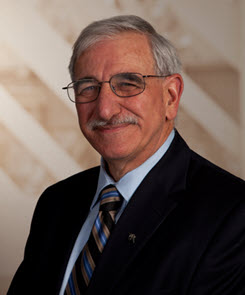
Soon after starting his career in San Francisco, Hamburger joined the Structural Engineers Association of California. The SEAOC Seismology Committee helped shape earthquake design rules for the Uniform Building Code, or “Blue Book,” which served as the foundation for seismic requirements across the western United States. Through this work, Hamburger also joined the Building Seismic Safety Council, which developed national seismic provisions.
This regional experience positioned him at a pivotal moment. In the mid 1990s, the patchwork of regional building codes began to consolidate into a single International Building Code that selected ASCE 7 as the national reference for structural loads. To make that work, seismic provisions had to evolve from a California centric approach into a framework suitable for the whole country; Hamburger joined the ASCE 7 98 committee to help with that effort. The result was a shift from a patchwork of regional guidelines to a rational, risk-based national standard, an important step in ensuring communities with real seismic risk design for it.
Hamburger continued to serve on ASCE 7 committees as the standard evolved. Over time, he took on more responsibility. He eventually chaired the ASCE 7-16 and ASCE 7-22 committees and contributed to related standards, including ASCE/SEI 41 on seismic evaluation and retrofit.
ASCE 7 expanded rapidly as it began to cover more hazards. Early editions were a few hundred pages, but ASCE 7-22 now exceeds a thousand. New chapters address floods, tsunami, tornado loads, and non-building structures. The profession is moving toward more prescriptive guidance, telling engineers both what to consider and how to do the work. Hamburger values clarity but prefers that standards define performance goals, leaving detailed instructions to manuals that can be updated more easily.
Chairing ASCE 7, he said, is more about coordination than technical authorship. Hundreds of volunteers contribute across subcommittees for wind, seismic, snow, flood, and other hazards. The chair’s job is to keep the work moving, resolve ballot comments, and ensure the standard is ready on time for adoption by the International Code Council. Delivering ASCE 7 16 and ASCE 7 22 on schedule was, in his words, a major accomplishment. “It’s herding the cats,” he joked. Getting it done on time is what makes the standard usable in practice.
Hamburger highlighted several advances in ASCE 7 that have made a difference. National seismic provisions help ensure that at-risk regions are designed for earthquakes. Tornado-resistant design rules were developed with NIST after major events. Risk-targeted flood provisions supplement FEMA maps by linking design requirements to building use and importance. Each update is based on research, lessons from disasters, and committee work.
Hamburger’s advice to engineers was direct: get involved.
Committee work is Society-level and by appointment, but all ASCE members can participate. Voting seats are limited, but corresponding memberships are open. He encouraged engineers to join subcommittees that match their expertise or local hazards, respond to ballots, and stay active. Consistent contributors often move into voting roles and leadership.
One place engineers can engage right away is ASCE’s Peer to Peer Standards Exchange, where Hamburger serves as a technical moderator. The Standards Exchange lets practitioners ask practical questions and get guidance from knowledgeable peers—including committee members. Questions have even led to clarifications, errata, or improvements in future editions. “It’s a two-way street,” he said. Engineers get answers, and the committee gains insight into how the standard is used.
Hamburger believes that rigorous, consensus-based development is demanding for a reason. Making it difficult to change the standard brings stability and ensures that ideas are refined until they are technically sound and clear. For a document that supports building safety and community welfare, this stability is important. The future of safer, more resilient structures depends on a profession willing to work together.
Explore ASCE standards using the suite of interactive tools and special features at ASCE AMPLIFY.