 Giulia Brachi, University of Colorado Boulder
Bioluminescence, or light produced by organisms through biochemical reactions, may soon enter the toolkits of civil engineers as researchers work to learn more about these light sources.
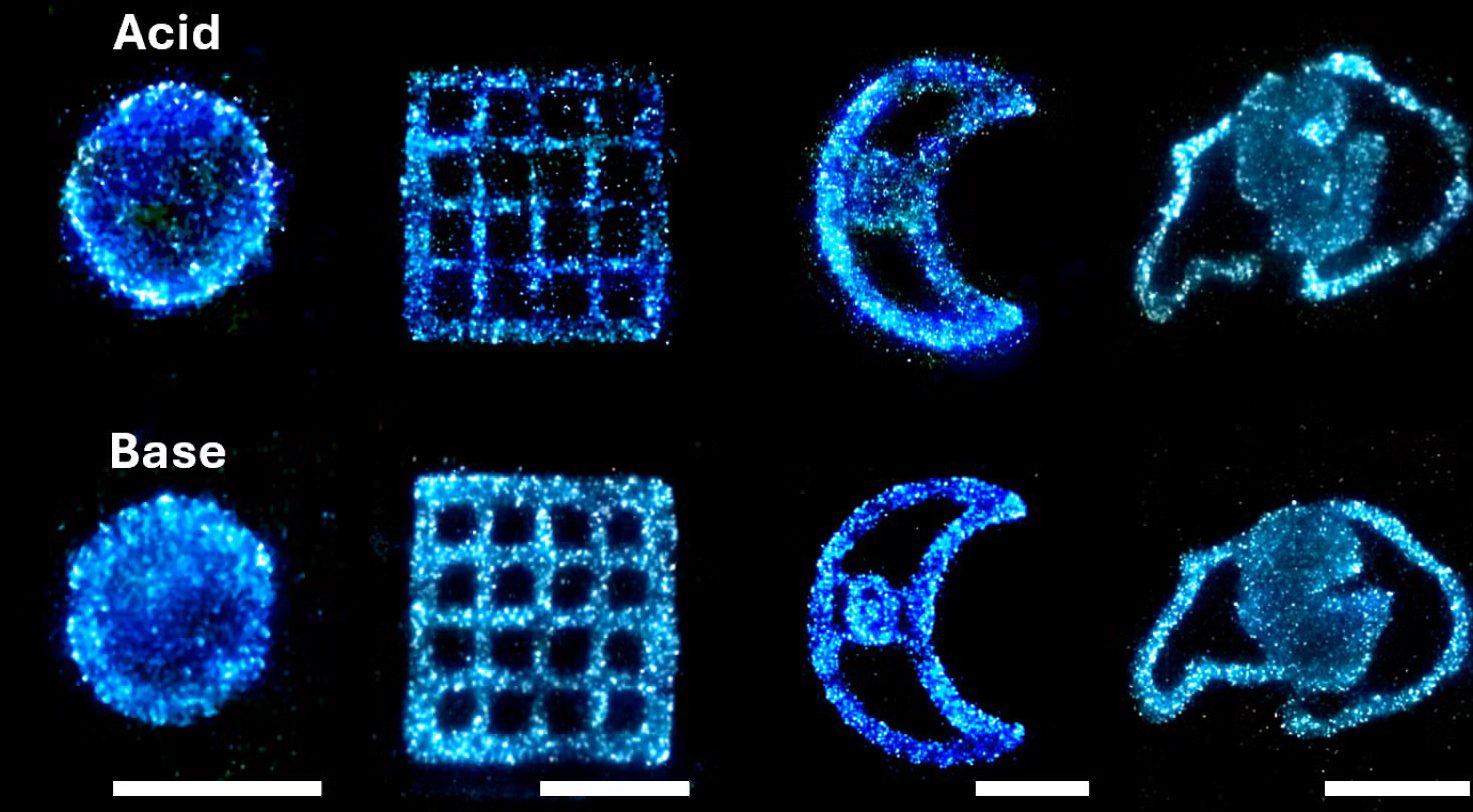
A recent study conducted at the University of Colorado Boulder found that the light of Pyrocystis lunula, a type of bioluminescent algae, can be switched on using chemical triggers. Although in nature the algae flash in response to mechanical perturbations such as crashing waves or passing fish, these flashes last only milliseconds. The chemical switch allows engineers to keep the algae illuminated for minutes at a time, opening new practical applications.
Further reading:
- What can engineers learn from Klamath River dam removals as trend ramps up?
- How living materials can shape the future built environment
- Hydraulic ‘memory’ guides New York City’s Bluebelt program
“Where we see this going first is probably in environmental monitoring and biosensing, so sensing changes in pH of a certain aquatic environment or perhaps sensing certain toxins,” said Wil Srubar, Ph.D., M.ASCE, one of the study’s authors. Soft robotics, with nonelectrical or resource-limited requirements such as with underwater exploration or space exploration, offer other potential applications, he continued.
Bioluminescence has evolved in the sea and on the land, ranging from well-known glowworms and fireflies to fungi to deep-sea anglerfish.
Srubar’s team chose to work with dinoflagellates, a class of single-celled microalgae, because of the breadth of study already done investigating their biology. The algae can also be grown easily to allow for a variety of experiments with different cultures, sizes, and densities.
Triggering a glow
When something physically stresses the surface of these algae cells, it produces an electrochemical potential gradient that, among other things, induces a pH drop within a certain type of organelle in the cell, explains Srubar. This pH drop then produces an enzymatic reaction that creates an unstable molecule which releases a photon as it returns to stability.
“These are photosynthetic organisms,” Srubar said. “During the day, they charge up, and then they use that energy for a number of different things. Regulating that interior environment is one use of that energy.”
The team embedded the algae in a naturally derived hydrogel and then 3D-printed the gel into various shapes. They were able to keep the algae alive for weeks in this setup. By exposing the gel to solutions with pH values ranging from an acidic pH 4 to a basic pH 10, the algae was made to glow. The acidic solutions produced brighter and longer-lived light than the basic ones.
Prior to their work, the medical and biological research fields had already leveraged bioluminescence in applications such as tumor and infection tracking, gene expression, and drug-discovery applications. Elsewhere, P. lunula found its way last year to the Paris Haute Couture Week in a dress that flashed in response to the wearer’s movements.
In the urban environment, French startup Glowee experimented with bioluminescent marine bacteria in several European cities between 2020 and 2023. Its saltwater containers illuminated urban signage to validate the use of bioluminescence in an urban setting.
Glowee ran into funding problems and entered liquidation in 2023, and BioDotDotDot, an Australian nature-based, urban-solutions developer, acquired the company in 2024 with plans to relaunch the bioluminescent-lighting venture later this year.
“It's best to think of it as an aquarium,” said BioDotDotDot founder and CEO Germain Briand. “Instead of having an aquarium with fish in it, you've got an aquarium with bacteria in it.”
When the bacteria have sufficient food and oxygen, they glow.
“That aquarium essentially becomes a light bulb,” Briand said. “And that light bulb can take any shape you want it to be.”
The urban environment, however, has proved to be one of the most challenging for bioluminescent lighting, Briand says. Without control over the outside temperature and the potential for vandalism, Glowee found it difficult to maintain the installations.
Instead, Briand sees immersive experiences for temporary indoor events as a better fit, as well as the health and wellness industry. Glowee feedback identified bioluminescent light as more relaxing than electrical lighting.
BioDotDotDot also owns Aglae, a French company that creates event spaces with bioluminescent plants. The company creates its installations by feeding a glowing serum to plants and flowers.
Several studies have documented the effects of artificial light on human circadian rhythms, the internal clocks that schedule our biological processes. Too much light exposure at night or too little light exposure during the day can disrupt these timing mechanisms, increasing the risks of metabolic and cardiac disorders plus several types of cancer, according to a 2023 International Journal of Molecular Sciences paper.
Briand stressed that the technology does not look to go head-to-head with electrical lighting.
“It's more about creating a new category of lighting, where light is not only functional, but it also has beauty, poetry,” Briand said. “Is there a role in that conversation for civil engineers? Absolutely. But it’s also about economic development. It’s also about tourism. It’s also about art in the city. It’s also about respecting the impact of lighting on nighttime biodiversity.”
What's next?
Looking ahead, Srubar’s CU Boulder team would like to investigate changes to the color of the algae’s light, altering it from the characteristic blue that evolved in the sea because of its ability to travel through water. Scalability, long-term viability, and reusability also need further work for engineering applications.
Srubar, who previously helped spin out zero-carbon, living concrete producer Prometheus Materials, continues to look to biology to inspire civil engineering and architecture solutions.
“We're not the only species trying to be resilient or build durable structures or adapt to a changing climate or trying to be as energy efficient as they possibly can,” Srubar said. “I think we have a lot to learn from nature, and we just need to pay a little closer attention.”

Feed Your Brain
Interested in this type of science? There will more like it at ASCE2027: The Infrastructure and Engineering Experience, a first-of-its-kind event bringing together subject-matter experts from all across the infrastructure space. Registration is open for the March 1-5, 2027, event in Philadelphia. So, yes, we know you’re excited about the Philly cheesesteaks, but ASCE2027 also is the perfect place to satisfy your appetite for learning.
Technical deep dives. Infrastructure expertise. Come feast!
Learn more about ASCE2027: The Infrastructure and Engineering Experience.