 Carollo Engineers
Broward County, Florida – within the Miami metropolitan area – is working to simultaneously upgrade two water treatment plants to meet new regulations from the U.S. Environmental Protection Agency aimed at limiting per- and polyfluoroalkyl substances in drinking water.
Known collectively as PFAS, these substances “are a series of man-made chemical compounds that persist in the environment for long periods of time. They are often called ‘forever chemicals,’” according to an April 2024 EPA fact sheet.
Further reading:
- Anaheim, California, treatment plants remove PFAS from drinking water
- New clean water tech keeps things simple, affordable for communities in dire need
- Revolutionary water treatment system could be transformational for Tampa
The new rules, which among other things will limit levels of various PFAS in drinking water to between 4 and 10 parts per trillion, are scheduled to take effect in April 2029.
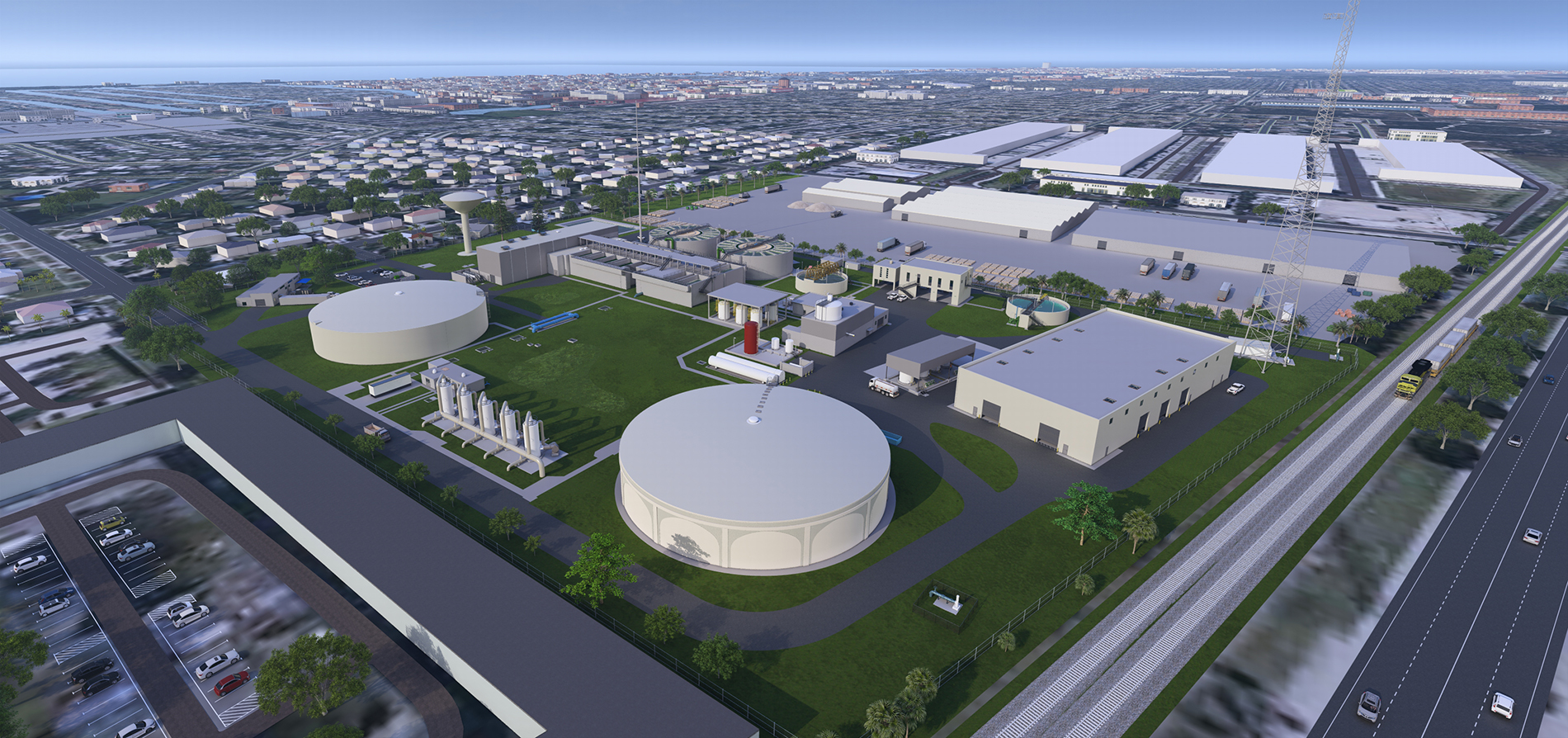
To meet that deadline, Broward County is working with a team led by Carollo Engineers and their major subconsultants – CDM Smith and Chen Moore and Associates – to replace the current lime-softening, dual-media filtration systems at the two plants with advanced nanofiltration treatment systems. The roughly $456 million project centers on Broward County’s Water Treatment Plant 1A, constructed in 1960 in Lauderdale Lakes, Florida, and Water Treatment Plant 2A, constructed in 1975 in Pompano Beach, Florida.
In addition to the water plant upgrades, the project includes an approximately 6-mile-long, large-diameter potable water transmission main that will link the distribution systems within the service areas of each plant to provide redundancy and improve reliability in delivering clean drinking water, according to Alan Garcia, P.E., M.ASCE, director of Broward County Water and Wastewater Services.
Staying in service
The two plants are roughly 10.2 miles apart, with 1A to the southwest of 2A. Plant 1A covers a footprint of roughly 7.8 acres and has a rated capacity of 16 million gallons per day. It provides drinking water to a service area that includes the Lauderdale Lakes community, as well as parts of Lauderhill, Oakland Park, North Lauderdale, and Fort Lauderdale. Plant 2A is larger, covering an area of 14.5 acres, and features a rated capacity of 30 mgd. It serves an area that includes Pompano Beach and Deerfield Beach. Plant 2A also sells water wholesale to the Coconut Creek community, which is not otherwise part of Broward County’s system.
Carollo is the prime consultant for the overall project, leading the design of Plant 2A, while CDM Smith is a major subconsultant, leading the design of Plant 1A, explained Liz Fujikawa, P.E., LEED AP, a Carollo vice president.
But there will be considerable overlap in the work. For example, Carollo is handling the electrical and instrumentation and control engineering at both plants, while CDM Smith is leading the structural work at each site. In addition, Carollo is serving as the overall design manager to bring consistency of process and operations to both plants, Fujikawa said. Chen Moore and Associates is leading the transmission line design.
Both plants will remain in operation throughout the installation of the nanofiltration equipment, which introduces challenges during construction. But the work on Plant 2A is expected to be relatively less complicated to complete because of the facility’s larger footprint, which means that almost all of the new equipment (except the permanent new generators and fuel system) can be installed in the first phase of construction, without the need to demolish any existing systems, said Sandeep Sethi, Ph.D., P.E., a Carollo vice president and project manager for the Broward County efforts.
Because Plant 1A is more site-constrained, there will likely be more construction phasing requirements and some demolition of existing equipment, resulting in the use of more temporary systems (e.g., generators, certain chemicals, etc.) before all the permanent new systems can be installed, Sethi added.
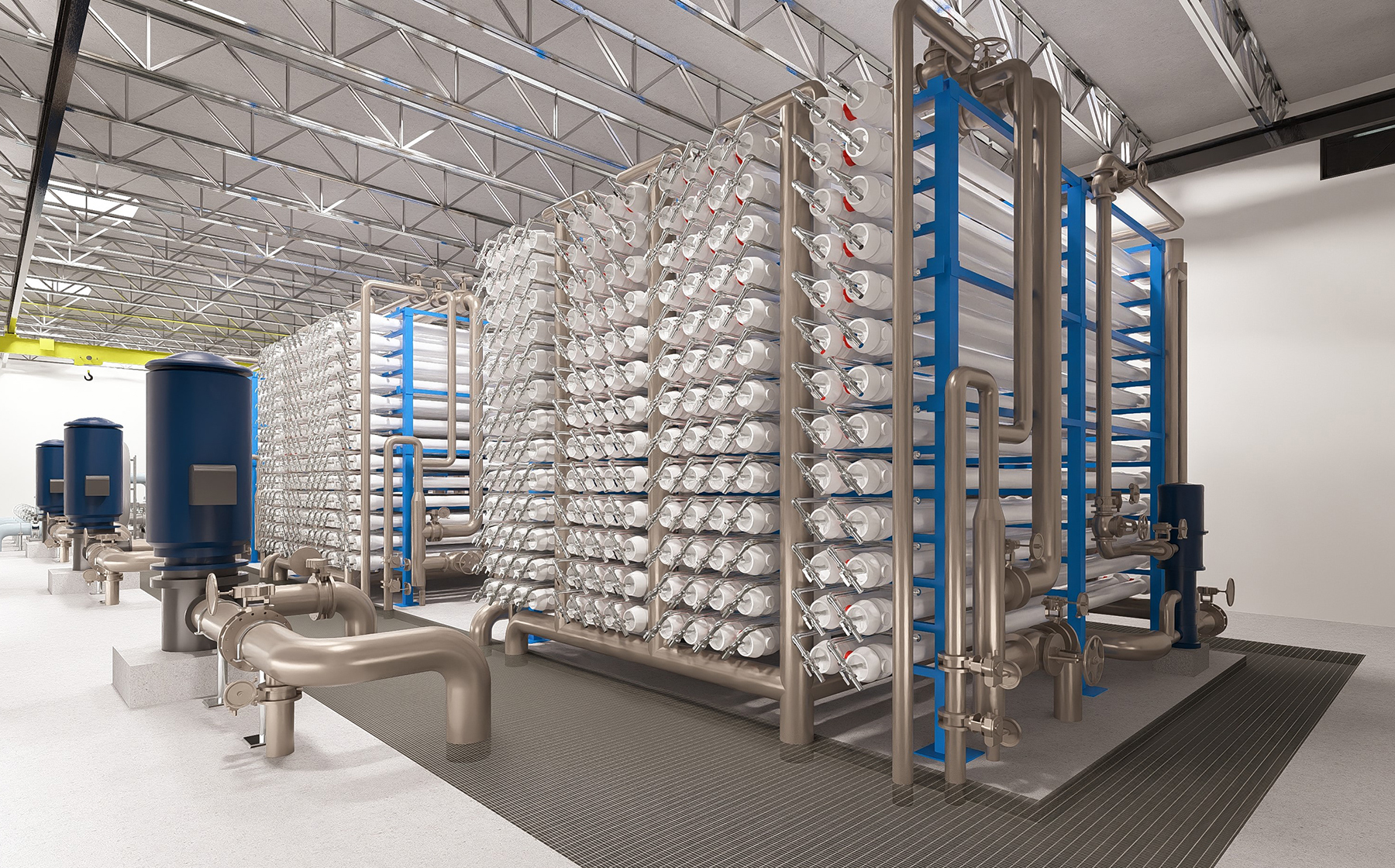
At each plant, Sethi explained, the project includes installation of a new nanofiltration membrane treatment system, including prefiltration systems (sand strainers and cartridge filtration) and pretreatment chemical systems (scale inhibitor and sulfuric acid). There will also be membrane trains, a clean-in-place system for the membrane system, degasifiers, and scrubbers for hydrogen sulfide removal and odor control.
The process will feature disinfection using sodium hypochlorite, transfer pumps, posttreatment chemical systems (sodium hydroxide, corrosion inhibitor, carbon dioxide, and ammonium sulfate), and a deep injection and monitoring well system for concentrate disposal, including a backup concentrate disposal system to the sanitary sewer.
In addition, the plants will have a generator and fuel system, electrical improvements to support the new treatment system, a supervisory control and data acquisition system for the new membrane system, as well as SCADA upgrades for existing processes that will be retained (including high-service pumping, ground storage tanks, and raw water wells).
The new transmission line also means that Broward County can use any excess capacity and storage from Plant 2A to maintain water pressure and meet demand within Plant 1A’s service area and in reverse from Plant 1A to Plant 2A’s service area, Fujikawa added. This will be useful in emergency situations and during the construction phase of the PFAS project, in case the work results in any unexpected shutdowns or production cutbacks at 1A, noted Garcia.
Future-proofing
The new nanofiltration systems are being designed and master-planned to convert to reverse osmosis technology in the event that Broward County’s water system ever needs to switch from its current reliance on the region’s Biscayne Aquifer to the more brackish water of the Floridan Aquifer, Garcia noted. The systems could also be converted if regulators adopt even stricter rules regarding PFAS or act to limit additional contaminants that nanofiltration cannot remove, added Sethi.
The idea is to future-proof the improvements so that the work being done now is not obsolete in 20 years or so, noted Fujikawa.
Broward County is also looking ahead by proceeding with a new delivery method called managing general contractor. Somewhat similar to the construction manager at risk procurement method, the MGC approach enables the general contractor to “manage all the subcontractors, review plans, give comments on constructability and value engineering, and build the collaboration between the contractors and the engineers,” said Garcia.
This method enables the general contractor to get purchase orders issued early for long-lead-time items – such as electrical gear and generators – which helps lock in a guaranteed maximum price, Garcia explained.
 Carollo Engineers
Because other water systems in the region will also be working to meet the PFAS compliance deadline, Fujikawa expects there to be considerable competition for the best contractors and subcontractors, “which makes predictability of construction capital costs difficult.” So, she praises the Broward County water system “for thinking outside the box, outside their norm,” in trying the MGC method for the first time on a county water project. Working closely with the general contractor and its team through the MGC method “will provide cost control and take away the worry of bid day,” Fujikawa added.
Learning lessons
Although construction to upgrade the two plants is not expected to break ground until next year, the project has already provided the engineers with valuable lessons, said Suzanne Mechler, P.E., a senior vice president at CDM Smith. Working on two plants simultaneously is a considerable challenge, which makes following the project schedule critical, Mechler noted.
“It’s not easy to have two large firms that do the same sort of engineering work team up together,” as CDM Smith and Carollo are doing, she added. But the combined effort provides the staffing necessary to achieve the project’s goals. She also praised Carollo’s efforts to establish up-front the standards for the software systems, 3D modeling, and other tools and methodologies that will enable all the consultants and subconsultants to work together “to provide a better product for the client.”
Sethi echoes that conclusion, citing the need for close coordination and communication between team members, the client, and other stakeholders, something manifested through regular collaboration sessions held multiple times each week. He also highlighted the benefits of pilot testing, which “let us fine-tune and optimize” the planned new treatment processes.

Feed Your Brain
Want to learn more about cutting-edge technology such as the ones in this article? Registration is open for ASCE2027: The Infrastructure and Engineering Experience, a first-of-its-kind event bringing together subject-matter experts from all across the infrastructure space, March 1-5, 2027, in Philadelphia. So, yes, we know you’re excited about the Philly cheesesteaks, but ASCE2027 also is the perfect place to satisfy your appetite for learning.
Technical deep dives. Infrastructure expertise. Come feast!
Learn more about ASCE2027: The Infrastructure and Engineering Experience.