 Donald R. Scott
 Imagine a giant balloon the size of a warehouse swelling up and suddenly popping.
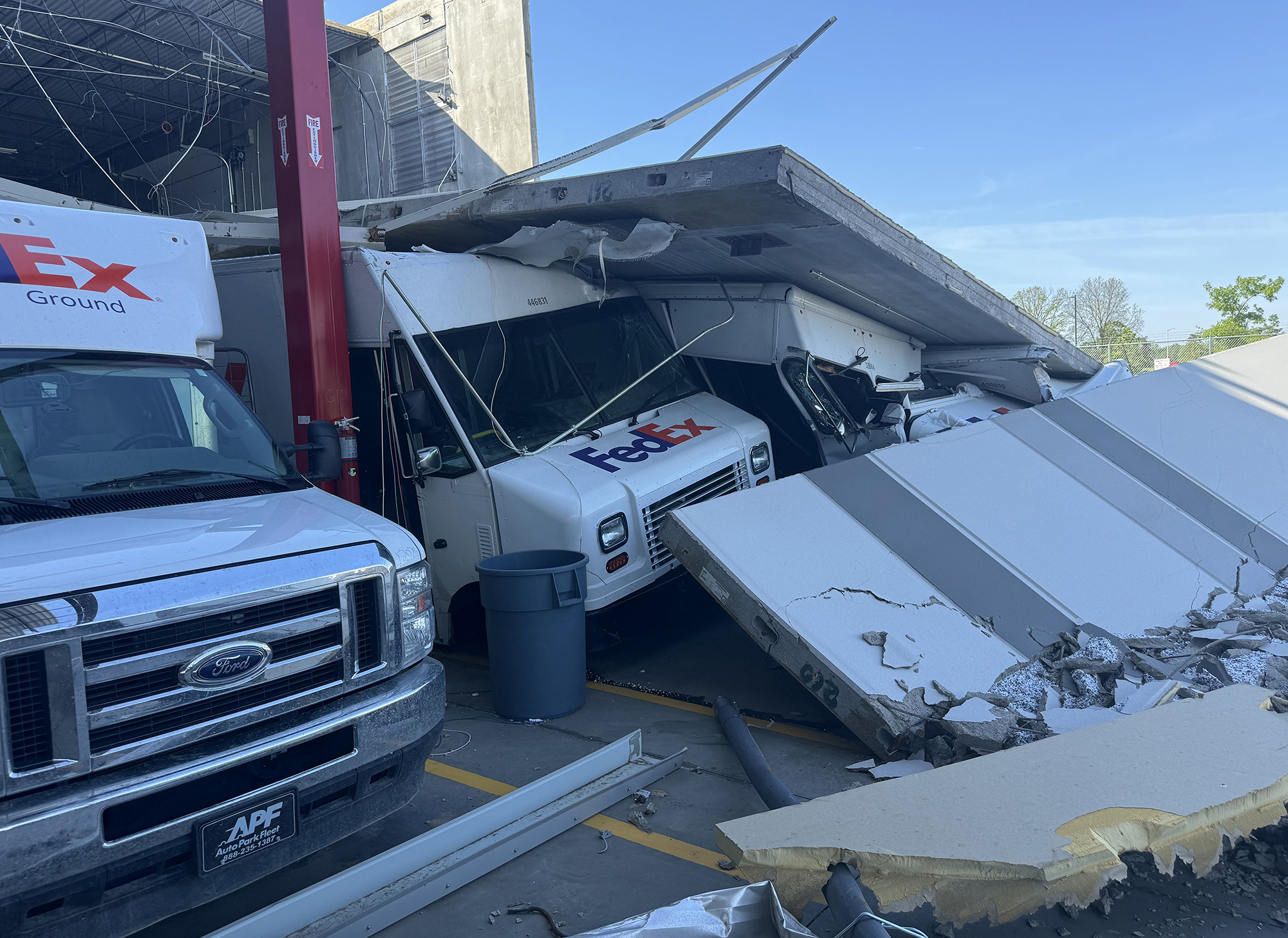
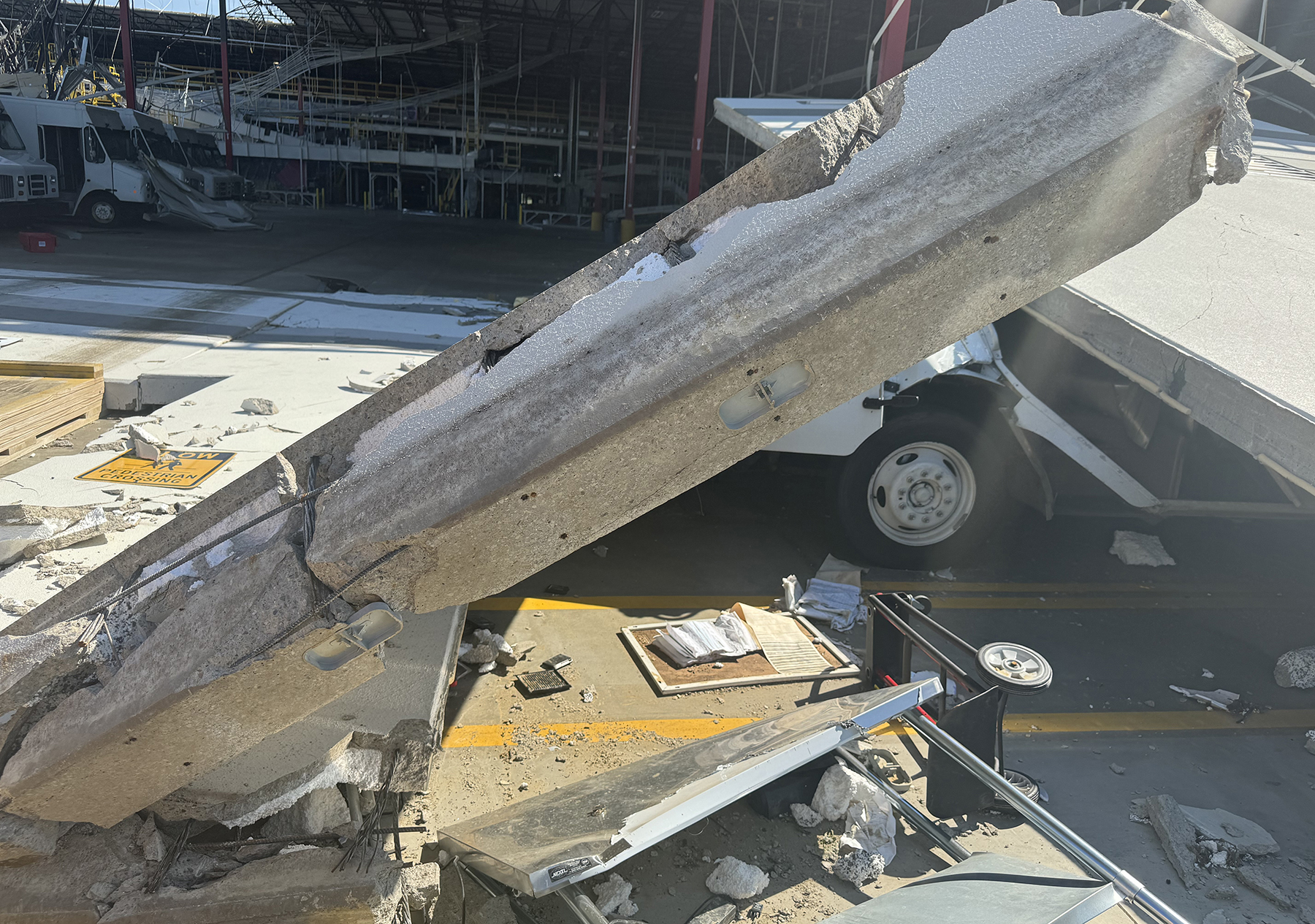
That is what happened to the FedEx warehouse near the Kalamazoo/Battle Creek International Airport on May 7, 2024, when an EF2 tornado – meaning it had wind speeds of 111 to 135 mph – struck Portage, Michigan. The dramatic pressure changes led to a large portion of the roof peeling away and the precast concrete exterior wall panels buckling inward. Forty workers hid in the restrooms and survived.
Further reading:
- In a changing world, past lessons show need for future ready structures
- Inside Hurricane Harvey: ASCE president-elect recalls navigating Houston crisis
- In aftermath of LA fires, group asks: Why not build homes that don’t burn?
While the event left behind a wide swath of damage, of particular interest to civil engineers was the collapse of the warehouse, which was not designed to withstand a tornado. An ASCE/Structural Engineering Institute assessment team, including investigators Franklin T. Lombardo, Ph.D., M.ASCE, of the University of Illinois Urbana-Champaign and Donald R. Scott, P.E., S.E., F.SEI, F.ASCE, evaluated the damage to the warehouse and made recommendations. The resulting report, Portage, Michigan, Tornado of May 7, 2024, Post-Disaster Assessment, reconstructs the damage and makes recommendations for design of large warehouse-like structures in regions prone to tornadoes.
“We really took this as an opportunity to take a firsthand look at the damage and to see what sort of lessons we can learn from being on the ground, assessing not only the damage to the warehouse but also the contextual details around it,” Lombardo said.
The damage and context
Those contextual details included understanding the wind forces generated by the tornado. Because of that force, the partially open roll-up doors in the warehouse were lost and allowed the wind in. “The wind goes into it like a balloon and blows up the building,” Scott said. Indeed, the on-site manager reported feeling the roof pick up where it broke loose from the welds in the walls.
In addition to the ballooning internal pressure, the wind flowing on top of the building delivered an upward force.
“It was a worst-case scenario. You have forces from inside and outside trying to separate the roof from the walls, and once there’s really nothing that’s supporting the walls, they’re prone to collapse,” Lombardo said.
Other damage included the connection between the metal roof deck and the bar joists, which failed, as did the roof-joist connections to the exterior wall.
The problems with an ‘enclosed’ classification
The 2015 International Building Code wind design requirements guided the design of the Portage FedEx warehouse, specifying a design wind speed of 115 mph and an exposure category of C, meaning it was surrounded by relatively open terrain with few obstructions.
The building was also originally designed with an enclosure classification of “enclosed,” which assumes all warehouse doors are closed during a wind event. But that is a problem, the experts said. “Even if the doors don’t fail, there’s so much area around a large overhead door that you can pressurize a building just from the leakage that comes around that door,” Scott said.
 Donald R. Scott
In a warehouse, doors are also frequently open, so the primary recommendation of the report is that large, unpartitioned Risk Category II structures in tornado-prone regions should be classified as partially, rather than fully, enclosed and designed accordingly.
Factoring in tornado loading
The 2015 code also did not contain any design provisions for tornadoes. Those came later, with the 2022 edition of the ASCE/SEI 7 Standard. This is a problem because tornadoes have vertical lift components with different profiles than straight-line winds.
“Tornadoes tend to expose some of the other issues that exist with warehouse buildings or big box structures,” Lombardo said. Scott agreed. “Not only is there the higher wind speed, but there’s a large suction pressure. It’s like putting the nozzle of a vacuum cleaner right over the building,” he said. “It exposes any sort of deficiency within the building structure.”
The new recommendation is to consider tornado loading instead of simpler straight-line wind provisions because tornadoes can more easily exploit openings and weaknesses in their structural load paths. The assessment suggests that warehouse-like structures in tornado-prone regions should account for tornado loading. For example, ensuring stronger welded connections that are designed for higher loads would help improve tornado resilience.
Changes in data collection techniques
Other recommendations in the report address how data is collected. For example, wind measurements in tornadoes are usually rare because the events damage equipment and the network of instruments is sparse. As luck would have it, the FedEx warehouse had a measuring instrument installed right behind it, but it did not record the wind speed of the Portage event because the instrument is programmed to ignore numbers that exceed the expected range.
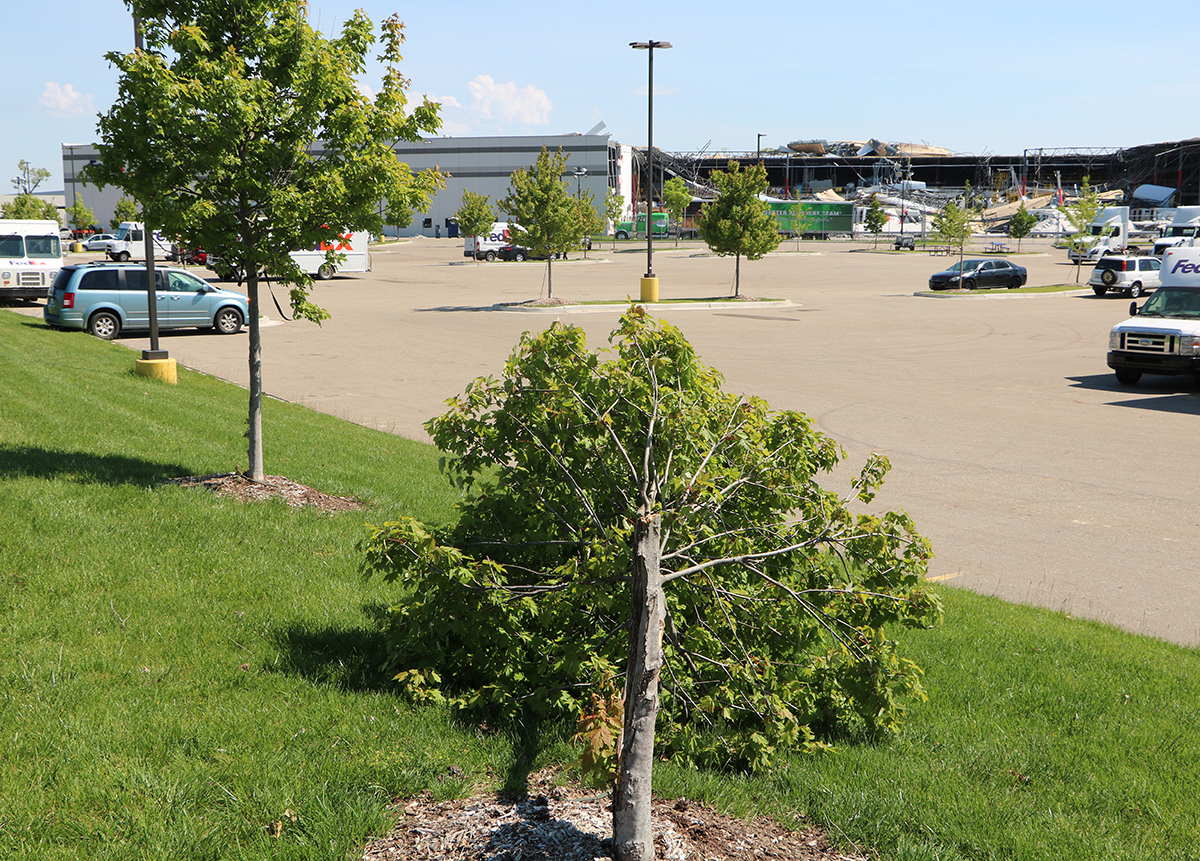
As a result, the team had to evaluate wind strength through alternative methods, such as studying patterns of damage to trees, light poles, and other structures that either failed or didn’t. This, too, is a challenge because damage-related information needs to be preserved, and sometimes it is not.
“Another recommendation was to improve how data is collected after these damaging events,” Lombardo said. “That way we can come back and do this type of analysis and have more confidence in the results.”
Even with the new recommendations, it takes a few years for code amendments to percolate down to how buildings are designed and constructed.
“Many structures being designed today don’t include factoring in tornadoes because the building code hasn’t caught up yet,” Scott said. “Recommendations are being considered now for ASCE 7 but will not be in the IBC until 2030 at the earliest.”
But the movement is in the right direction. The changes are coming at a time when the number of warehouses is growing and the infamous Tornado Alley might be moving toward more densely populated states such as Illinois and Michigan. In 2026, Illinois recorded more tornadoes than any other state.
 Franklin T. Lombardo