
By David Baker, P.E., M.ASCE
Data center development is exploding, and civil engineers must be at the forefront, offering revolutionary solutions and resource-conscious design strategies.
From the moment you wake up, you are a traveler on a digital highway, with nearly every stop along your day powered by an unseen engine: the data center.
Consider the ordinary rhythm of a single day. You wake up and immediately check the weather on your phone. On your commute, you stream a podcast or catch up on the news. At work, the day is a flurry of emails, instant messages, and virtual meetings that connect you with colleagues across the country or around the world. On your way home, you order a grocery delivery for dinner and pay a landscaping company for mowing your grass with a few taps of your mobile device. Finally, you unwind by streaming your favorite show on your television. Our digital footprint is truly all-encompassing and for the most part invisible.
Each of these actions, from the most mundane to the most critical, initiates a near-instantaneous request that travels through a complex web of digital infrastructure. Every email sent, every video streamed, and every transaction made is processed and stored within these massive, warehouse-like facilities. And it is not just our personal lives. Engaging with digital infrastructure impacts almost everything in modern society, including banking, transportation, healthcare, government, and consumer goods. Data centers have become the indispensable backbone of our modern world.

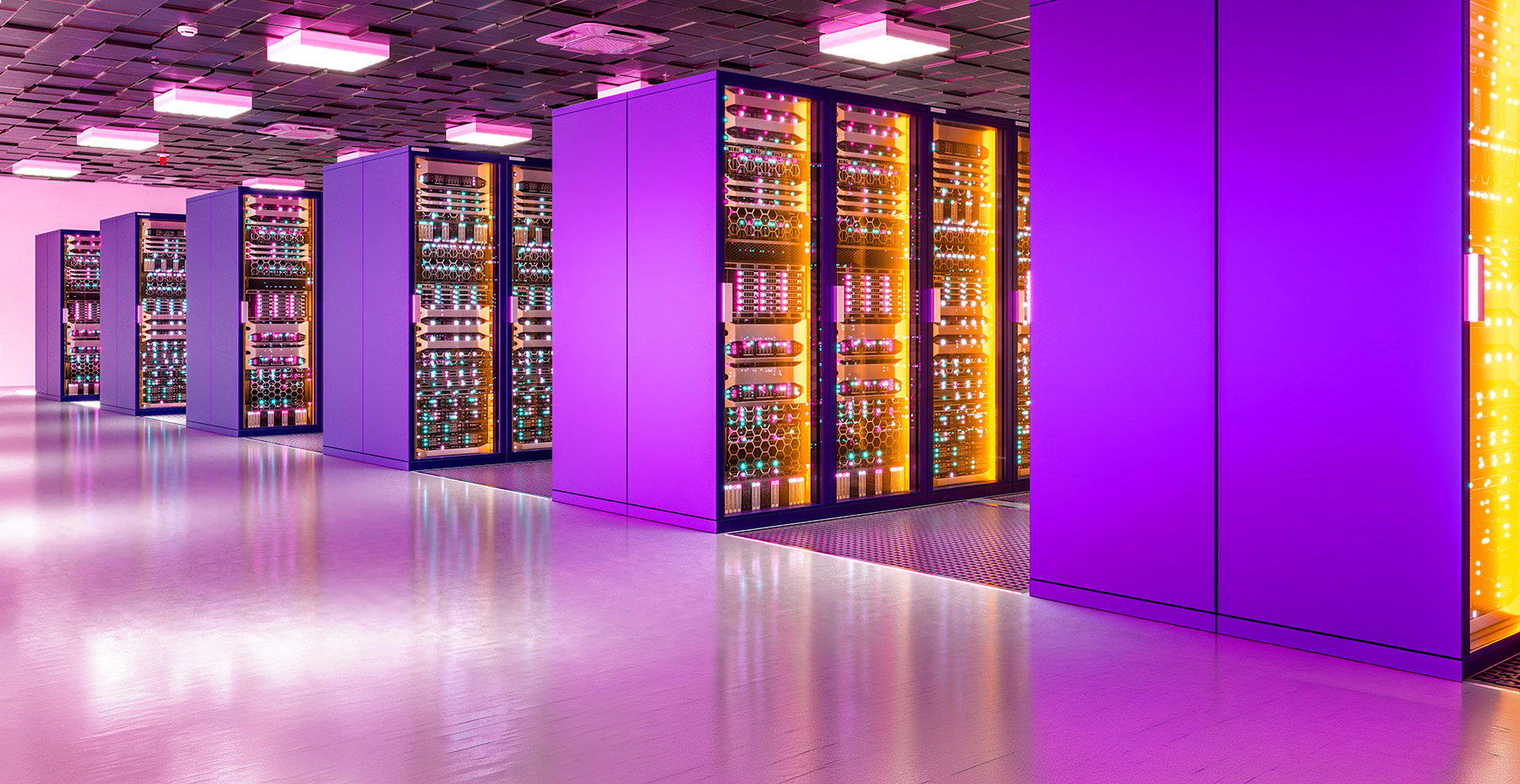
At its core, a data center is a highly secure, industrial-scale facility packed with computer servers, storage devices, and networking gear. The industry generally categorizes these facilities into three main types:
- Enterprise data centers: built and owned by a single organization for its private use. They account for about 32% of global data center capacity (measured in megawatts of critical IT load).
- Colocation facilities: provide space to multiple organizations in one secure building, as well as power and cooling. Tenants, ranging from private companies to public agencies, install and manage their own server hardware to support their unique operational needs. These facilities provide roughly 20% of global capacity.
- Hyperscale data centers: massive, sprawling campuses that power the cloud and are rapidly dominating the digital landscape. Hyperscale facilities currently account for about 48% of global capacity and are projected to hit 67% by 2031.
While smaller, decentralized “edge” data centers are increasingly deployed to minimize latency for real-time applications, the overwhelming physical footprint of digital infrastructure remains anchored in these three high-capacity centralized facility types.
Although artificial intelligence dominates the news cycle, traditional cloud workloads (computing and storage) still make up between 70% and 85% of current data center demand, with AI representing a rapidly expanding share of the market that is projected to consume nearly a third of all data center power by the end of the year.
To function, modern hyperscale facilities require power in staggering quantities, and depending on the mechanical cooling technology deployed, they can also demand massive amounts of water. As facility designs and IT loads vary wildly, there is no single benchmark for demand; however, the upper limits are remarkable. Some of the largest hyperscale data center sites being developed are advancing into multi-gigawatt capacities. A single site of this magnitude can demand enough continuous electricity to power millions of homes, equaling or exceeding the combined power demands of major cities like San Francisco and Seattle.
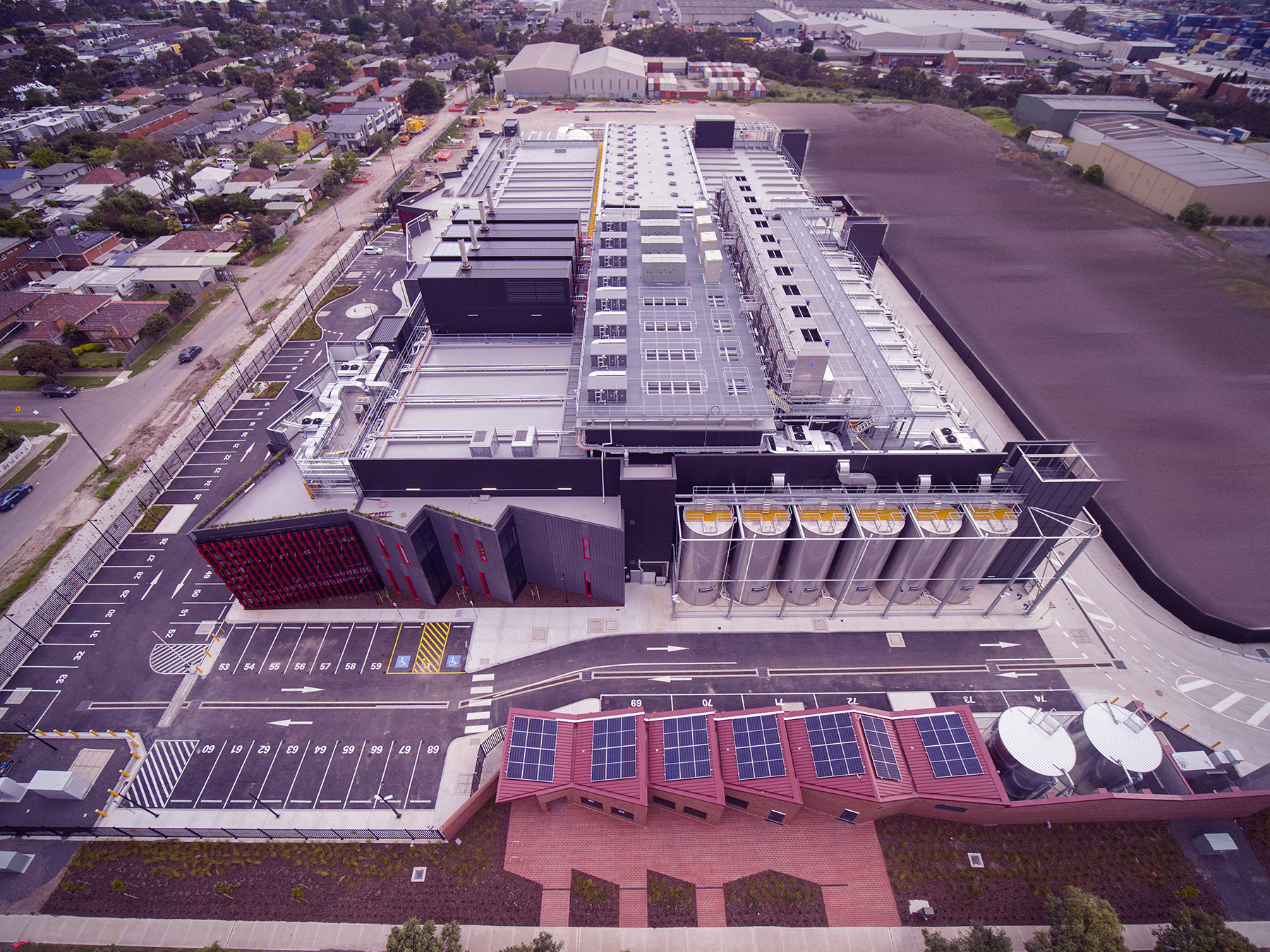
Their need for water, used not just for cooling but also for other critical processes, is equally complex. Fortunately, the industry is rapidly evolving, and modern designs are shifting toward more water-efficient technologies. However, a large hyperscale data center site still relying on evaporative cooling methods can consume up to 5 million gallons of water per day, rivaling the daily usage of a city of 50,000 people like Galveston, Texas.
This brings us to the crux of our digital dilemma: The explosive growth of cloud computing and AI is advancing far faster than our public utilities, regulatory frameworks, and public policies can handle. This collision between surging digital demand and very real physical resource constraints is forcing data center developers, technology companies, regulators, and engineers to fundamentally reimagine how the infrastructure of our future is designed, built, and regulated.
Confronting resource reality
Historically, data center developers and tech companies have prioritized speed to market, massive computing power, and uninterrupted reliability. Early on, regional power grids and municipal water utilities possessed enough supply and capacity to support this growth. However, few could have anticipated the unprecedented speed and scale of modern digital expansion. Today, that historic surplus of available power and water has nearly evaporated in many communities.
As early as 2019, tech giants like Google, Microsoft, and Amazon established aggressive carbon-neutral and 100% renewable energy goals. The AI boom has pushed hyperscale data center energy demand substantially higher, complicating these ambitious targets. Due to mounting power transmission constraints, regional moratoriums, and intense public scrutiny, sustainability has now become a fundamental necessity to secure utility agreements, gain local community buy-in, and make these massive projects viable.
To meet these modern challenges, technology companies are actively expanding their sustainability goals. Google and Amazon have pledged to be “water positive” by 2030, meaning they intend to replenish more water to local watersheds than their facilities require. Microsoft has gone a step further, targeting not only water-positive but also carbon-negative and zero-waste operations by the end of the decade, while actively acknowledging the difficulties that AI data center expansion has placed on their current carbon emission reduction targets.
For engineers, this means the very definition of a successful data center project has changed. Technology companies are no longer just looking for conventional engineering designs. They are demanding collaborative engineering partners who can deliver optimal resource efficiency, integrate alternative power strategies, and design facilities that actively benefit the surrounding ecosystem. While development climates still vary by region, the industry continues to shift rapidly toward responsible, resource-conscious development.
Cooling down the demand for public water
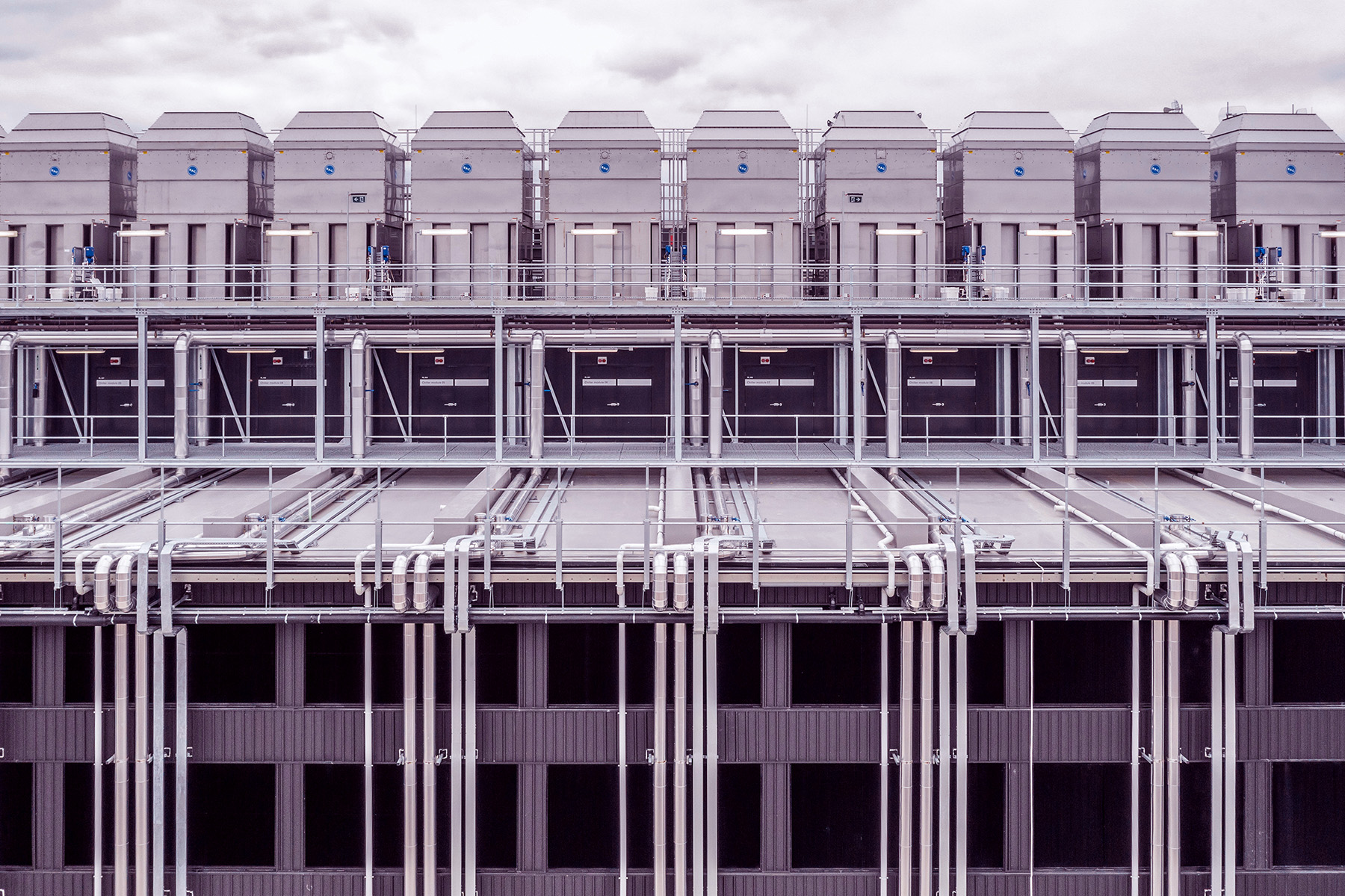
To maintain optimal server performance and prevent hardware from overheating, most data centers rely on continuous mechanical cooling systems to reject, or release, heat from the server halls. Fundamentally, this cooling is a two-step process: capturing the heat generated inside the server halls and then transporting that heat to a central mechanical plant to be rejected into the outside atmosphere. At the central plant, engineers typically use either wet heat rejection, which evaporates water to release heat into the air, or dry heat rejection, which uses massive fans to blow ambient air across closed cooling coils without consuming water.
While data center facilities also require water for indoor humidification, domestic use, fire protection, and other miscellaneous needs, heat rejection represents the vast majority of their direct water use when using evaporative cooling systems. By evaporating large volumes of water into the atmosphere, these traditional wet systems can result in substantial water demand from local public utilities.
Addressing this challenge requires engineers to navigate a complex water-energy tradeoff. When evaluating environmental impacts from cooling systems, engineers must balance direct water use, which occurs on-site during the cooling process, against indirect water use, which occurs off-site at the power plants generating the facility’s electricity. If engineers eliminate direct water use by switching to dry heat rejection equipment, such as air-cooled chillers or dry coolers, the facility’s power demand significantly increases. These dry systems lack the thermodynamic efficiency of evaporation and require massive fans and compressors to reject heat. If that extra power is supplied by fossil-fuel power plants that rely on wet-cooling towers for their own heat rejection, the overall hydrological footprint may actually increase.
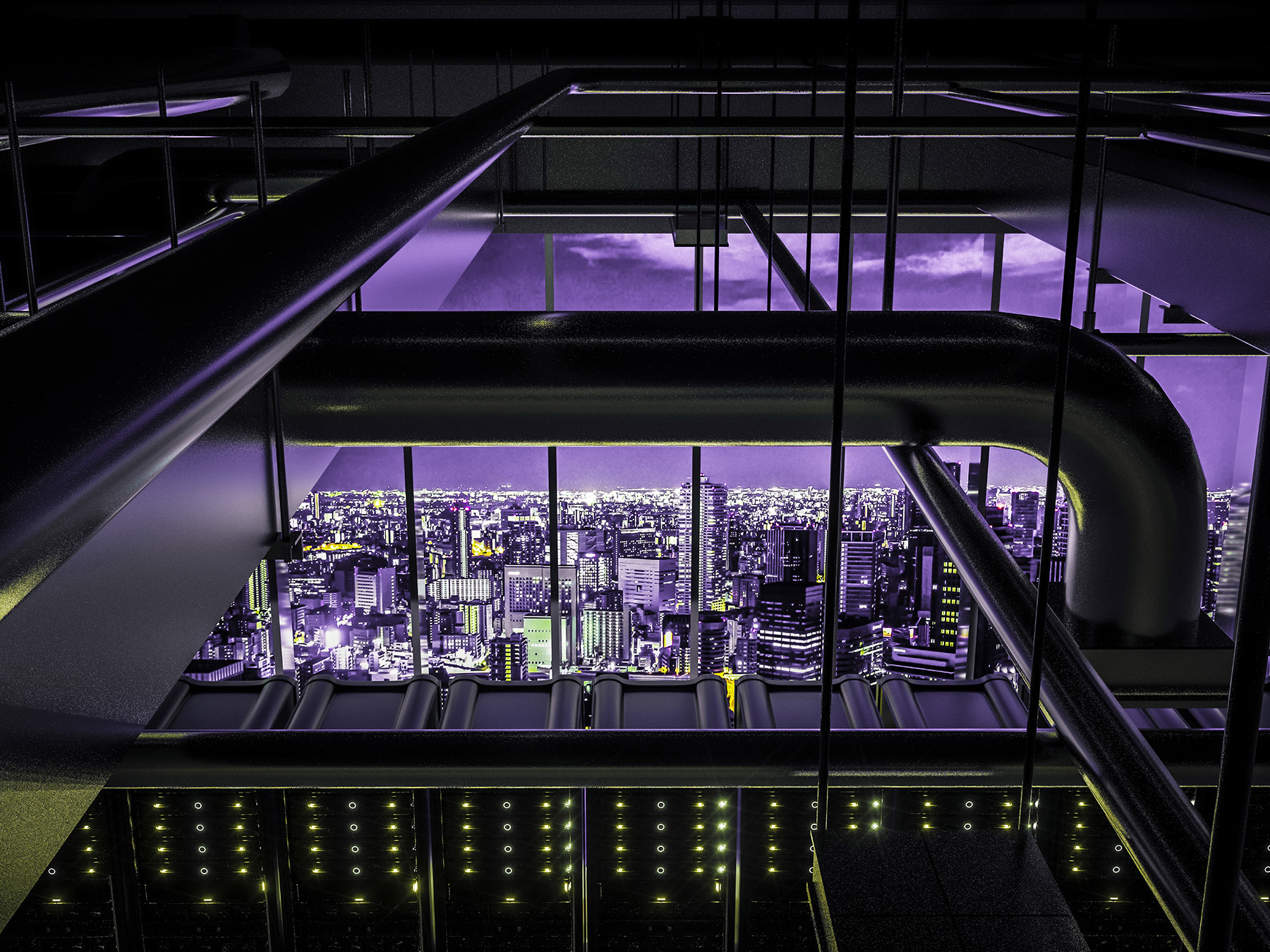
To navigate these tradeoffs, engineers are deploying a multifaceted strategy that addresses heat capture and water sourcing. On the mechanical side, designers are increasingly employing direct-to-chip liquid cooling (a technology that circulates liquid through cold plates attached directly to server processors to capture heat at the source) due to the increased heat generated by modern AI servers. While this technology does not directly reduce on-site water use, its superior heat-transfer efficiency significantly lessens the facility’s overall electricity demand, which in turn can lower indirect water use at off-site power plants.
At the central mechanical plant, where the primary choice between water-intensive wet cooling and energy-intensive dry cooling must be made, civil engineers are focusing on reducing the use of local potable water. When wet cooling is selected for its high energy efficiency, engineers are actively shifting to alternative, nonpotable sources, including municipal reclaimed water, industrial gray water, produced water from oil and gas extraction, brackish groundwater, and harvested stormwater.
Conversely, when regional power grids possess the capacity to support higher electrical demands, engineers can prioritize dry heat rejection to greatly reduce direct water use by the facility. This approach is already transitioning into physical reality. In Temple, Texas, for example, developer Rowan Digital Infrastructure publicly announced that its hyperscale site was engineered specifically around closed-loop, air-chilled cooling technology to bypass regional water constraints. By completely avoiding evaporative cooling, the facility is engineered to preserve hundreds of millions of gallons of potable water annually. This project stands as a prime example of how collaborative engineering can deploy essential digital infrastructure in rapidly growing municipal areas while drastically reducing the direct demand on the community’s potable water supply.
Pulling the plug on public power reliance
While navigating the water-energy tradeoff is critical for municipal infrastructure planning, it is ultimately eclipsed by the most fundamental constraint threatening digital infrastructure: the availability of continuous, reliable electricity. The U.S. power grid is rapidly reaching its physical transmission and capacity limits. In markets such as Northern Virginia and Texas, developers face utility interconnection and energization queues ranging from three to seven years.
Growing AI workloads require immense power today, so waiting for traditional utility upgrades is no longer commercially viable.
To bypass these interconnection delays, data center developers are more often deploying “behind-the-meter” power generation as a strategic bridging solution. While technology companies strongly prefer a traditional public utility interconnection and generally do not want to operate as independent power producers, colocating dedicated power generation allows data center facilities to become operational now while simultaneously waiting for permanent interconnection with the public utility grid.
Due to data centers requiring uninterruptible, 24/7 baseload power, standard renewable deployments are largely insufficient for behind-the-meter power generation. Producing enough solar energy to power a single 100 MW hyperscale building would require more than 1,400 acres of land — a physical footprint that is geographically and economically prohibitive for data center developers and technology companies.
Furthermore, bridging the intermittency of renewable sources would require battery energy storage systems of an unprecedented physical and financial scale. While these systems are effectively used for short-term backup and peak-load shaving, relying on them for continuous baseload power remains unfeasible due to extreme land consumption and technology costs. Consequently, the most immediate and reliable behind-the-meter solution being deployed at scale today is on-site natural gas power generation.
However, colocated natural gas power generation creates a paradoxical loop for engineers. While on-site gas turbines solve the immediate grid connection delays, the choice of thermal generation technology forces data center developers and technology companies right back into the center of the water-energy nexus. If engineers deploy highly energy-efficient combined-cycle gas power plants that rely on wet-cooling towers for their own heat rejection, they can use massive volumes of water for evaporative cooling.
Conversely, if they reduce that water demand by using simple-cycle turbines or air-cooled combined-cycle plants, overall thermal efficiency drops significantly. To generate the same baseload power without wet-cooling towers, the facility must burn substantially more fossil fuel, drastically increasing the site’s carbon emissions. By solving a local electrical interconnection or capacity problem with on-site power generation, data center developers and technology companies are forced to compromise either their water conservation goals or their carbon reduction commitments.
To break this combustion cycle and eventually achieve zero-carbon baseload power generation, the digital infrastructure sector is exploring advanced nuclear energy technologies. Small modular reactors represent a promising long-term solution, offering reliable, 24/7 output with a fraction of the physical land footprint required by colocated natural gas power plants. Factory fabrication of SMR components allows for highly compact and efficient site layouts. These facilities often require less than 50 acres of physical site footprint for hundreds of megawatts of capacity, which presents a viable colocated power option for space-constrained data center sites in the future.
Furthermore, as a result of their smaller thermodynamic scale compared to traditional gigawatt-class nuclear reactors, several advanced SMR designs can be paired with air-cooled condensers. While dry cooling eliminates the need for massive nearby water sources, it does introduce a similar thermal efficiency penalty for using the reactor. Regardless of the cooling technology, deploying on-site SMRs faces extensive regulatory testing, Nuclear Regulatory Commission licensing, and fuel supply chain hurdles, meaning widespread commercial viability may realistically be at least a decade away.
Unwilling to wait for SMR commercialization, technology giants are executing diverse, capital-intensive strategies to increase clean baseload power. In a landmark 20-year power purchase agreement, Microsoft partnered with Constellation Energy to purchase power from a restarted 835 MW reactor at the former Three Mile Island nuclear facility in Pennsylvania, now known as the Crane Clean Energy Center.
Similarly, Meta secured a massive power purchase agreement with Vistra to acquire existing nuclear capacity while funding the largest corporate-supported uprate program in U.S. history, which will add 433 MW of new generation through equipment upgrades at three operating plants.
Beyond existing plants, technology companies are actively pursuing partnerships with advanced nuclear startups to accelerate commercial licensing and development of SMRs. Together, these multibillion-dollar investments underscore the extraordinary steps technology companies must take to secure uninterruptible, zero-carbon baseload power while keeping their long-term sustainability goals in reach.
Navigating the water-energy nexus
The complex tradeoffs required by modern data centers can no longer be addressed within traditional engineering disciplinary silos. To successfully navigate these constraints, engineering teams must collaborate seamlessly from a project’s inception. While a data center developer ultimately selects the facility’s cooling technology, engineers play a critical role in providing input in early-stage planning that guides these decisions.
Once a specific cooling technology is selected, it dictates the contributing water and power use for the facility. This, in turn, may require water resource engineers to secure alternative water rights, environmental engineers to design advanced on-site treatment systems, civil engineers to lay out the massive physical footprint of these facilities, and electrical engineers to route the electrical infrastructure required to power the facility. Ultimately, every design choice triggers cascading thermodynamic, spatial, regulatory, and public utility impacts across the entire site.
These cascading impacts require engineers to evolve beyond executing standard design specifications and become strategic advisors to data center developers and technology companies. They must actively encourage clients to push boundaries, embrace innovation, and develop site master plans that can adapt as new technologies emerge.
For example, if a facility relies on colocated natural gas power generation today, the civil site layout should provide spatial flexibility to accommodate future industry advancements, such as SMRs. By designing flexible site master plans, engineers ensure that data center sites can evolve without requiring complete reconstruction as those emerging technologies mature.
Furthermore, engineers sit at the critical intersection of private development and public infrastructure, making their role in the public sphere just as critical as their engineering design. Developing massive data center sites with high utility demands requires proactive leadership to navigate highly localized regulatory environments.
Working alongside strategic communications and economic development professionals, engineers must facilitate transparent, early conversations with local authorities, community stakeholders, water and wastewater utilities, and regional power providers. Rather than simply requesting substantial municipal water use or power grid interconnections that stress local utility capacities, engineers are uniquely positioned to negotiate mutually beneficial public-private partnerships.
By designing infrastructure that actively reduces the impact on the community’s potable water supply and minimizes direct demand on the existing power grid, engineers can establish trust in the community, which is essential to bringing these monumental projects to life.
Pioneering a blueprint for global resilience
The collaboration among engineers, data center developers, technology companies, and government regulators has already yielded remarkable results in navigating data center development challenges.
The rising demand for digital infrastructure is forcing a technological evolution in data center design, yet the road ahead extends far beyond the footprint of the digital infrastructure sector. The hurdles the industry faces are a microcosm of the broader challenges facing humanity. The global population continues to expand, and the collective demand for finite natural resources will only intensify worldwide.
And as technology matures, it will scale and adapt to provide power and water solutions for cities, agriculture, and industries worldwide, helping to mitigate the drain on natural resources. Ultimately, the water and power challenges the industry faces today may spark the innovation of the very technologies required to help human civilization sustainably thrive for thousands of years to come.
References
Amazon. (2026, 17 March). Water Stewardship. Accessed July 31, 2026.
Bates, B. (2026, July 17). How Temple’s ASR Project Became Tied to Rowan’s Changing Data Center Plans. KCEN. Accessed August 11, 2026.
Bhowmik, P. K., Anselmi, T. M., Griffith, G. W., Sabharwall, P., & Ballout, Y. A. (June 2024). SMR Current Status: Development Needs and Global Perspectives. Idaho National Laboratory. Accessed July 31, 2026.
Chernicoff, D. (2026, August 6). Land and Expand: The Gigawatt Credibility Test. Data Center Frontier. Accessed August 8, 2026.
Eryilmaz, D., & Kilroy, L. (2026, 14 May). AI Meets the Grid: Interconnection Queue Analysis in PJM and ERCOT. Carbon Direct. Accessed July 31, 2026.
Fisher, K. (2026, June 4). Google Commits to Replenish More Water than It Uses at Data Centers by 2030. ESG Today. Accessed July 31, 2026.
Gartner. (2026, June 10). Gartner Says Data Center Electricity Consumption to Grow 26% in 2026. Accessed July 31, 2026.
Gaster, R. (2025, April 14). Small Modular Reactors: A Realist Approach to the Future of Nuclear Power. Information Technology and Innovation Foundation. Accessed July 31, 2026.
Goldman Sachs Research. (2025, December 11). Is There Enough Data Center Capacity for AI? Accessed July 31, 2026.
Lawrence Berkeley National Laboratory. (2026, April 12). Queued Up: Characteristics of Power Plants Seeking Transmission Interconnection as of the End of 2025. Berkeley Lab Energy Markets & Planning Group. Accessed July 31, 2026. https://emp.lbl.gov/queues
Martucci, B. (2024, September 20). Constellation Plans 2028 Restart of Three Mile Island Unit 1, Spurred by Microsoft PPA. Utility Dive. Accessed August 11, 2026.
Microsoft. (2026, February 2). 2026 Environmental Sustainability Report. Accessed July 31, 2026.
Rakholiya, K. (2026, July 19). Data Center Solar Siting: How to Find and Evaluate Land for Solar-Powered Data Centers. SurgePV. Accessed August 10, 2026.
Synergy Research Group. (2026, April 7). Hyperscale Operators to Account for 67% of All Data Center Capacity by 2031. Accessed July 31, 2026.
U.S. Department of Energy. (2025, November 18). Energy Department Closes Loan to Restart Nuclear Power Plant in Pennsylvania. Accessed August 11, 2026.
Vistra. (2026, January 9). Vistra and Meta Announce Agreements to Support Nuclear Plants in PJM and Add New Nuclear Generation to the Grid. Accessed July 31, 2026.
Yañez-Barnuevo, M. (2025, June 25). Data Centers and Water Consumption. Environmental and Energy Study Institute. Accessed July 31, 2026.
David Baker, P.E., M.ASCE, is the site civil business class director at HDR Inc.
The author will be speaking on data center development at ASCE2027: The Infrastructure and Engineering Experience, March 1-5, 2027, in Philadelphia. To explore more about ASCE2027, visit experience.asce.org.
This article first appeared in the November/December 2026 of Civil Engineering as “Digital Titans: Engineering Innovation for a Sustainable Future.”

