By Kayt Sukel
The city of Lignano Sabbiadoro stands just northeast of Venice, Italy, close to the country’s border with Slovenia. For centuries, this small peninsula, jutting into the Adriatic Sea, was only accessible via water. In the early 20th century, roads finally made their way to this waterfront town, opening it up to tourism. Today, it is a popular holiday spot for beach lovers, and it continues to grow.
Yet, like many places in Italy, Lignano Sabbiadoro is working to find a balance between development and sustainability. A recent design competition with the goal of transforming the city’s underdeveloped waterfront received entries from firms all over the world. Valentina and Iuliia Tambovtseva, the designers for Studio VI, won the contest. The sisters said they were inspired to find an approach that would allow “everyday life (to unfold) in harmony with nature,” according to the project description for the competition.
“The existing environment is actually really gorgeous,” said Iuliia. “There are these old pine trees and an amazing waterfront, but this is also a city with a rich and interesting history. Our challenge was to create a new master plan that could bring these things together and not interrupt the natural environment.”
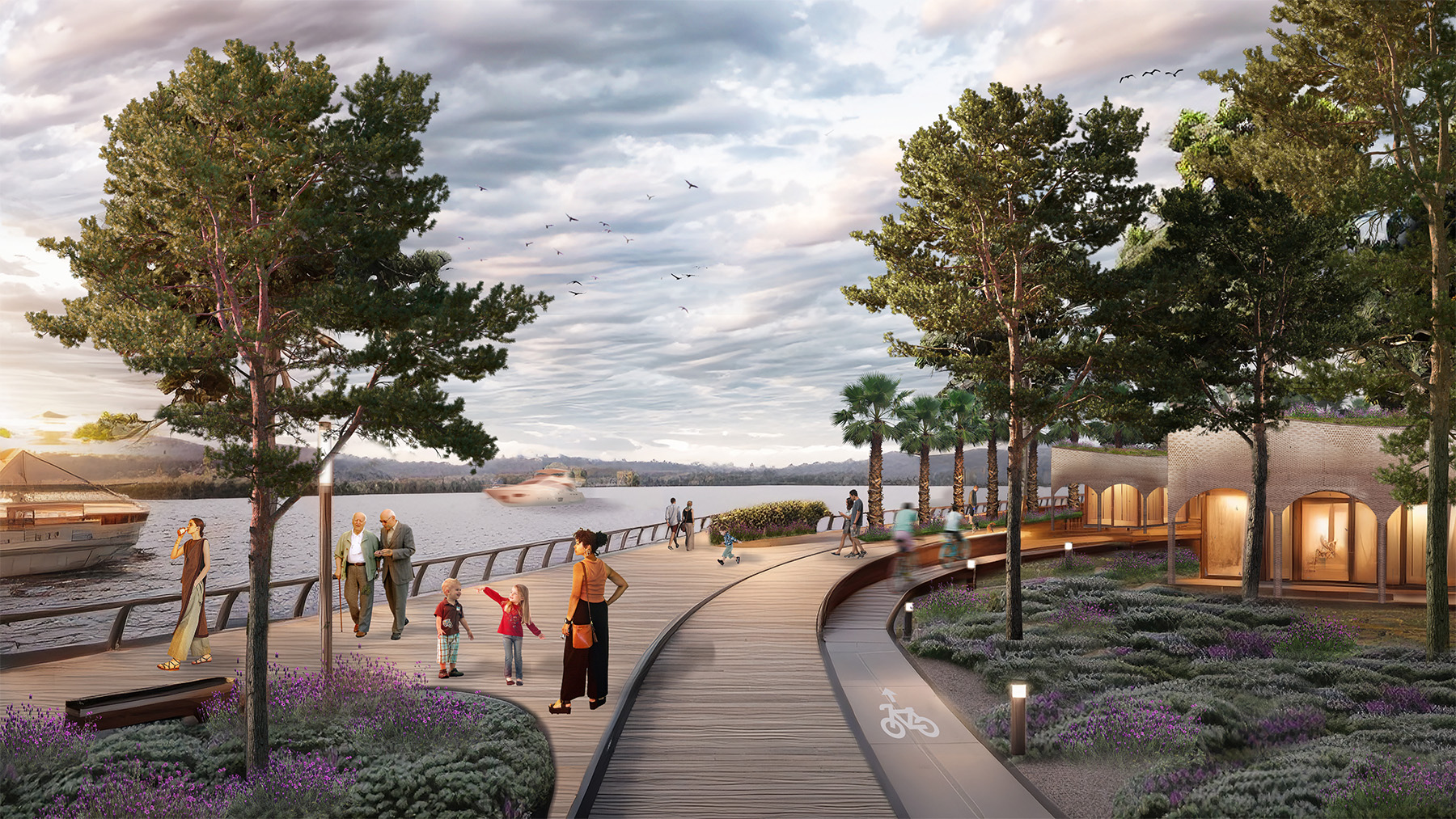
Their proposed master plan design would transform the waterfront into a “vibrant, sustainable, and interactive” community, per the project description. The design preserves the existing landscape, while introducing new pedestrian and cycling paths throughout the area. The result is a series of interconnected green spaces meant to encourage economic activity, social interaction, and community engagement.
The design also includes a flood wall inspired by the waves and the smooth lines seen in the city’s existing historic architecture, as well as children’s play areas, outdoor sports fields, and interactive art installations.
“As we worked, we had to think in two scales at once: the (entire) master plan as a whole, as well as each specific area on its own,” said Valentina. “The goal was to create something alive and functional. It’s not a separation of nature and human spaces, but a combination of the two.”
Kayt Sukel is a science and technology writer based outside Houston.
This article first appeared in the January/February 2026 issue of Civil Engineering as “Sustainable Beauty.”