 Carollo Engineers
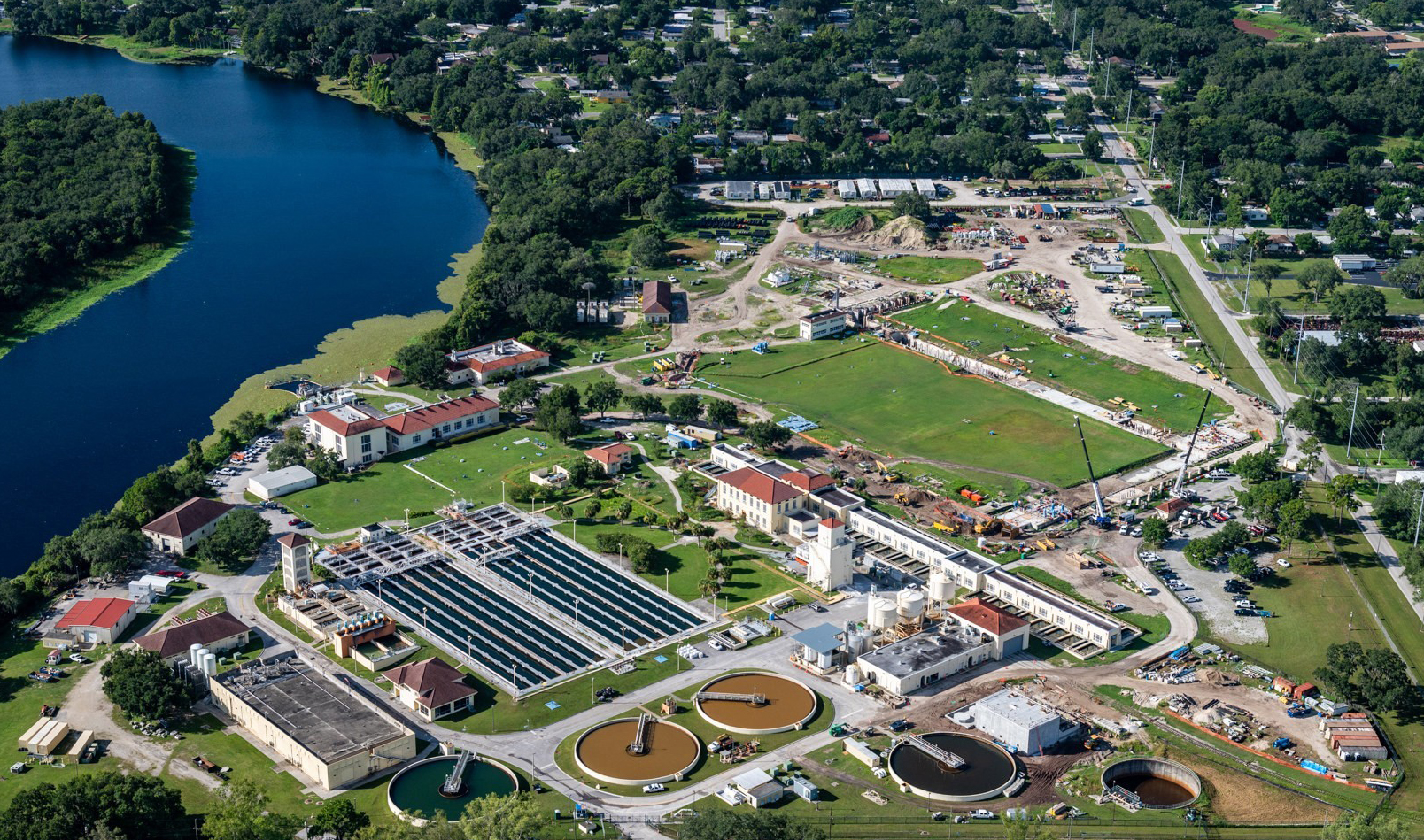
Tampa, Florida, is preparing to build the world’s largest Suspended Ion Exchange system, treating up to 140 million gallons of drinking water per day.
Known as the SIX system, it will be the first of its kind to be installed in the U.S.
Further reading:
- Hacks of US water systems make it clear: Cybersecurity is a civil engineering problem
- New clean water tech keeps things simple, affordable for communities in dire need
- Anaheim, California, treatment plants remove PFAS from drinking water
The system has many benefits, including the ability to easily and accurately set treatment levels for organic removal. This is especially important in a place like Tampa, which gets its water from the Hillsborough River, a source where total organic carbon can vary by an order of magnitude between seasons.
Before moving forward with design, a team of engineers and researchers conducted a 10-month pilot study to determine whether SIX would effectively treat Tampa’s source water.
The team found that the process produced benefits across the board, including better TOC removal, some removal of per- and polyfluoroalkyl substances, reduced demand for downstream chemicals, lower solids production, and better filter operations (lower head loss).
In light of these successes, along with a third-party review, detailed design work began for installation of the system at Tampa’s David L. Tippin Water Treatment Facility. The city approved funding earlier this year.
SIX technology comes to the US
Although this specific type of suspended ion exchange is new in the U.S., the technology has been used elsewhere for years. It was developed by PWNT, an innovation division born out of Dutch public water utility PWN.
The original installation was in the Andijk Water Treatment Plant near Amsterdam, said Vinnie Hart, P.E., LEED AP, an executive vice president and principal-in-charge at Carollo Engineers. Andijk has been successfully using SIX since 2014, and the technology is spreading to water treatment plants around the world.
 Carollo Engineers
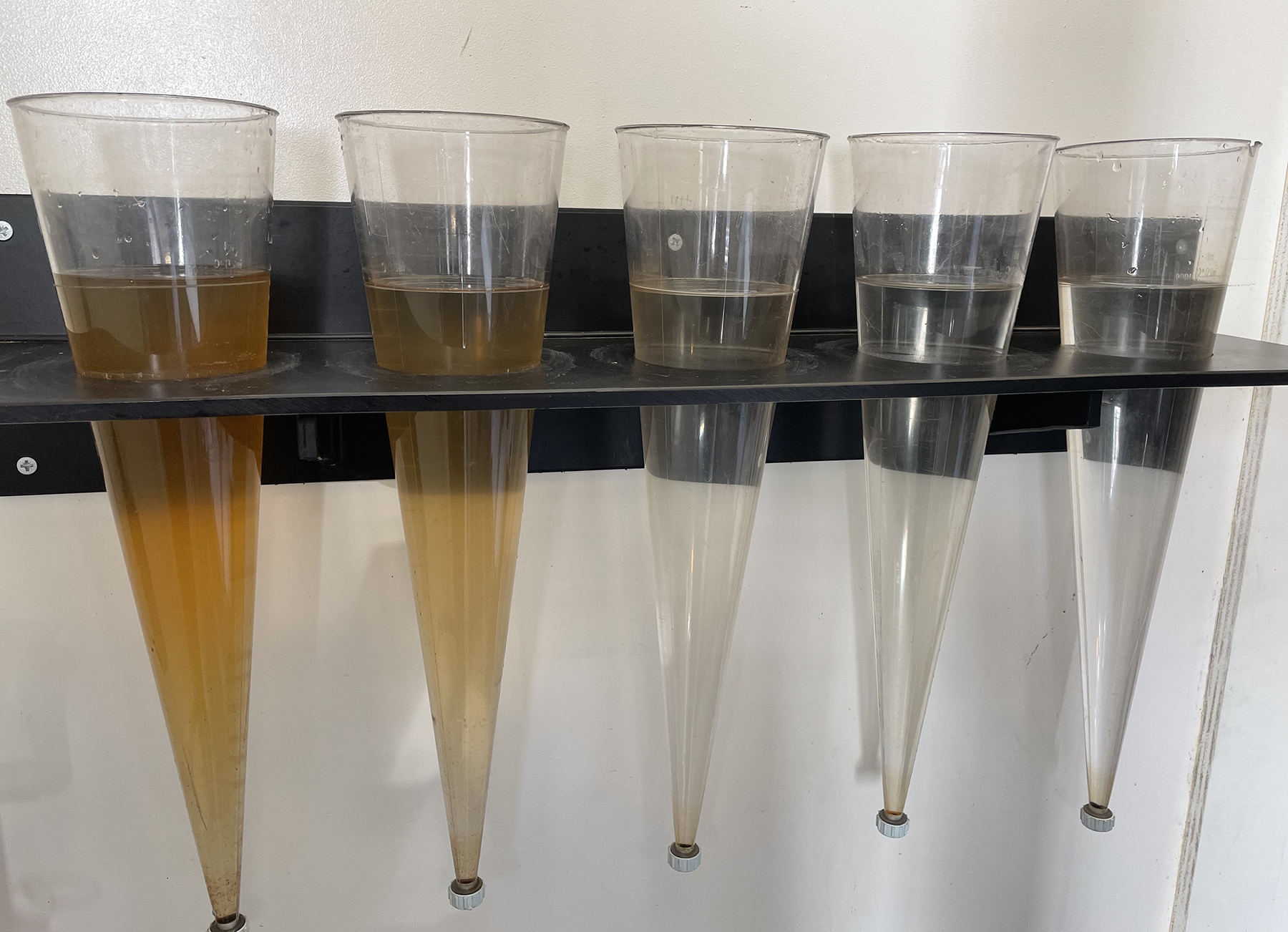
Tampa’s primary water source (the Hillsborough River) is a waterway that begins in a swamp and flows southwestward 60 miles to Tampa Bay. Along its stretch, the river contains significant amounts of organics, including algae and vegetation.
“There’s two distinct seasons with respect to the water quality in the river,” said Melanie Pickett, Ph.D., P.E., a Carollo senior engineer who oversaw the pilot. “The total organic levels go from about 3.5 milligrams per liter in the winter, and then it’ll suddenly jump to about 30 milligrams per liter in the spring.”
This high organic variability is not typical of most plants and requires changing levels of chemical treatments and procedures.
In 2018, city of Tampa representatives were planning to revamp their water treatment operations. “We wanted to expand the maximum day capacity of the plant, but another major goal was to address the organics,” said Sarah Burns, P.E., the water planning manager at the Tampa Water Department.
Rory Jones, P.E., director of the Tampa Water Department, recalled the moment SIX technology came into the conversation around what technologies could handle the big seasonal swings of TOC. “We were sitting around the table, and (we) asked Vinnie, ‘Is there a resin that isn’t proprietary that we could try?’”
Hart described the technology used in the Andijk plant, noting that, in terms of the resin, it was nonproprietary and would be a good candidate for the city’s highly organic source waters.
The pilot study
While SIX seemed promising for Tampa’s water treatment, the team wanted to test the efficacy of removing organics and anions from the raw water before installing the system.
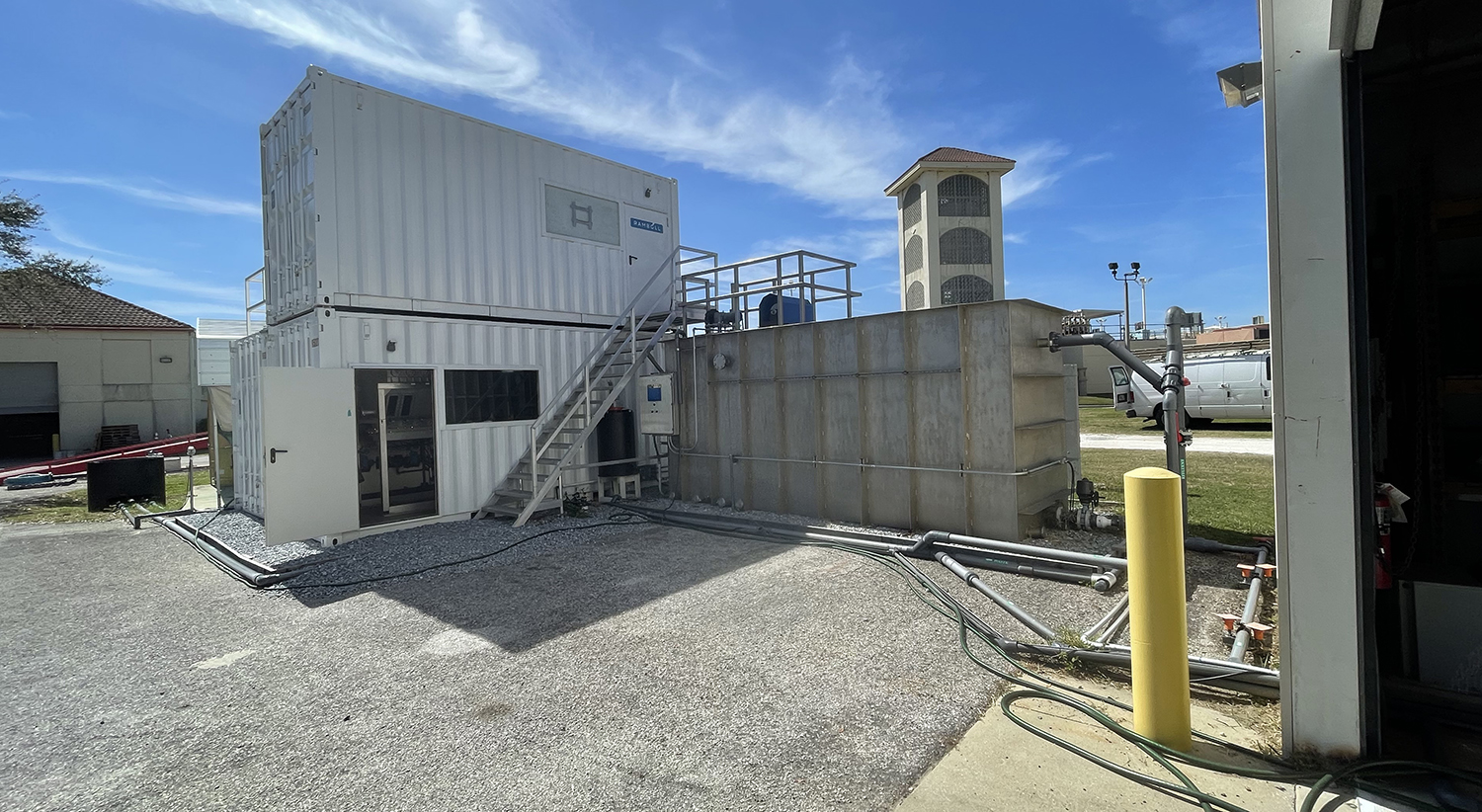
Carollo, along with partners at Ramboll, PWNT, Garney Construction, and Wharton-Smith Inc., designed the pilot study. In this smaller-scale test, the team investigated how the system would handle organic and anion removal. They also tested the downstream effects, including coagulation, flocculation, sedimentation, ozonation, and filtration.
“We saw that SIX worked well right out of the gate,” said Pickett. Because the system uses a suspended-resin process, it treats raw water directly, providing downstream benefits.
Hart said that unlike traditional ion exchange water treatment, the SIX system can remove organic materials at the front of the treatment process and improve all downstream processes (coagulation, ozone, and filters). This leads to big advantages downstream for other processes.
During the pilot study, the coagulant demand dropped by about 70%, and the ozone dose dropped by about 30%.
“When you’re adding less coagulant, you’ve got less solids to dispose,” Hart explained, adding that the process also eliminated the use of sulfuric acid and greatly reduced the need to raise the pH after the coagulation step. “There’s a whole host of benefits to the utility from the standpoint of chemical use.”
Getting the green light
The results from the pilot study were impressive – maybe a little too impressive, at first glance. “We do have a very involved stakeholder group and a group of environmental folks that are very involved with city of Tampa Water (Department),” explained Burns. She said when stakeholders saw the results, there was an initial, “Is this too good to be true?” moment.
 Carollo Engineers
“We did a complete third-party review with a different engineering company, looking at all the work Carollo did on the pilot,” Burns said. The reviewers found the methods, testing, and findings were solid and that a SIX system would be a good fit for Tampa. The second opinion assured stakeholders, city council members, and the general public that the project would be beneficial for Tampa’s water treatment.
Detailed design work has been greenlit and is underway. The estimated cost for the system is about $220 million, said Hart. He estimated that the system will also save about $2 million each year in chemical costs and offset the capital cost of thickeners, mechanical dewatering, and filters.
The team said the SIX system would meet the needs of the city and EPA regulations while helping control costs over time. “It's been very rare in my career where there’s something that made so much sense,” said Hart. “It's a great fit for Tampa.”

Feed Your Brain
Interested in this type of technology? ASCE2027: The Infrastructure and Engineering Experience will be a first-of-its-kind event bringing together subject-matter experts from all across the infrastructure space, March 1-5, 2027, in Philadelphia. So, yes, we know you’re excited about the Philly cheesesteaks, but ASCE2027 also is the perfect place to satisfy your appetite for learning.
Technical deep dives. Infrastructure expertise. Come feast!
Learn more about ASCE2027: The Infrastructure and Engineering Experience.