Small communities around the globe facing clean water challenges often bear the burden of accommodating complex technologies. But what if we flipped the perspective and modified the technologies to meet the needs of the communities?
That is exactly the approach that Monroe Weber-Shirk, Ph.D., is taking. He saw the issues:
- In 2024, more than 4.4 billion people in low- and middle-income countries lacked access to safely managed drinking water services.
- Communities without efficient treatment systems contend with high water turbidity – especially during the rainy season – and pathogens from surface runoff that can cause gastrointestinal problems.
- Water flow and availability can be unpredictable due to extreme weather events.
 VersaWater
 As technical director for AguaClara Reach, a nonprofit in partnership with Agua Para el Pueblo, a Honduran nonprofit, Weber-Shirk is helping deliver easier-to-use water treatment solutions around the world.
In 2017, Maysoon (May) Sharif, P.E., established AguaClara Reach to expand on past successes, primarily in Honduras. AguaClara Reach partners with Cornell University, Ohio State University, and New Jersey Institute of Technology to continue developing improved water treatment technologies. These build on early versions developed at Cornell by a student-based research program Weber-Shirk founded in 2005.
Engineered for small communities
When Weber-Shirk started work in Honduras – already knowing the executive director of Agua Para el Pueblo and thereby directing the Cornell group’s first real-world efforts there – he noticed a significant disconnect between the water situation on the ground and how conventional treatment systems worked.
Mechanized treatment plants don’t function well because failed parts are difficult to replace and lead to makeshift solutions that might not be sustainable in the long run. Multiple-stage filtration plants built around slow-sand filters were the other common approach. Very few small communities in Honduras had water that was of sufficient quality for use in multiple-stage filtration plants.
“They are installed where they never have a chance of working, so that’s just a ton of money being wasted on technologies because there aren’t any other good options,” Weber-Shirk said.
Further reading:
- Climate financing boosting water access for millions in developing nations
- Anaheim, California, treatment plants remove PFAS from drinking water
- Flooding, stormwater costs would rise from Clean Water Act rollbacks, engineers say
He decided that AguaClara Reach would deliver that good option.
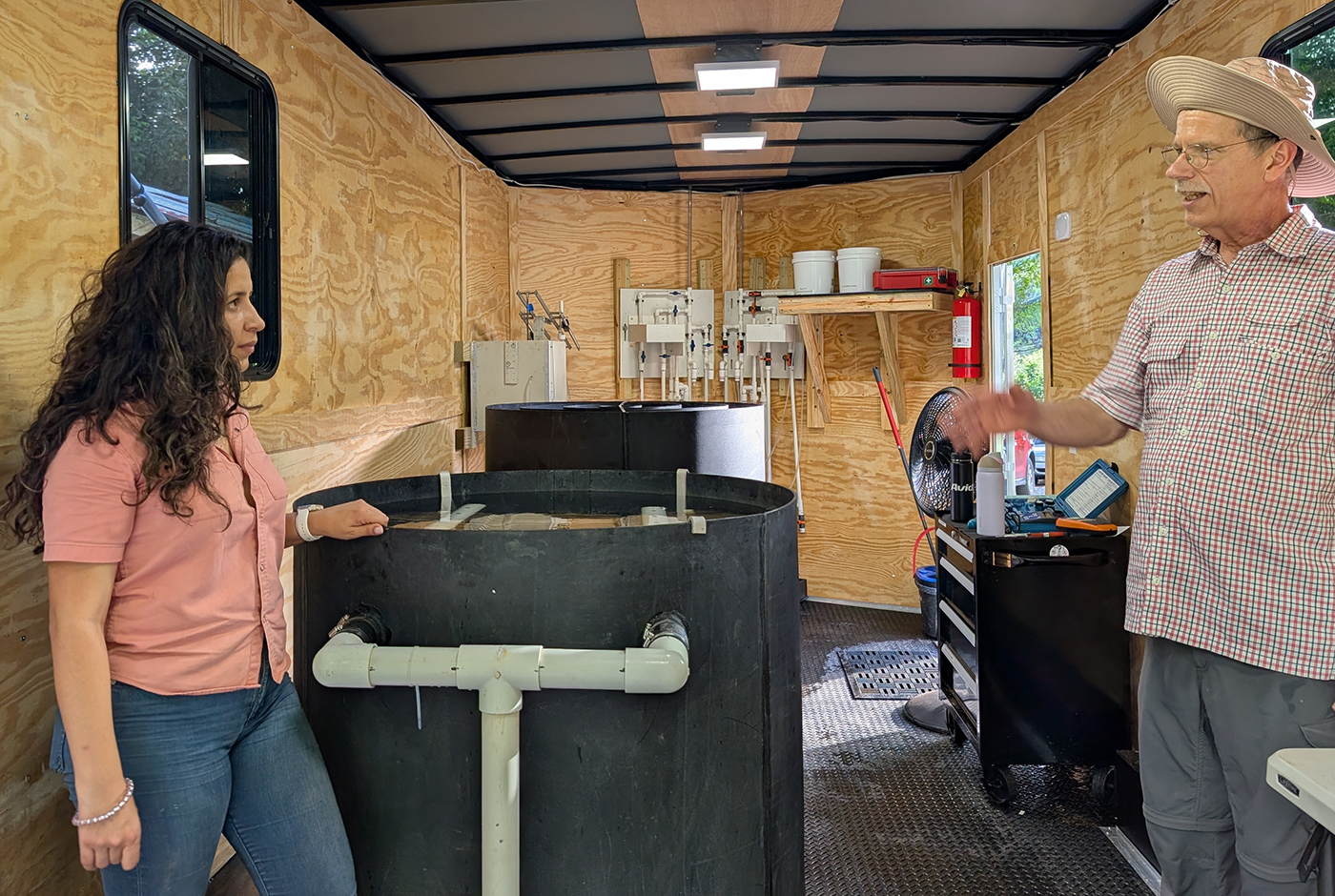
The AguaClara Reach water purification protocol is similar to conventional water treatment systems. Water from the source fills the entrance tank, where a chemical doser adds a coagulant. (The coagulant sticks to impurities and makes them easier to extract in the clarifier.) The water then moves on to a flocculator, which helps the small suspended particles form larger clumps called flocs. From there, the water moves to a clarifier, which removes the flocs, and flows through a sand filter to the final water storage tank.
What makes the AguaClara Reach systems different from conventional equivalents, however, is that they are intentionally designed with small, resource-strapped communities in mind. The units do not need electricity and have no moving parts, simplifying maintenance.
 VersaWater
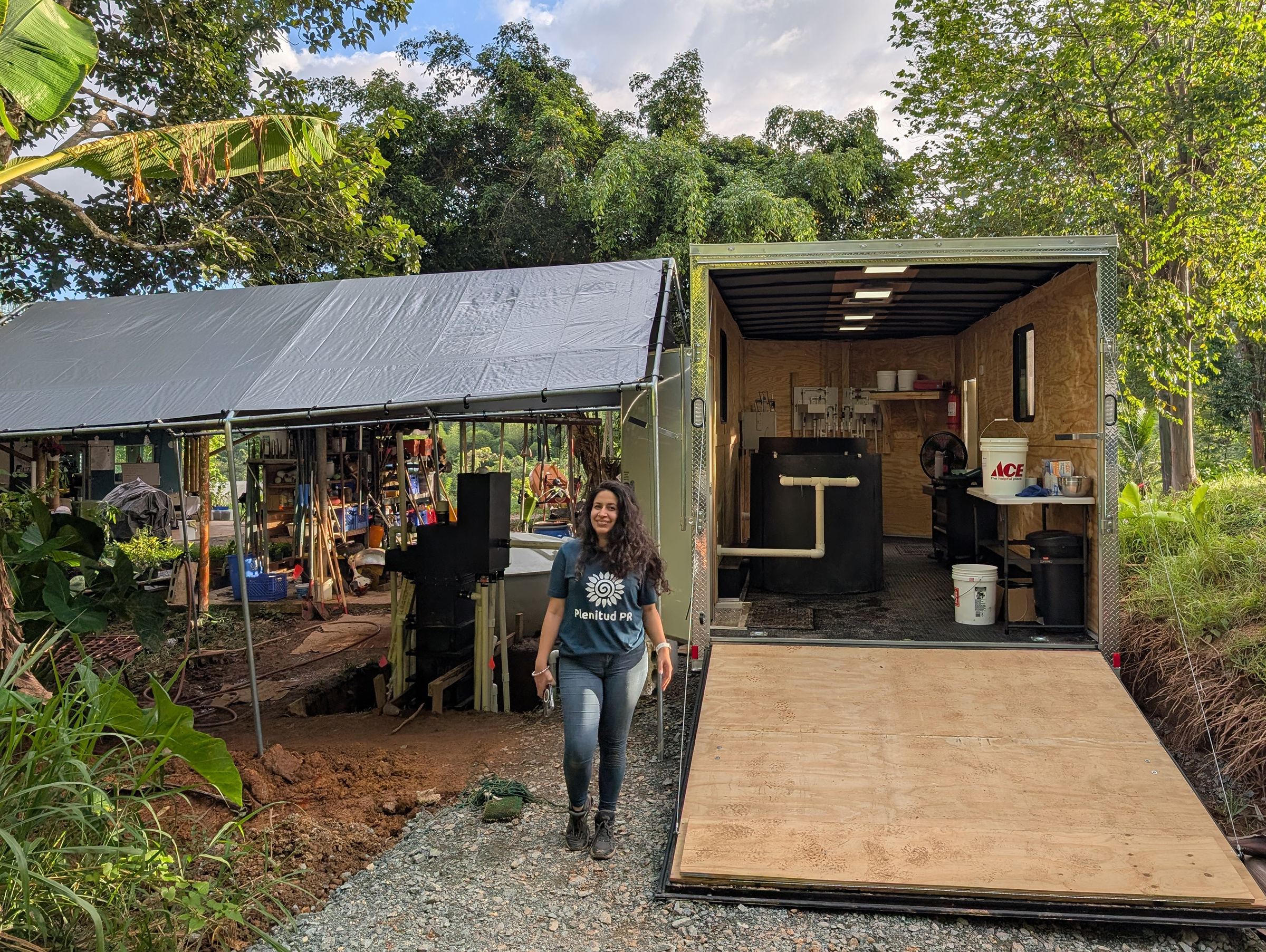
Because these communities do not have the luxury of waiting 6-9 months for a built-in-place treatment system, AguaClara Reach focuses on prefab systems like the PF-70, which – as its name indicates – can produce 70 cubic meters of water per day. The unit can be transported on the back of a truck and assembled quickly.
The PF-70 can be installed inside an 8-by-20-foot trailer. The flocculator and clarifier are 43 inches in diameter and 48 inches tall. The filter measures 26 inches wide, 50 inches long, and 48 inches high. Operators can access all components for easy cleaning without having to walk on scaffolding or boards over the system.
Ongoing innovations
A significant challenge was adjusting the amount of chemicals (coagulant and chlorine) based on the plant flow rate without using chemical pumps. Because input flow rates can vary widely, the key was designing a system that maintained a constant chemical dose regardless of the plant flow rate.
To solve the problem, the device has a float that tracks the water level in the entrance tank, which is directly proportional to the flow rate. That in turn sets the angle on a lever system, which adjusts to continue delivering the dosage set by the operator.
A number of innovations delivered the compactness that is key to AguaClara Reach systems’ portability.
For example, the flocculator uses vertical modular baffles that can be removed easily. The water is just 3.6 feet deep in the clarifier as opposed to conventional treatment plants that range from 10 to 18 feet.
To make the more compact version work, AguaClara Reach introduces an additional treatment process, a floc filter, at the bottom of the clarifier. Incoming flocculated water is ejected from diffusers that inject the water downward toward a jet reverser that redirects the jet vertically. Flocs that settle on the sides of the hopper slide down to the vertical jet where they are resuspended without allowing any sludge to settle as occurs in conventional sedimentation tanks.
The process creates a concentrated suspension of flocs that works as the first filtration process. The flocs eventually exit through gravity and concentrate in a hopper, whose valve can be opened to drain them out. The fluidized floc bed functions as a continuously renewed particle filter.
The filtration sand beds also stack vertically for compactness and to facilitate backwashing using high-quality clarified water. The filter can be backwashed without requiring a pump or a tank of filtered water. It’s open for direct observation and uses an ultra-simple pipe stub system to eliminate valves. To eliminate motors, the baffle flocculator has a high-uniformity velocity gradient with no moving parts.
Addressing clean drinking water in Puerto Rico
While working on technology improvements, AguaClara Reach also partners with institutions on the ground to increase its impact and bring clean water to more communities around the globe.
In Puerto Rico, for example, the organization has installed a demonstration plant at Plenitud, a nonprofit educational farm and sustainability education center in Las Marías. The effort is a partnership with Cornell, the Institute of Sustainability Engagement at Syracuse University, and Inter-American University of Puerto Rico.
The project is funded through a grant from the National Science Foundation, but the goal is to become an independent entity through alternative funding sources.
In Puerto Rico, most of the population receives drinking water from a large public utility, Puerto Rico Aqueduct and Sewer Authority. But about 235 small communities, mostly in areas that are rural and/or geographically separated from the conventional distribution systems, are not connected to PRASA primarily because connections to these remote areas are classified as not economically viable. However, these communities must comply with National Primary Drinking Water Regulations.
Through a project called VersaWater, Syracuse’s ISE helps identify potential communities for a pilot project and can help them find funding resources for the PF-70 system. “We have been inviting non-PRASA communities to learn about the technology and the project,” said Francisco Guzman-Alvarado, a native Puerto Rican and technical specialist at ISE.
Complex systems don’t fare well in non-PRASA communities because maintenance can be frequent, time-consuming, and expensive. VersaWater offers training and certification on the easy-to-operate AguaClara Reach system for operators, most of whom are volunteers.
ISE understands Puerto Rico is prone to weather extremes and is currently suffering a drought.
“Puerto Rico is a hot spot for environmental events like hurricanes, drought, and flooding, and some communities opt for groundwater wells,” said Kaira Fuentes, Ph.D., assistant director of Caribbean programs at ISE.
Communities that use surface water have to contend with changing turbidity levels due to sudden flooding events. Weber-Shirk understands the equation too. “We do help with climate resilience by being able to treat water that is high turbidity from increasingly frequent rain events,” he said.
 VersaWater
Next up: a smart automation system that doesn’t require cables or grid power and that allows reverting to full manual operation without requiring any tools for the transition. “If the plan goes as we hope, it will allow us to fully automate the dosing of the chemicals, so that plant operators don’t have to be on-site 24/7, which is prohibitive for small communities,” Weber-Shirk said.
The organization is also looking to expand globally.
As for work in Puerto Rico, Guzman-Alvarado is hopeful that the island will take steady steps toward clean water solutions.
“We have confronted many challenges including economic, COVID, hurricanes. And we have learned from the proverb, ‘The people save the people,’” he said. “Community-based organizations have shown that we can achieve things by working together.”

What’s Your Big Idea?
Big infrastructure challenges require big infrastructure solutions, such as the ones related to clean drinking water in this article. ASCE2027 is your place for those big ideas.
ASCE2027: The Infrastructure and Engineering Experience is a first-of-its-kind event, bringing together big thinkers from all across the infrastructure space, March 1-5, 2027, in Philadelphia. Pack your big ideas and join the discussion.
Learn more about ASCE2027: The Infrastructure and Engineering Experience.