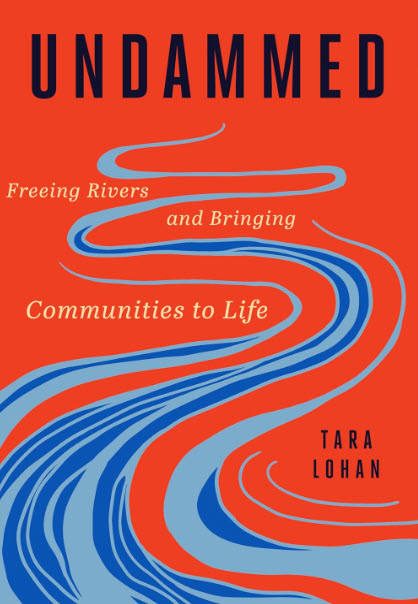
Undammed: Freeing Rivers and Bringing Communities to Life, by Tara Lohan. Washington, D.C.: Island Press, an imprint of Princeton University Press, 2025; 264 pages, $32.
Progress is, generally speaking, understood to be creating new things where nothing previously existed. Perhaps nowhere is progress more linked to creation – to construction – than in engineering and infrastructure, where even demolition or deconstruction is often done to make way for new creation.
Further reading:
- What can engineers learn from Klamath River dam removals as trend ramps up?
- Mega-project success: Author offers advice to land and deliver the big jobs
- New York City’s first subway was secretive, bold, brief – here’s Alfred Beach’s story
So it is noteworthy when the systematic removal of constructed works that are replaced by nothing gains traction as the right way forward. That is the story told in Undammed.
Author and environmental journalist Tara Lohan, who spent years covering fossil fuel extraction, wrote Undammed as the culmination of a five-plus-year exploration into what happens when a river is allowed to return to its natural state.
Beginning with the restoration of the Elwha River in Washington state by removing two major dams – a three-year effort from 2011-14 that was at the time the largest such project in U.S. history – Lohan’s research and reporting examined a movement that has seen more than 2,000 dams removed in the past 25 years.
This came amid a still-small but broadening recognition that whatever the original motives, needs, and benefits were for building many of the more than half a million dams in the U.S., they came with significant costs. These were chiefly to biodiversity and ecosystems but also to communities and local economies, among others. Although in some cases these costs were unknown at the time of construction, in others they were simply ignored.
There are numerous astonishing numbers to appreciate the nation’s dam-building frenzy by which, according to Lohan, we “dammed, diked, and diverted almost every major river in the country.” Two of those numbers are:
- Across the whole of the 1950s, 1960s, and 1970s, the U.S. built, on average, about 1,700 dams per year.
- Through the 1990s, we had essentially built one large dam per day since the signing of the Declaration of Independence.
Lohan begins Undammed with a crisp, wildly effective nine-page introduction that introduces the reader to the author on her journey of discovery to the site of a removed dam on the Elwha, conveys the mind-boggling scope of existing dams in the U.S., and introduces the key points of the problems they cause that have spurred the removal movement.
The book’s chapters delve into a wide range of topics: a full accounting of the Elwha dam removal and restoration effort and, later, the new king of U.S. dam removal projects, namely the Klamath River in Oregon and California; the tens of thousands of so-called deadbeat dams that no longer serve any useful purpose; additional risks driven by climate change; effects on fish populations; and more.
Throughout, it is clear that the dam removal movement is not based on a “return everything to nature!” zealotry.
Lohan notes that “many of our dams serve critical purposes, and I’ve yet to meet any dam removal advocate who thinks they should all come down. I certainly don’t.”
But, of course, most dam removal projects will have opponents for various reasons, and that’s a crucial part of the story as well because those battles will need to be fought again and again. One story of the outsized positive effects of the removal of a single small, 6-foot deadbeat dam in Virginia is especially illuminating.
Thoroughly researched but written in a classically light and limber journalistic style that keeps it accessible to readers regardless of their backgrounds, Undammed is a hopeful tale of the power of coalition building, facts, and their ability to move things in the right direction – even when the right direction is, literally if not figuratively, backward.