
 Nagesh Ramaswamy
The first time we stood beside a decommissioned wind turbine blade, we saw something different than what most people saw.
To many, these blades that had reached the end of their service lives after decades of generating renewable energy represented a disposal problem. As structural engineers, the blades looked to us like extraordinary structural members waiting for a second opportunity.
That simple observation became the foundation of our research at the University of Houston. Rather than asking how wind turbine blades could be recycled, we began asking a different question: What if they didn't need to be recycled at all? What if they could simply be reused? Ultimately, we found an ideal application – in the form of roadway infrastructure.
Further reading:
- How to achieve net zero in building retrofits: Challenges and expert advice
- US coastal cities are sinking. What can civil engineers do?
- System-of-systems method can bring cities resilient infrastructure, report finds
Wind energy has become one of the fastest-growing renewable energy sources in the world. It supplies approximately 10% of U.S. electricity. Yet this remarkable success has created an unexpected challenge. Wind turbine blades are typically designed for service lives of 20-25 years, and many early utility-scale turbines are reaching retirement. By 2050, nearly 4 million tons of blade material are expected to require end-of-life management in the U.S. alone.
 Nagesh Ramaswamy
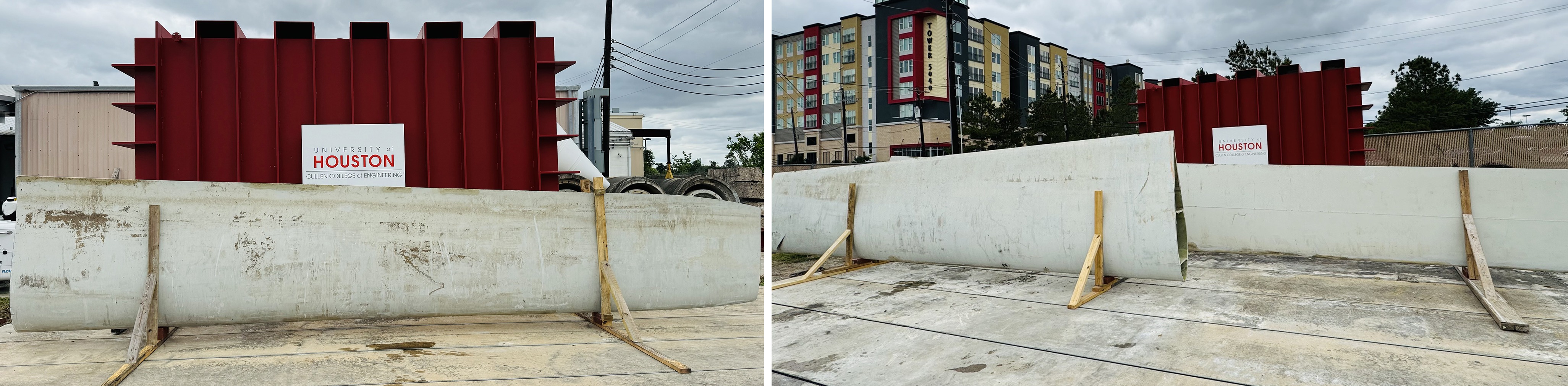
Wind turbine blades are manufactured primarily from glass fiber-reinforced polymer composites. These materials are exceptionally strong, lightweight, and resistant to environmental degradation, but those same characteristics make them difficult and expensive to recycle. Today, many retired blades are landfilled, mechanically processed into low-value products, or incinerated.
As we studied this growing waste stream, we realized something that fundamentally changed our perspective. Engineers spend years designing these blades to survive hurricane-force winds, millions of fatigue cycles, and decades of environmental exposure. Why should all that engineering be destroyed simply because the blade has reached the end of its original purpose?
Instead of viewing retired blades as waste, we began viewing them as existing structural members. Before that idea could become reality, however, we needed to answer a critical engineering question: How much structural capacity remained after years of service?
Surprising findings
Our research began with retired GE37 wind turbine blades supplied by Carbon Rivers. We focused on the spar caps, the primary load-carrying elements within the blade, and conducted an extensive material testing program. To our surprise, the composites retained remarkable mechanical properties.
Even after years of service, the spar caps exhibited tensile strengths approaching 90 kilopounds per square inch and compressive strengths of approximately 54 ksi, indicating that much of the blade's original structural capacity remained intact.
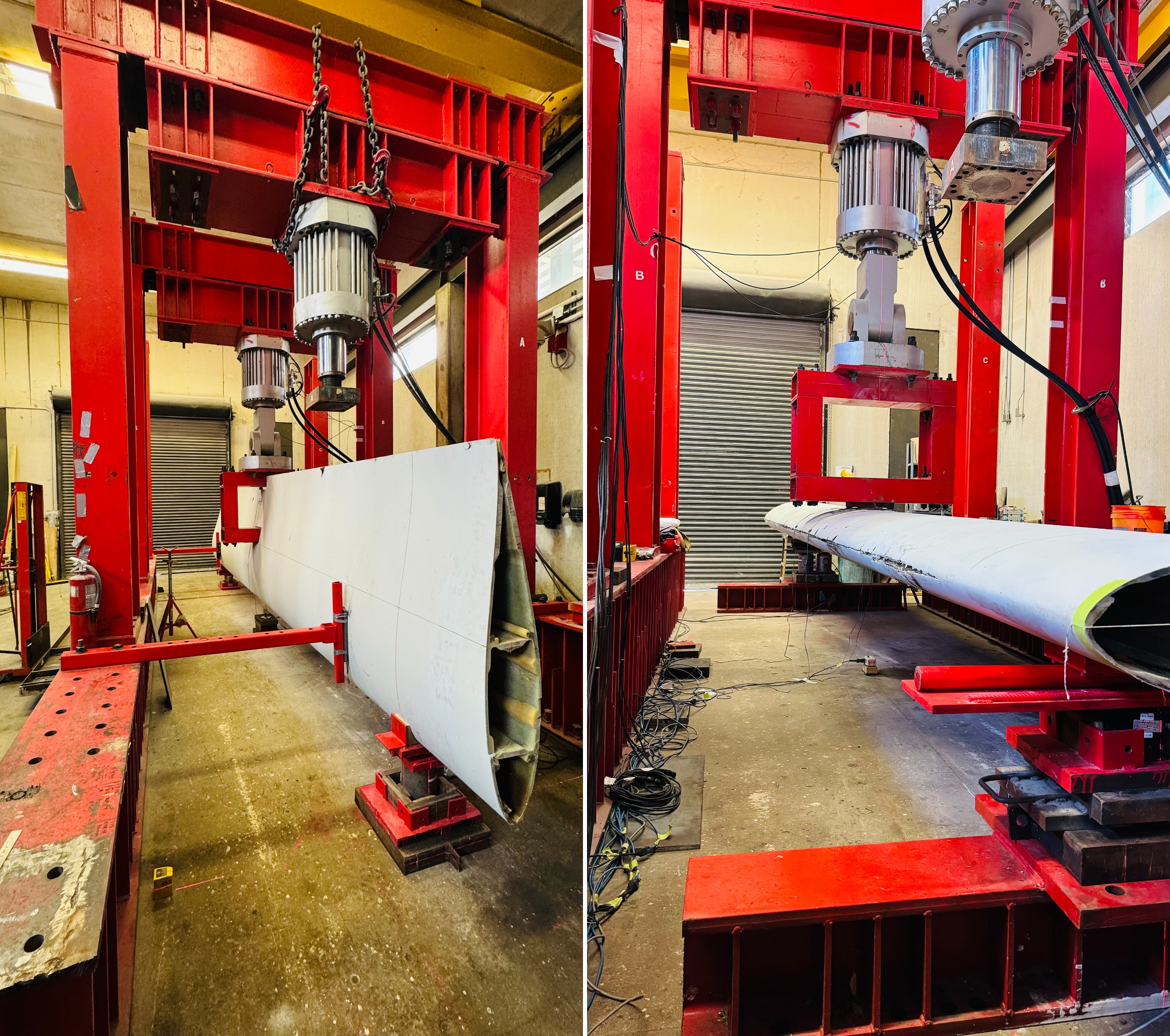
Those results gave us confidence to move beyond small laboratory specimens and investigate the behavior of entire blade segments. We performed full-scale bending tests on 25-foot-long blade sections in the university’s Thomas Hsu Structural Research Laboratory. The experiments showed that the blades could sustain substantial loads while exhibiting gradual, predictable damage rather than sudden brittle failure. Perhaps more importantly, they demonstrated that retired blade sections behaved like structural members, not simply pieces of composite material.
 Nagesh Ramaswamy
Although the experiments were encouraging, laboratory testing alone could never answer every engineering question. Every blade differs slightly in geometry, material distribution, and manufacturing details. Testing every possible configuration would be impractical.
To bridge that gap, we developed detailed finite element models in Abaqus that were calibrated using the experimental results. Once validated, the models allowed us to evaluate blade behavior under a wide range of loading conditions, identify stress concentrations, and refine the connection details essential for future infrastructure applications.
Interestingly, the blades themselves were not the greatest engineering challenge. The connections were. Unlike steel beams that can be welded or bolted using conventional details, wind turbine blades require carefully engineered connections capable of transferring large forces without damaging the composite material. Developing those connection systems became one of the most important aspects of the project.
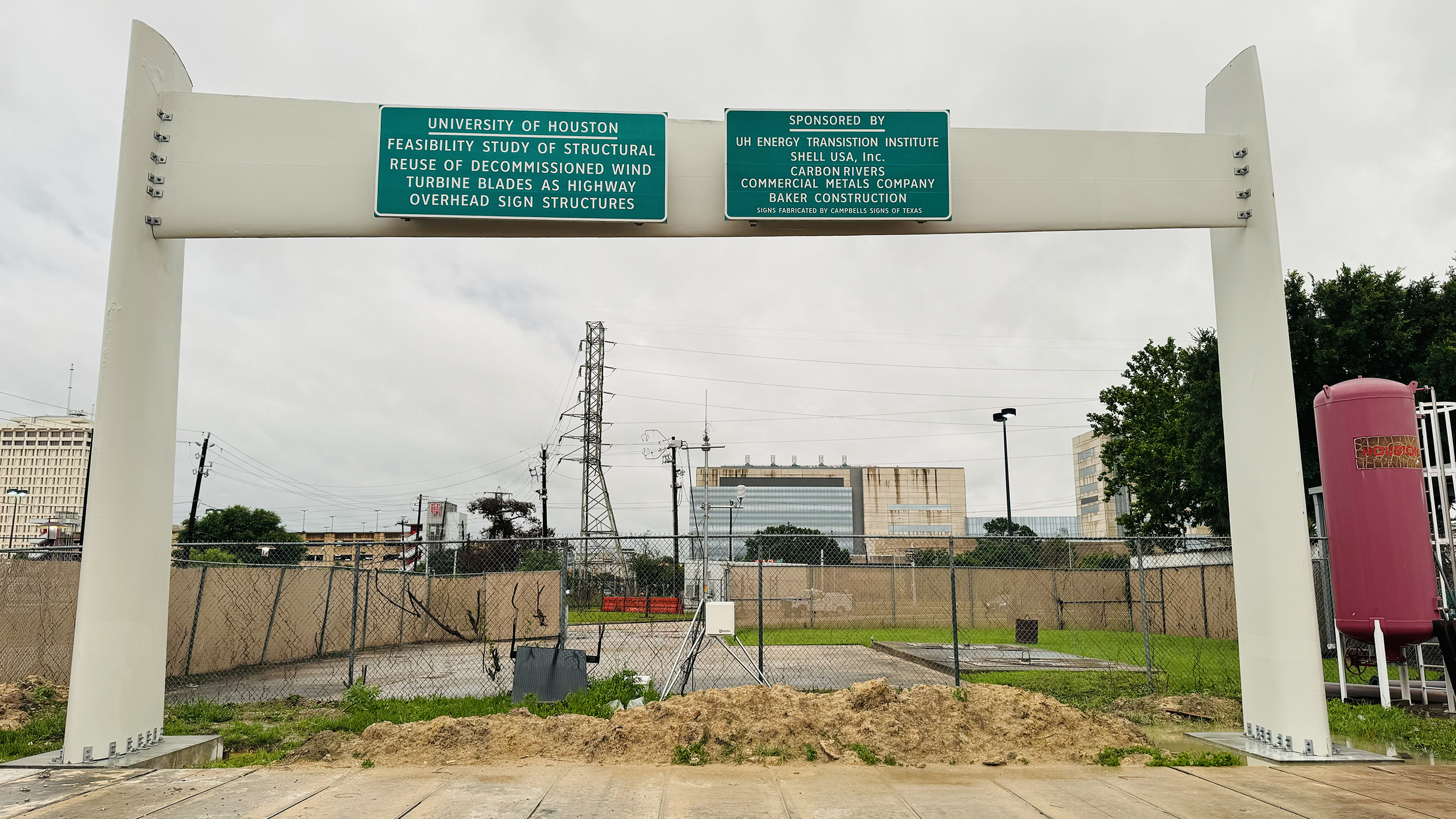
The ultimate goal was never simply to publish another laboratory study. It was to build something real. Rather than stopping with experiments and computer models, we designed and constructed a full-scale highway overhead sign structure using repurposed wind turbine blade segments.
Building something real
Highway sign structures were intentionally selected because they are governed by demanding wind loads and must satisfy well-established American Association of State Highway and Transportation Officials design requirements. If retired blades could perform in this application, they could demonstrate genuine potential for transportation infrastructure.
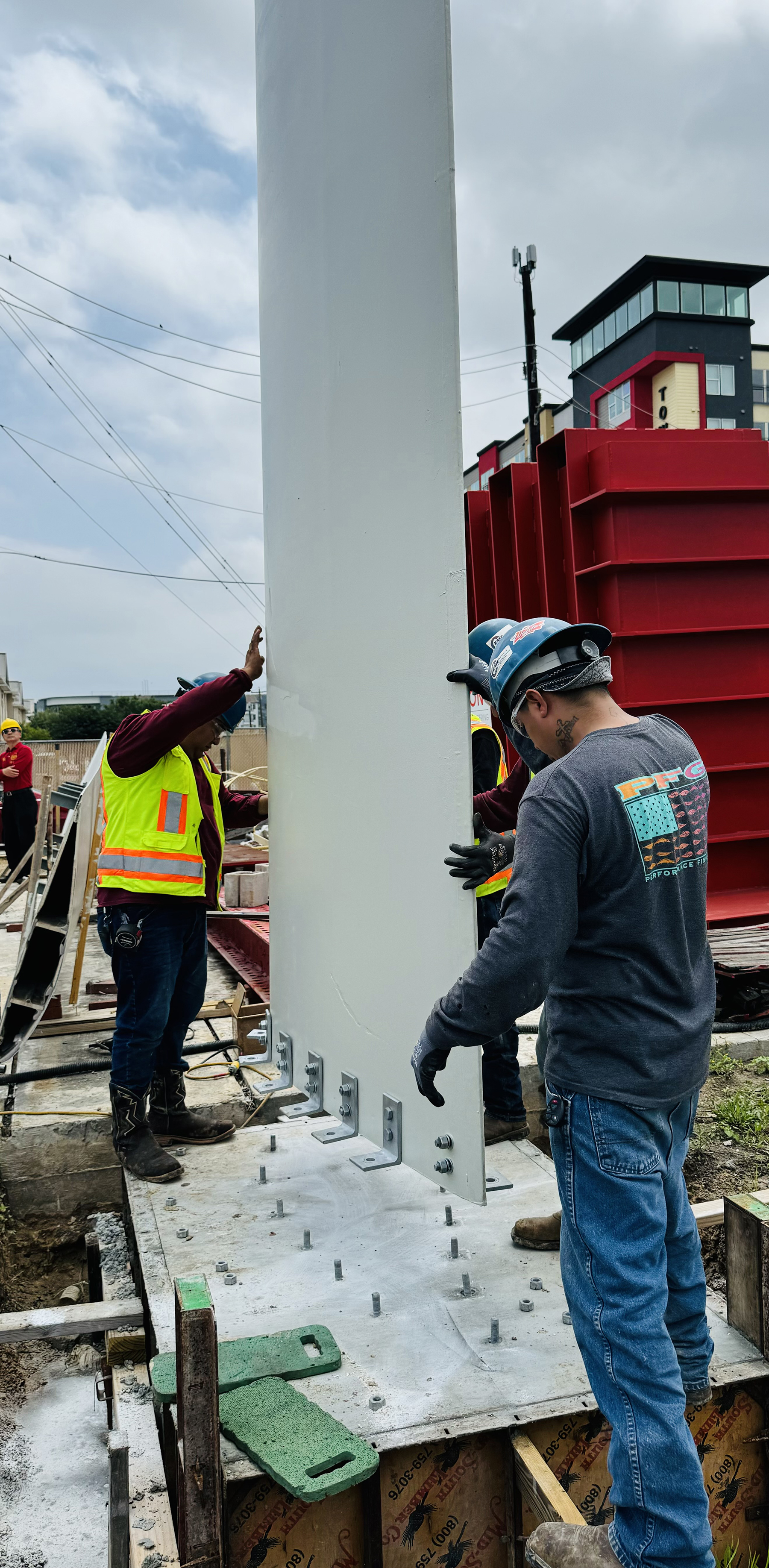
Watching a retired wind turbine blade being lifted into place as part of a functioning highway structure was one of the most rewarding moments of the project. What had once captured wind energy was now supporting infrastructure.
The completed prototype spans approximately 40 feet and provides 18.5 feet of roadway clearance. Decommissioned wind turbine blade segments serve as the primary structural members, replacing the steel trusses and concrete columns typically used in highway overhead sign structures. The repurposed blade segments form both the columns and the horizontal member to support the sign panels and resist gravity and wind loads while transferring these forces safely to the foundation.
 Nagesh Ramaswamy
Shortly after construction, the structure experienced an unexpected real-world test when a powerful derecho and later Hurricane Beryl passed through the Houston area with wind gusts exceeding 100 mph in 2024.
Although the structure had been designed to resist extreme wind loads, seeing it withstand actual storm events reinforced our confidence that structural repurposing could move beyond the laboratory and into practical engineering applications.
The environmental and economic benefits proved equally compelling. Compared with a conventional steel overhead sign structure, the repurposed design reduced material costs by approximately 73% while lowering embodied energy and greenhouse gas emissions by more than 65%. Each structure also has the potential to avoid approximately 248 metric tons of carbon dioxide emissions by extending the useful life of an existing engineered product rather than manufacturing a new one.
Looking back, the most valuable outcome of this research was not simply demonstrating that retired wind turbine blades are strong enough for structural applications. The work demonstrated a different way of thinking about sustainability.
For decades, engineers have focused on recycling materials that have reached the end of their original service lives. Structural repurposing asks a different question: Can we preserve the engineering already built into those materials instead of destroying it?
Wind turbine blades are only one example of a much broader opportunity.
As civil engineers seek more sustainable solutions for future infrastructure, many materials currently considered waste may, in fact, represent valuable structural resources waiting for second lives. Sometimes the most innovative engineering solution is not creating something new but recognizing the value in something we already have.

What’s Your Big Idea?
Big infrastructure challenges require big infrastructure solutions, such as the concepts mentioned in this article. ASCE2027 is your place for those big ideas.
ASCE2027: The Infrastructure and Engineering Experience is a first-of-its-kind event, bringing together big thinkers from all across the infrastructure space, March 1-5, 2027, in Philadelphia. Pack your big ideas and join the discussion.
Learn more about ASCE2027: The Infrastructure and Engineering Experience.


