This presentation summarizes a computational framework for simulating the nonlinear behavior of steel frame structures under multi-axial loading conditions with emphasis on nonlinear geometric instabilities, such as inelastic local buckling. The framework relies on multiaxial constitutive formulations that preserve the primary behavioral characteristics of mild structural steels under inelastic cyclic straining. These formulations, which are made publicly available, can be readily used in either continuum or frame analysis finite element software. A gradient-based optimization framework is also presented for inferring consistent input model parameters. Illustrative examples include structural steels from the North America, Europe as well as Asia. All the examples are made available from a publicly structural performance database. Moreover, reduced-order frame analysis beam-column elements are presented that alleviate well-known issues of localization and mesh-dependence in the presence of a softening material law through gradient-enhanced formulations. These models are appealing for simulating inelastic cyclic buckling in steel members as part of frame structures. The presentation also discusses multi-point constraint formulations that couple continuum and beam-column element domains for high-resolution modeling of steel structures, when necessary. The presentation concludes with an array of practice-oriented applications to advance the seismic design and behavior of steel structures via advanced simulation capabilities.
Bio
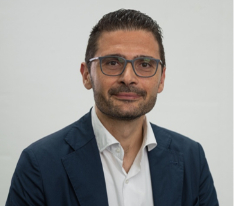
Prof. Lignos is a Full Professor and the Chair of the Civil Engineering Institute at École Polytechnique Fédérale de Lausanne (EPFL). A key aspect of his research lies in the development of advanced models that leverage multi-scale experimentation to advance our understanding of the ultimate limit states that trigger structural collapse in steel structures. Prof. Lignos joined EPFL in 2016 from McGill University, Canada, where he was a tenured Professor in the Department of Civil Engineering and Applied Mechanics. Prior to that he was a post-doctoral researcher at Kyoto University (2010) and Stanford University (2009). He holds degrees in Structural Engineering (Stanford University, M.S. 2004, Ph.D. 2008) and Civil Engineering (NTU, Athens, 5-year Diploma 2003). The work of his group has been acknowledged through several prestigious international awards including the 2025 J.M.Ko Award, a 2025 Special Achievement Award from the American Institute of Steel Construction and the 2019 Walter L. Huber Civil Engineering Research Prize among others, from the American Society of Civil Engineers. Just recently the European Research Council awarded him an ERC Advanced Grant, Europe’s most competitive research awards, to develop new concepts for lightweight steel structures for urban Resilience. His work on structural steel systems has emerged into the second generation of Eurocode 8, the AISC seismic provisions as well as CSA S16. Since 2025 he serves as an Editor of Earthquake Engineering & Structural Dynamics (EESD). He is regularly involved as a consultant in research-to-practice projects related to advanced analysis, evaluation and the design of steel and steel-concrete composite structures