
A Symbol of Science, Stewardship, and Community: San Antonio’s New Mascot
Juvencio Zamora, P.E. CFM, M.ASCE
Founded in 2019, the EWRI San Antonio Chapter serves the greater San Antonio area and includes approximately 140 multidisciplinary professionals. The Chapter’s goal is to facilitate cross-disciplinary dialogue among environmental, ecological, design, planning, and water resources professionals on the science, policy, and social aspects of the natural and built environment. Our aim is to break down silos through focused collaboration.
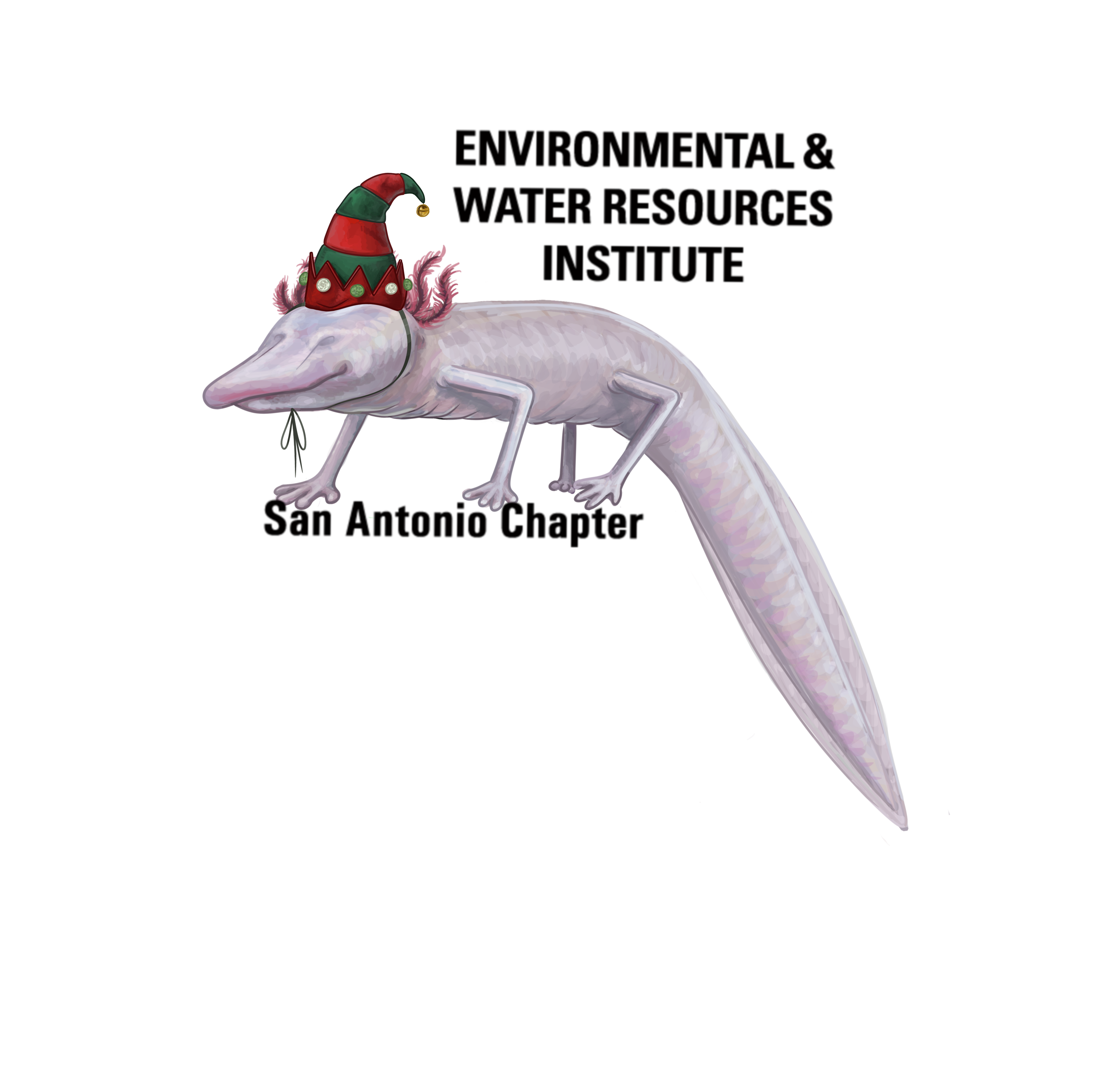
The idea for a mascot was floated by one of our members, Theresa Campbell, who works for the San Antonio River Authority. It was a fun idea and it wasn’t expected to gain traction so quickly, but after being introduced at our chapter meeting in May 2025, the campaign took flight. Almost immediately, nominations poured in and were as diverse as our membership. For example, they included a donkey, a pangolin, and the lovable North American river otter. However, most nominations were well-known species found in the South Texas region— truly reflecting the passion and knowledge of the members of our group.
During the process, it quickly became evident that we wanted to be represented by something that could live up to our goal statement. Up against some tough competition, including the Golden-cheeked warbler, Guadalupe spiny softshell turtle, and Mexican free-tailed bat, the Texas blind salamander ultimately prevailed. For those not familiar, a brief note on these three species: the golden-cheeked warbler breeds exclusively in the Texas Hill Country; the Guadalupe spiny softshell turtle is found only in the Nueces and Guadalupe rivers and their associated tributaries; and the Mexican free-tailed bat is the official flying mammal of the State of Texas (something I did not know before writing this!).
Most of us probably would not have envisioned that the Texas blind salamander could encapsulate the “science, policy, and social” components of our goal statement, but it does so beautifully in the following ways:
- Science: The Texas blind salamander lives in the unique habitat of the water-filled caves of the Edwards Aquifer, a mission-critical resource for millions of people in this region.
- Policy: It serves as an indicator species, meaning its presence—or absence—can provide valuable insights into the overall health of the aquifer ecosystem.
- Social: It depends on a constant supply of clean, cool water from the Edwards Aquifer. Pollution and water overuse driven by urban growth threaten its survival.
A massive thank you to Theresa for her countless hours spent handcrafting various mascot designs—including hats, fashion accessories, and even different postures and poses—using Procreate on her iPad Air to produce the image above. We truly believe that adoption of this mascot will enable us to further our mission to educate and grow both within our chapter and beyond.