
Walter L. Huber Civil Engineering Research Prizes are awarded to recipients based on the impact of their research, both on their chosen subdisciplines, as well as on the field of civil engineering more broadly.
Sergi Garcia-Segura, Ph.D., M.ASCE and Lauren Stadler, Ph.D., M.ASCE are award recipients and represent EWRI.
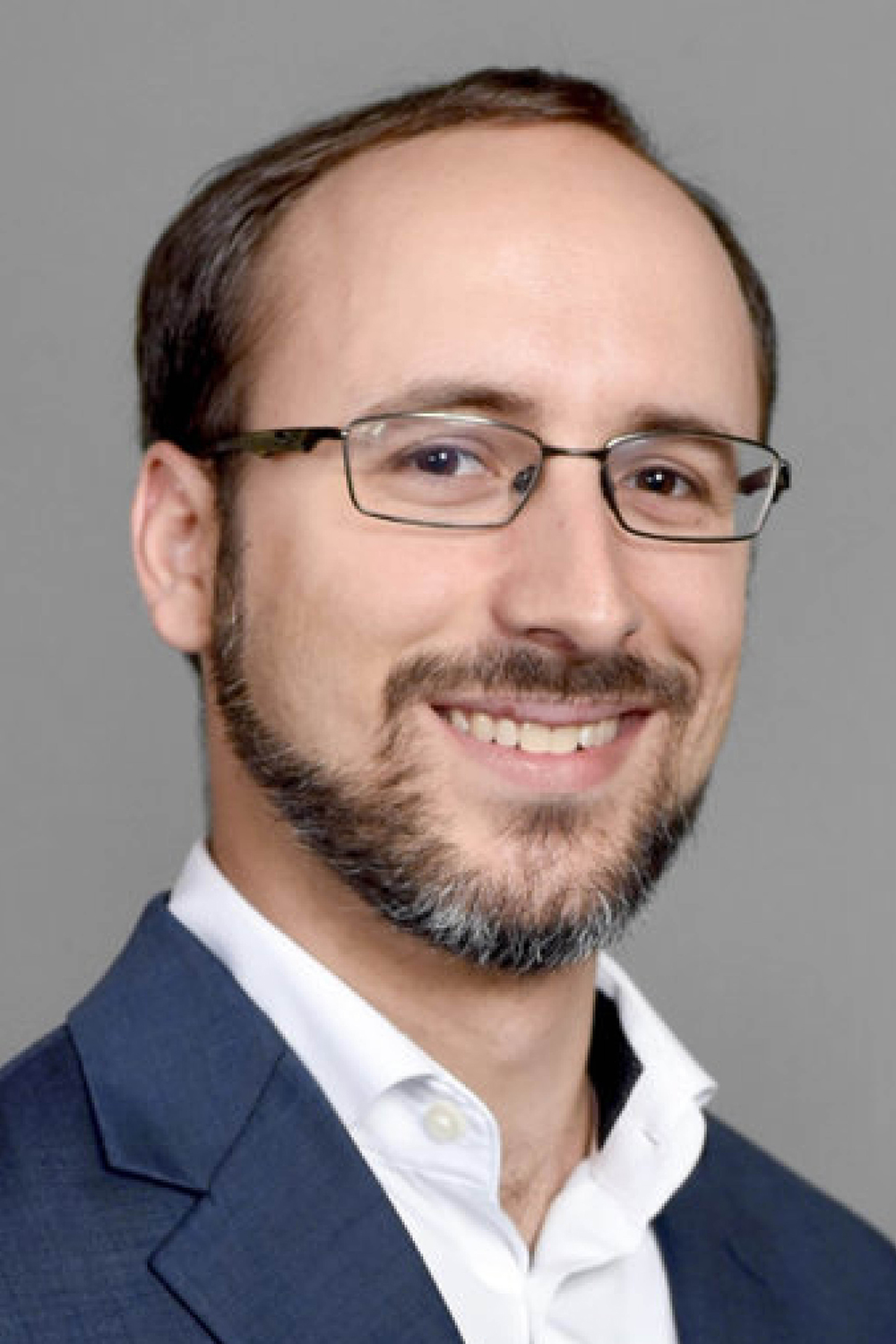
Dr. Sergi Garcia-Segura is an internationally recognized leader in electrochemically driven environmental technologies, with pioneering contributions in advanced oxidation and reduction processes, functional materials, and nanobubble science. His research has transformed water treatment paradigms by integrating electrochemical and catalytic processes with engineered nanobubbles to drastically improve gas-liquid transfer, reaction selectivity, and energy efficiency. He has demonstrated how nanobubbles can be leveraged to unlock new treatment mechanisms and enhance the generation and delivery of reactive species in decentralized, modular systems.
Dr. Garcia-Segura's work on nitrate-to-ammonia conversion, PFAS treatment, and antibiotic removal through electrocatalysis and nanointerfacial control has positioned him at the forefront of environmental electrochemistry. He has authored over 190 peer-reviewed publications, holds 11 patents, and has received more than 14,000 citations (h-index: 59), underscoring his influence and innovation. By bridging fundamental science with practical engineering, Dr. Garcia-Segura's contributions are enabling next-generation technologies to tackle global water challenges.
Dr. Garcia-Segura's research has been widely disseminated and adopted by the civil engineering profession through high-impact publications, patents, applied collaborations, and international policy citations. He has authored over 190 peer-reviewed articles in journals such as Water Research, Applied Catalysis B, Nature journals, and others (14,000+ citations, h-index: 59), informing cutting-edge practices in water treatment, nanobubble-enhanced mass transfer, and decentralized disinfection technologies.
To support implementation, he has filed 11 patents, many in collaboration with utilities and technology developers, addressing contaminants such as nitrate and PFAS. His innovations are being piloted in field-scale systems for small and rural communities. Crucially, Dr. Garcia-Segura's contributions extend beyond academia: his work on digitalization and sustainability (Sci. Total Environ., 2021) has been cited by the United Nations and other international bodies in support of global climate and water policy frameworks.

Dr. Lauren Stadler has advanced wastewater-based epidemiology (WBE) as a transformative tool that leverages sewer infrastructure to monitor community health. Since the onset of the COVID-19 pandemic, she has worked with the City of Houston Health Department and Public Works to implement one of the most extensive citywide wastewater monitoring systems in the world. Her research showed that wastewater SARS-Co V-2 viral loads strongly correlated with positivity rates, emergency department visits, and hospitalizations, while providing 1-2 weeks of advanced warning-allowing proactive interventions. Stadler's group developed and applied sensitive methods for quantifying diverse pathogens in wastewater, extending monitoring beyond SARS-CoV-2 to influenza, RSV, enterovirus D68, mpox, measles, mumps, rubella, antibiotic resistance genes, Candida auris, food- and waterborne pathogens, and vector-borne viruses such as West Nile and Zika. Her team also created computational pipelines for sequencing wastewater to detect emerging variants, reporting omicron in Houston before clinical confinnation and tracking cryptic SARS-Co V-2 lineages absent from patient samples. In recognition of these contributions, Rice University and the Houston Health Department were named a CDC National Wastewater Surveillance Center of Excellence, where Stadler leads national innovation and training on wastewater surveillance systems for civil and environmental engineers and public health agencies.
Stadler's wastewater surveillance research has been broadly and rapidly disseminated to civil engineering and public health communities. Since 2020, her team provided weekly reports to the Houston Health Department, Public Works, and school districts, including internal briefings to city and hospital leadership and a public-facing dashboard. She also co-developed the first wastewater-based virus alert system in the U.S., which sends text notifications to parents, school nurses, and administrators when pathogens are detected in school wastewater, along with transmission prevention guidance. Results have been shared nationally and internationally through presentations at conferences and meetings, including the Water Environment Federation Annual Conference (WEFTEC), ASCE Houston Branch, and CDC National Wastewater Surveillance System Community of Practice meetings. Stadler's work has been highlighted by news outlets such as Houston Public Media and the Houston Chronicle, which routinely reference wastewater data in public health reporting. She has also published extensively, with 34 peer-reviewed papers on wastewater-based epidemiology and additional manuscripts under review. These appear in high-impactjm1mals including Nature Communications and the CDC's Morbidity and Mortality Weekly Repo1t (MMWR), ensuring results reach both engineering professionals and the broader public health community.